
How to Improve Indoor Air Quality at Home without Breaking the Bank
Learn how to improve indoor air quality at home affordably: control sources, ventilate, filter & more. EPA tips for healthier air!
Why the Air Inside Your Home May Be Harming Your Health Right Now
How to improve indoor air quality at home is one of the most important things you can do for your family's health — and the good news is, you don't need to spend a fortune to make a real difference.
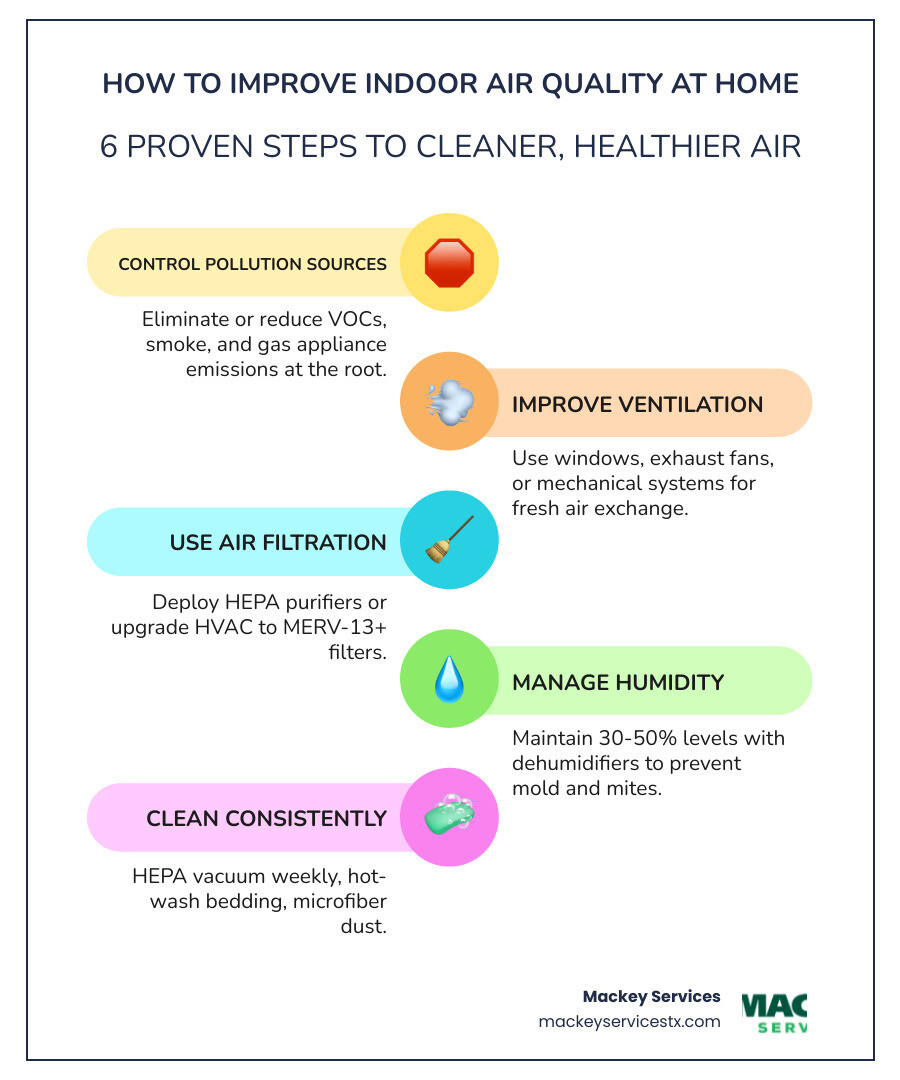
Here are the most effective ways to improve indoor air quality at home:
- Control pollution at the source - eliminate or reduce what's creating the problem (gas appliances, VOCs, smoke)
- Improve ventilation - bring fresh outdoor air in through windows, exhaust fans, or mechanical systems
- Use air filtration - run HEPA air purifiers or upgrade your HVAC filter to MERV-13 or higher
- Manage humidity - keep indoor humidity between 30-50% to stop mold and dust mites
- Clean consistently - vacuum with a HEPA filter weekly, wash bedding in hot water, and dust with microfiber cloths
- Test for hidden dangers - check for radon, carbon monoxide, and mold, especially in older homes
Most people don't realize that the air inside their home can be two to five times more polluted than the air outside. Americans spend about 90% of their time indoors, which makes that statistic hard to ignore. Poor indoor air quality has been linked to asthma flares, chronic respiratory illness, fatigue, and even serious long-term conditions like heart disease and lung cancer.
In the Greater Houston area, the challenge is even more pronounced. The region's heat and humidity create ideal conditions for mold growth, dust mites, and other allergens to thrive — often without you ever seeing or smelling a thing. As Dr. Nicholas BuSaba of Harvard Medical School has noted, most of the things that cause indoor air problems are completely odorless, so there's often nothing to alert you until symptoms appear.
Whether you're dealing with allergy flare-ups, stale air, or just want to breathe easier at home, this guide walks you through proven, practical steps to clean up the air in your home room by room.
Understanding IAQ and Why It Matters for Your Health
Indoor Air Quality (IAQ) refers to the condition of the air within and around buildings, specifically as it relates to the health and comfort of those inside. As of April 2026, research continues to show that the environment inside our homes is often more hazardous than the smog we see in big cities.
Why is this? Modern homes are built to be "tight" for energy efficiency. While this keeps your electricity bill down in the sweltering Houston summer, it also traps pollutants inside. Without proper air exchange, things like dust, pet dander, and chemical vapors just circulate over and over again.
The health impacts are significant. Short-term exposure can lead to "sick building syndrome" symptoms: headaches, dizziness, fatigue, and irritation of the eyes, nose, and throat. For those with pre-existing conditions, poor IAQ is a major trigger for asthma attacks and allergic reactions. Long-term, the EPA ranks indoor air pollution among the top five environmental risks to public health.
Serious risks include:
- Radon: This colorless, odorless gas is the number one cause of lung cancer among non-smokers and the second leading cause overall in the U.S.
- Carbon Monoxide (CO): A byproduct of fuel-burning appliances that can be fatal if it builds up.
- Particulate Matter: Microscopic solids or liquid droplets that are so small they can be inhaled deep into the lungs and even enter the bloodstream.
For residents in areas like Nassau Bay, understanding these risks is the first step toward wellness. If you are concerned about what’s lingering in your hallways, our Indoor Air Quality Service Nassau Bay TX can help identify specific issues in your home.
Identifying Common Sources of Indoor Air Pollution
Before we can fix the problem, we have to find the "bad guys." Indoor air pollutants come from a variety of sources, some of which might surprise you.
Volatile Organic Compounds (VOCs)
These are gases emitted from certain solids or liquids. VOCs include a variety of chemicals, some of which may have short- and long-term adverse health effects. Concentrations of many VOCs are consistently higher indoors (up to ten times higher) than outdoors. Common sources include paints, wood preservatives, aerosol sprays, cleansers, and even that "new car smell" from new furniture or carpets.
Combustion Byproducts
If you use a gas stove, a fireplace, or a kerosene heater, you are releasing pollutants into your air. These include carbon monoxide and nitrogen dioxide. Two-thirds of U.S. households burn fuel in their homes, making this a widespread concern.
Biological Contaminants
These are living (or once-living) things. They include mold, dust mites, pet dander (skin flakes), and pollen. In our humid climate, mold is a particularly aggressive foe. It only takes a small leak or high humidity for mold spores to begin colonizing your drywall or carpet.
Radon and Asbestos
Radon enters the home through cracks in the foundation or walls. Asbestos, often found in older home insulation or floor tiles, becomes a danger when it is disturbed and the fibers become airborne.
To give you a better idea of what you're up against, here is a look at common household allergens:
| Allergen | Common Source | Health Impact |
|---|---|---|
| Dust Mites | Carpets, bedding, upholstered furniture | Sneezing, runny nose, asthma triggers |
| Pet Dander | Cats, dogs, birds, rodents | Itchy eyes, skin rashes, respiratory distress |
| Mold Spores | Bathrooms, basements, leaky pipes | Coughing, wheezing, fungal infections |
| Formaldehyde | Pressed wood (MDF), permanent-press fabrics | Respiratory irritation, potential carcinogen |
| Tobacco Smoke | Cigarettes, cigars, pipes | Lung cancer, heart disease, ear infections in kids |
For a deeper dive into how these pollutants affect your specific living situation, check out our main page on IAQ.
Three Proven Strategies for How to Improve Indoor Air Quality at Home
When it comes to how to improve indoor air quality at home, the EPA and health experts agree on three primary strategies. Think of these as your "Air Cleaning Allies" working together to protect your lungs.
1. Eliminating Pollution Sources at the Root
Source control is usually the most effective and cost-efficient way to improve IAQ. If you remove the source of the pollution, you don't have to worry about filtering it out later.
- Seal it up: If you have asbestos-containing materials, sometimes sealing or enclosing them is safer than trying to remove them and releasing fibers.
- Adjust emissions: Have a professional check your gas stove or furnace to ensure it's burning efficiently and venting correctly.
- Go Green: Switch to non-toxic, unscented cleaning products. Avoid "air fresheners" and scented candles, which often just add more chemicals to the air.
- Smoke-Free Zones: Never smoke or vape indoors. Thirdhand smoke—the residue left on furniture and walls—can continue to off-gas harmful chemicals for years.
- New Furniture Care: If you buy new pressed-wood furniture, let it "off-gas" in a garage or well-ventilated area for a few days before bringing it into the main living space.
For more advanced solutions, our Clean Air Systems can provide a comprehensive shield for your home.
2. How to Improve Indoor Air Quality at Home Through Better Ventilation
If source control is about stopping the "bad air," ventilation is about bringing in the "good air." Most home heating and cooling systems do not mechanically bring fresh air into the house. They simply recirculate the air that’s already there.
To improve ventilation:
- Open the Windows: When weather permits, opening windows and doors for even 10-15 minutes a day can drastically reduce pollutant concentrations.
- Use Exhaust Fans: Always run the exhaust fan in the kitchen when cooking and in the bathroom when showering. Ensure these fans actually vent outdoors and not just into your attic.
- Mechanical Ventilation: For newer, airtight homes, consider a heat recovery ventilator (HRV). These systems exchange stale indoor air for fresh outdoor air while pre-heating or pre-cooling it to save energy.
Learn more about Boosting Indoor Air Quality Using Proper Ventilation to see which method fits your home's layout.
3. How to Improve Indoor Air Quality at Home with Advanced Filtration
When you can't eliminate the source or ventilate enough, air cleaning and filtration are your final line of defense.
- Upgrade Your Filters: Most standard 1-inch HVAC filters are designed to protect the equipment, not your health. Upgrading to a MERV-13 rated filter can trap much smaller particles, including viruses and bacteria.
- HEPA Technology: High-efficiency particulate-absorbing (HEPA) filters are the gold standard. They can remove more than 99% of harmful particles from the air, including flu viruses and tiny allergens.
- UV Lights: Installing UV Lights Kemah TX inside your HVAC system can inactivate airborne pathogens like mold spores and bacteria before they ever reach your living room.
- Whole-House Systems: While portable units are great for a single room, a Whole House Air Purification Spring TX system integrates directly with your HVAC to clean every cubic inch of air in your home.
Managing Humidity and Preventing Mold Growth
In the Greater Houston area, humidity is the silent enemy of indoor air quality. When indoor humidity levels climb above 60%, you are essentially rolling out the red carpet for mold and dust mites.
The ideal range for health and comfort is between 30% and 50%.
- Monitor Levels: Use a simple hygrometer (available at most hardware stores) to track your home's humidity.
- Fix Leaks Promptly: A small drip under the sink or a roof leak can create a mold colony in as little as 24 to 48 hours.
- Dehumidify: In cities like Pearland, your AC might not be enough to pull all the moisture out of the air, especially on those "thick" humid days. A Whole House Dehumidification Pearland TX system works alongside your air conditioner to keep things crisp and dry.
- Ventilate Steam: Always use fans in the laundry room and bathroom. If you see condensation on your windows, your humidity is too high!
Proper moisture management isn't just about air quality; it's about structural integrity. For more tips, read about The Role of Humidity Control for Home Comfort.
Establishing a Cleaning Routine to Reduce Allergens
A clean house is a healthy house, but how you clean matters just as much as how often you clean. Some cleaning methods actually kick more dust into the air than they remove.
- HEPA Vacuums: Use a vacuum cleaner equipped with a HEPA filter. Standard vacuums often suck up large dust particles but blow the tiny, most harmful ones right back out the exhaust.
- The 130°F Rule: Wash your bedding, pillowcases, and area rugs weekly in water that is at least 130°F. This is the temperature required to kill dust mites.
- Microfiber is King: Ditch the feather duster. Use damp microfiber cloths that trap and lock in dust rather than spreading it around.
- Shoe-Free Zone: Implement a "no shoes" policy. Shoes track in pesticides, pollen, and lead dust from the outside world.
- Manage Your Pets: We love our furry friends, but they are walking allergen factories. Bathe them weekly and keep them out of the bedrooms of anyone with allergies or asthma.
- Smart Tech: Using Smart Thermostats Installation Deer Park TX can help you set "fan-only" cycles that keep air moving through your filters even when the AC isn't cooling, helping to pull dust out of the air continuously.
Debunking IAQ Myths and Seeking Professional Assistance
There is a lot of misinformation out there about air quality. Let's clear the air on a few common myths:
The Houseplant Myth
You may have heard that houseplants are "nature's air purifiers." While plants can remove some toxins in a laboratory setting, you would need a literal jungle in your living room to see any measurable benefit in a real home. In fact, over-watered plants can actually worsen IAQ by fostering mold growth in the soil.
The Air Freshener Trap
"Fresh smelling" air is not the same as "clean" air. Most air fresheners use phthalates and other chemicals to mask odors. If your house smells, find the source and remove it rather than spraying chemicals over it.
When to Call the Pros
Sometimes, DIY steps aren't enough. You should consider professional testing if:
- You smell a persistent "musty" or "earthy" odor (signs of hidden mold).
- Family members have chronic respiratory symptoms that improve when they leave the house.
- You live in an older home and are planning a renovation (risk of asbestos or lead).
- You want to test for Radon, which requires specific equipment for accuracy.
If your system is acting up, or you suspect your ducts are leaking and pulling in attic dust, Smart Thermostats Repair Seabrook TX or a full system audit can get you back on track.
Frequently Asked Questions about Home Air Quality
Do houseplants really clean indoor air effectively?
As mentioned above, no. While they look great and provide psychological benefits, they don't have the "lung capacity" to filter a whole room's worth of VOCs or particulates. Stick to high-quality mechanical filters for actual air cleaning.
How often should I change my HVAC filters in 2026?
In the Houston area, we recommend checking your filter every 30 days. If you have pets or live near a construction site, you may need to change it monthly. At a minimum, never go more than three months without a fresh filter.
Is indoor air really more polluted than outdoor air?
Yes, frequently. Because indoor air is contained and often recirculated, pollutants like pet dander, cleaning chemicals, and cooking fumes concentrate to levels much higher than what you would find outside.
Breathe Easier with Mackey Services
Improving your home's air doesn't have to be an overwhelming project. By focusing on source control, ventilation, and proper filtration, you can create a sanctuary where your family can breathe easy.
At Mackey Services, we’ve spent 30 years helping our neighbors in the Greater Houston Area—from Dickinson to League City and beyond—achieve unwavering comfort. Whether you need a simple filter recommendation or a whole-house purification strategy, our A+ BBB rated team is here to provide reliable, family-like service.
Ready to take control of your home’s health? Contact Mackey Services today to learn more about our indoor air quality solutions and start breathing the clean air you deserve.
Ready for a better day?
One call handles it all — HVAC, electrical, and generators across the Texas Gulf Coast. Less to pay. Better day. That's the Mackey way.
Mon–Fri: 7 AM – 8 PM · Sat: 8 AM – 5 PM · Licensed & insured · #TACLA 112769C · #TECL 558211