
Wire You Doing This? When DIY Becomes Too Dangerous
Is it safe to do your own electrical work? Learn the real risks, safety protocols, and when to call a licensed electrician to protect your home.
Is It Safe to Do Your Own Electrical Work in Houston?
Is it safe to do your own electrical work? The short answer: it depends on what you're doing — but the risks are real, and in many cases, the stakes are life or death.
Here's a quick breakdown:
| Task | Safe for DIY? |
|---|---|
| Replacing a light bulb | Yes |
| Resetting a tripped breaker | Yes |
| Testing a GFCI outlet | Yes |
| Installing battery-powered devices | Yes |
| Replacing an outlet or switch | Proceed with caution — permit may be required |
| Adding a new circuit | No — requires a licensed electrician |
| Panel upgrades or replacements | No — always hire a professional |
| 240V appliance wiring (EV chargers, dryers) | No — always hire a professional |
| Whole-home rewiring | No — always hire a professional |
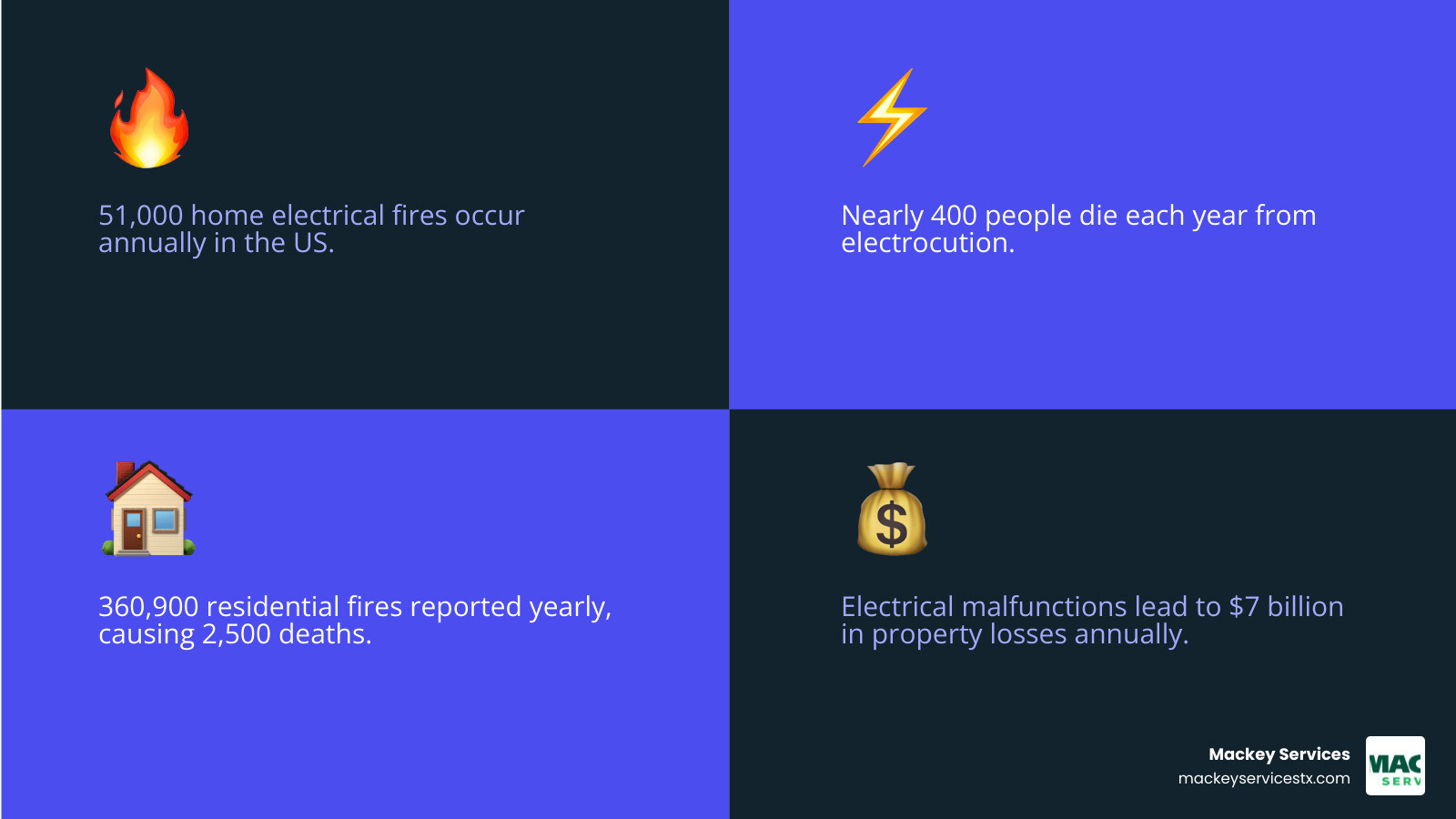
Every year, roughly 51,000 home electrical fires occur across the United States, and nearly 400 people die from electrocution. A significant portion of those incidents trace back to improper wiring or amateur repairs. In the Greater Houston area, older homes, high humidity, and aging electrical systems add even more complexity to the picture.
The appeal of DIY electrical work is understandable. It feels like a quick fix, it seems straightforward, and YouTube makes it look easy. But electricity is unforgiving. Even with the breaker switched off, some wires can still be live. A loose connection hidden inside a wall can work fine for months — then arc and start a fire when no one expects it.
This guide breaks down exactly where the safe line is, what the law requires in Texas, and when calling a licensed electrician isn't just the smart choice — it's the only safe one.
The Real Risks: Is It Safe to Do Your Own Electrical Work?
When we ask ourselves, "is it safe to do your own electrical work," we have to look at the cold, hard numbers. In April 2026, safety standards are more rigorous than ever, yet residential building fires remain a massive threat. Nationwide, an estimated 360,900 residential fires are reported annually, leading to nearly 2,500 deaths and $7 billion in property losses. Electrical malfunction is a leading cause of these tragedies.
The dangers aren't just about fire; they are about immediate physical harm. Approximately 400 electrocutions occur in the United States each year. About 15% of these are related to household wiring and consumer products like power tools. Even a standard 120-volt household outlet carries enough current to stop a human heart if the conditions are right.
Beyond the shock itself, DIYers face the risk of an arc flash—a type of electrical explosion that happens when a connection is bridged improperly—and thermal overloads. These overloads occur when a circuit is asked to carry more power than it was designed for, leading to melted insulation and hidden embers inside your walls. This is why Common Electrical Problems in Older Homes are so dangerous; many older systems simply weren't built for the power demands of modern life.
Understanding your system is the first step toward safety. For instance, knowing What's the Difference Between an Electrical Panel and a Circuit Breaker can help you identify when a problem is a simple trip or a sign of a failing panel that requires professional intervention.
Is it safe to do your own electrical work for minor fixture changes?
For very basic maintenance, the answer is generally yes. Tasks like replacing a burnt-out light bulb or installing battery-powered LED strips under your cabinets are perfectly safe for homeowners. We also encourage homeowners to take charge of their safety by installing and testing battery-powered smoke alarms and carbon monoxide detectors.
Keeping your home safe also involves Understanding GFCI Outlets and Why They Matter. These outlets are designed to shut off power instantly if they detect a leak of current, protecting you from shocks in wet areas like kitchens and bathrooms. While you can certainly clean the exterior of your light fixtures (with the power off!) or swap a battery, the moment you have to touch the actual copper wiring, the risk level jumps significantly.
When is it safe to do your own electrical work on existing circuits?
There are a few "low-stakes" tasks that most homeowners can handle:
- Resetting a tripped breaker: If your toaster kills the power, flipping the switch back to "on" is standard. However, if it trips repeatedly, that’s a sign of a deeper issue.
- Testing outlets: Using a simple plug-in tester to ensure your outlets are grounded is a great DIY habit.
- Safe power strip usage: Ensuring you aren't "daisy-chaining" power strips (plugging one into another) is vital for fire prevention.
- Unplugging appliances: Before doing any cleaning or minor repair on a toaster or lamp, always pull the plug.
Knowing What Does GFCI Mean is also helpful here. If a GFCI outlet trips, pressing the "reset" button is a safe DIY task. But if the outlet won't reset, or if you notice a burning smell, it's time to put down the screwdriver and call for help.
Knowing the Limits: Professional vs. DIY Projects
The National Electrical Code (NEC) is the gold standard for safety, and it is updated every three years. As of April 2026, the code requires specific protections like Arc-Fault Circuit Interrupters (AFCI) in almost all living areas. Most DIYers aren't keeping up with these thousand-page manuals, which is how code violations happen.
| Homeowner DIY Tasks | Licensed Electrician Required |
|---|---|
| Changing a light fixture (existing box) | Electrical Panel Upgrade Stafford TX |
| Replacing a standard wall switch | Electrical Installation Nassau Bay TX |
| Testing GFCI/AFCI buttons | Installing new 240V circuits |
| Low-voltage doorbell wiring | Running outdoor underground conduit |
| Cleaning vent covers | Troubleshooting flickering whole-home lights |
High-voltage systems, specifically 240V circuits used for heavy appliances, are never appropriate for DIY. A 240-volt shock delivers roughly four times the energy of a standard outlet, making it significantly more lethal.
Projects That Always Require a Licensed Electrician
Some projects carry such a high risk of fire or death that they should never be attempted by anyone without a license.
- Main Panel Work: Your electrical panel is the heart of your home. Any work involving the main lugs or Electrical Panel Replacement Houston TX involves massive amounts of current that cannot be turned off by a simple breaker. One slip can cause a fatal arc flash.
- Whole-Home Rewiring: Whether it's House Rewiring League City TX or Whole Home Rewiring Texas City TX, the complexity of balancing loads and ensuring proper grounding across thousands of feet of wire is a job for experts.
- EV Charger Installation: Modern electric vehicle chargers pull a massive, sustained load. If the wiring isn't perfectly sized and torqued, the heat buildup can easily start a garage fire.
- Outdoor and Underground Wiring: Water and electricity are a deadly mix. Running power to a shed, pool, or hot tub requires specialized conduit and depth-specific trenching that must meet strict municipal codes.
The Hidden Consequences of Improper DIY Wiring
The risks of DIY electrical work aren't always immediate. We often see "successful" DIY projects that look fine on the surface but hide dangerous secrets. A loose neutral connection or a "backstabbed" wire (where the wire is simply pushed into a hole rather than wrapped around a screw terminal) might work for months. However, as electricity flows, it creates heat. Over time, that heat causes the connection to expand and contract, eventually leading to a spark or a melted outlet.
There are also legal and financial headaches to consider. If you perform unpermitted work and it leads to a fire, your insurance company may deny your claim entirely. Most policies have exclusions for work not performed by a licensed professional. Furthermore, when you go to sell your home, a professional inspection will likely catch the non-compliant work. This can lead to a loss in property value or a cancelled sale until you pay for an Electrical Repair Pasadena TX to bring everything up to code.
In some jurisdictions, you may even need a "Certificate of Acceptance" to prove the work was inspected. Without it, you’re essentially sitting on a liability. Whether you need an Electrical Repair West University Place TX or just a safety check, knowing When is Home Rewiring Necessary can save you from these hidden consequences.
Essential Safety Protocols for Homeowners
If you are determined to handle very basic tasks like changing a light switch or a faceplate, you must follow strict safety protocols. "Guessing" if the power is off is how most accidents happen.
- Non-Contact Voltage Testers: Never touch a wire without using one of these first. They glow or beep when they sense electricity, even through insulation.
- Insulated Tools: Always use screwdrivers and pliers with rubberized, insulated grips rated for electrical work.
- Personal Protective Equipment (PPE): Safety glasses and gloves are non-negotiable.
- Lockout-Tagout: If you turn off a breaker to work on a room, make sure no one else in the house flips it back on while you’re mid-task. Tape the breaker shut and leave a note.
- Circuit Identification: Clearly label your panel so you know exactly which breaker controls which room.
We also highly recommend investing in Surge Protection Alvin TX. Understanding How Surge Protectors Work and Their Many Benefits is key; they don't just protect your TV from lightning; they help manage the "dirty power" and small surges that can wear down your DIY connections over time.
Frequently Asked Questions about DIY Electrical Safety
Is it legal to do my own electrical work in Texas?
In many parts of Texas, including the Greater Houston area, there are "owner-occupant" exceptions that allow you to pull a permit for your primary residence. However, this doesn't mean you can just start wiring. You still have to apply for the permit, pay the fees, and—most importantly—pass a rigorous inspection by a municipal official.
In some cities, you may even be required to pass a basic written exam to prove you understand the NEC before they will issue a homeowner permit. If you're in a rental property, a commercial building, or a home you don't live in full-time, DIY electrical work is strictly illegal. It’s often much simpler and safer to hire a qualified Electrician Nassau Bay TX who already knows the local building department's quirks.
Can DIY electrical work void my homeowners insurance?
Yes, it absolutely can. Insurance companies are in the business of assessing risk. If a fire investigation determines that the source of a blaze was a junction box you installed yourself without a permit or a license, they can argue that you increased the risk beyond what the policy covers. This can leave you responsible for hundreds of thousands of dollars in damages. Using a licensed professional provides a "paper trail" of safety that protects your liability coverage.
How do I know if my home has dangerous outdated wiring?
If your home was built before the 1980s, there’s a high chance you have outdated components. Look for these red flags:
- Knob and Tube: Porcelain cylinders and tubes used in very old homes. They lack a ground wire and the insulation is often brittle and falling off.
- Aluminum Wiring: Common in the 60s and 70s, aluminum expands and contracts more than copper, leading to loose, fire-prone connections.
- Backstabbed Outlets: If you pull an outlet out and the wires are pushed into the back rather than screwed to the side, you have a major fire hazard.
- Flickering Lights: A sign of loose connections or an overloaded system.
If you see these, don't try to patch them. Knowing How to Choose the Right Electrician for Your Needs is the first step toward a permanent, safe solution.
Conclusion
At the end of the day, your home should be your sanctuary, not a source of danger. While the "Do It Yourself" spirit is a big part of Texas culture, electricity is one area where professional expertise is non-negotiable.
At Mackey Services, we bring 30 years of experience to every job in the Greater Houston Area. From Alvin to Pearland and League City to Houston, we’ve seen the aftermath of DIY projects gone wrong, and we’re here to make sure that doesn't happen to you. With our A+ BBB rating and commitment to family-like service, we ensure your home stays comfortable and, above all, safe.
Don't gamble with your family's safety. Whether you need a simple repair or a complex panel upgrade, trust a licensed Electrician TX to get the job done right the first time.
Contact our licensed professionals for safe electrical solutions today and let us take the "shock" out of your home maintenance.
Ready for a better day?
One call handles it all — HVAC, electrical, and generators across the Texas Gulf Coast. Less to pay. Better day. That's the Mackey way.
Mon–Fri: 7 AM – 8 PM · Sat: 8 AM – 5 PM · Licensed & insured · #TACLA 112769C · #TECL 558211