
Frosty Vents and Warm Air: Spotting Low Refrigerant Signs
Spot low refrigerant signs in your AC system: warm air, frozen coils, high bills. Learn causes, risks & call pros in Houston!
What is Refrigerant and Why is it Essential?
Low refrigerant signs in your AC system are something every Houston-area homeowner should know — especially as temperatures climb heading into summer 2026. If your AC is running but your home just won't cool down, low refrigerant could be the reason.
Here are the most common signs your AC is low on refrigerant:
- Warm or lukewarm air blowing from vents
- Ice or frost forming on refrigerant lines or the evaporator coil
- Longer-than-normal cooling cycles
- Hissing or bubbling sounds from the unit
- Short cycling (AC turns on and off frequently)
- Rising energy bills without a change in usage
- Higher indoor humidity than usual
Your AC system runs on refrigerant — a chemical compound that absorbs heat from inside your home and releases it outside. It cycles through your system in a closed loop, meaning it should never run out under normal conditions. If levels are low, there is almost always a leak somewhere in the system. Left unchecked, that leak can wear out your compressor, freeze your coils, and leave you sweltering on the hottest days of the year.
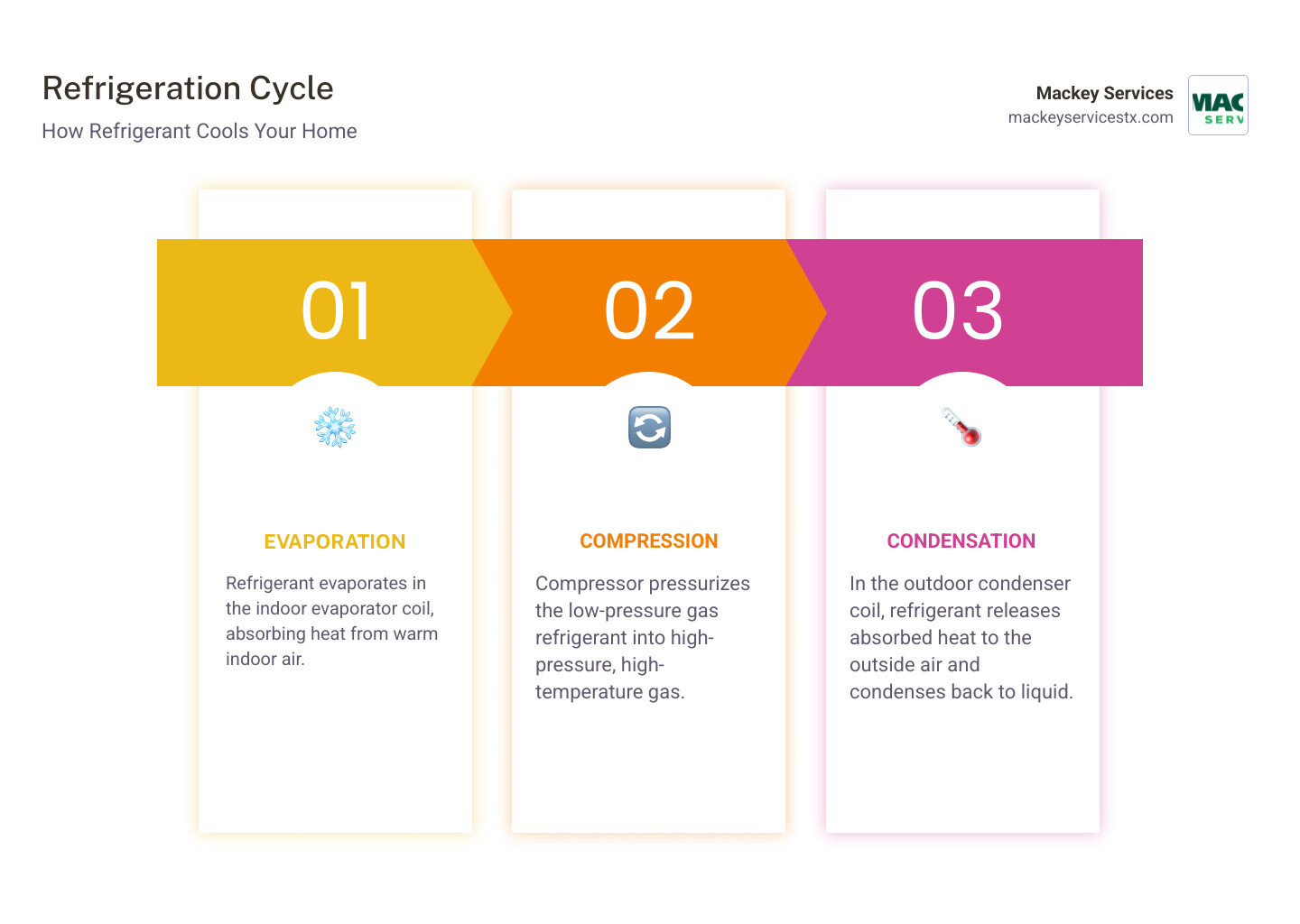
To understand why low refrigerant signs in your AC system are such a big deal, we first need to look at what refrigerant actually does. Think of refrigerant as the "lifeblood" of your air conditioner. It is a special chemical compound that has a very low boiling point, allowing it to change from a liquid to a gas and back again quite easily.
This phase change is the secret to cooling. As the refrigerant evaporates in your indoor evaporator coil, it pulls thermal energy (heat) out of your indoor air. It then travels to the outdoor unit, where the compressor squeezes it, turning it into a high-pressure, high-temperature gas. The condenser coil then releases that captured heat into the Texas air.
Without enough refrigerant, this thermal energy transfer simply cannot happen efficiently. As we move into April 2026, efficiency standards are stricter than ever, and a system with low levels will struggle to meet them. If you want to keep your home comfortable while managing costs, following Air Conditioning Service Tips to Save Energy starts with ensuring your refrigerant charge is exactly where the manufacturer intended.
7 Low Refrigerant Signs in Your AC System to Watch For
When your system is low on "juice," it won't just stop working overnight. Instead, it will give you several warning signs. Here is what we tell our neighbors in Dickinson and League City to look for:
- Warm Air from Vents: This is usually the first thing people notice. If the air coming out of your supply registers feels lukewarm or "room temp," the refrigerant isn't absorbing enough heat to cool the air down.
- Ice on Refrigerant Lines: You might see white frost or solid ice on the copper lines leading to your outdoor unit. This happens because low pressure causes the temperature of the refrigerant to drop below freezing, turning moisture in the air into ice.
- The "Never-Ending" Cycle: Does your AC seem to run for hours without stopping? When refrigerant is low, the system has to work twice as hard to reach the temperature on your thermostat.
- Hissing or Bubbling Noises: Since refrigerant is under pressure, a leak often makes a sound. A hissing sound usually indicates a gas leak, while bubbling can mean the refrigerant is leaking in its liquid state.
- Short Cycling: Sometimes, the system will turn on and off rapidly. This happens because the low-pressure switch trips to protect the compressor from damage.
- Spiking Utility Bills: If your electric bill is suddenly much higher than it was in April of last year, your AC is likely struggling and consuming more power to compensate for low cooling capacity. Check out our AC Maintenance Houston TX Guide for more on how efficiency impacts your wallet.
- Water Near the Furnace: When the ice on your coils eventually melts, it can overwhelm the condensate drain pan, leading to puddles around your indoor unit.
Identifying Low Refrigerant Signs in Your AC System via Airflow
Aside from the temperature, the way the air moves through your home can be a major clue. When refrigerant levels drop, the evaporator coil can become partially or fully encased in ice. This ice acts as a physical barrier, blocking airflow.
You might notice that the air coming out of the vents feels weak or "thin." Furthermore, because the AC isn't running long enough or effectively enough to remove moisture, your home might feel "sticky" or humid. If you notice these issues along with a thermostat that never seems to match the actual room temperature, it’s a strong indicator of a problem. Sometimes, these symptoms can also mean your HVAC air compressor needs repair, so a professional diagnosis is key.
Why Low Refrigerant Signs in Your AC System Lead to Frozen Coils
It seems counterintuitive—how can a system that is failing to cool actually freeze up? It all comes down to pressure. In a healthy AC system, the refrigerant is kept at a specific pressure that allows it to stay just above freezing while it absorbs heat.
When there is a leak, the pressure inside the coils drops. According to the laws of physics, when pressure drops, the temperature also drops. The coils can quickly fall below 32 degrees Fahrenheit. Any humidity in our Greater Houston air will instantly freeze onto those coils. Once the ice starts forming, it insulates the coil, preventing it from absorbing heat and causing the ice to grow even thicker. If this happens to you, knowing what to do when your AC unit freezes up is vital—the first step is always to turn the system off! For residents needing immediate help, we offer expert AC Repair in Alvin, TX.
Primary Causes of Refrigerant Leaks and System Risks
Refrigerant doesn't just evaporate or get "used up" like gasoline in a car. If it's low, it’s because it escaped. Here are the primary culprits we see in the field:
- Formicary Corrosion: This is a fancy term for tiny pinhole leaks caused by a chemical reaction between the copper coils and pollutants in the air (like cleaning products or building materials).
- Vibration: Over years of operation, the natural vibration of the unit can cause copper lines to rub against each other or the chassis, eventually wearing a hole through the metal.
- Deteriorating Seals: Rubber seals and joints can dry out and crack over time, especially in older units.
- Physical Damage: Lawn mowers, weed whackers, or even curious local wildlife can occasionally puncture a line.
Running a system with low refrigerant is risky. It puts immense strain on the compressor—the most expensive part of your AC. Without enough refrigerant to cool the compressor motor, it can overheat and suffer a mechanical failure. If your unit is over 10-15 years old and experiencing frequent leaks, it might be one of the 7 signs it's time for a new air conditioner. For those in the northern suburbs, we provide reliable Air Conditioning Repair in Cypress, TX to catch these issues before they turn into total system failures.
Professional Diagnosis vs. DIY Dangers
We know it's tempting to grab a "recharge kit" from a big-box store, but we strongly advise against it. Refrigerant is a regulated chemical that requires specialized tools and an EPA Section 608 certification to handle safely.
When a Mackey Services technician arrives for an AC service in Galveston, TX, we don't just "top it off." Adding more refrigerant without fixing the leak is like trying to fill a bucket with a hole in the bottom—it's a waste of money and bad for the environment.
Our pros use electronic leak detectors or fluorescent dyes to find the exact source of the leak. We then evacuate the remaining refrigerant using a vacuum pump, repair the leak, and recharge the system to the exact manufacturer specifications. This level of precision is one of the many benefits of routine AC maintenance; we catch small leaks before they leave you in a sweat.
Frequently Asked Questions about AC Refrigerant
Can I add refrigerant to my AC system myself?
No. Aside from the legal regulations, DIY "recharge kits" often contain "leak stop" additives that can gum up your internal valves and ruin your compressor. Furthermore, without high-tech gauges, it is very easy to overcharge the system, which can be just as damaging as having too little refrigerant.
What other problems mimic low refrigerant?
Sometimes, low refrigerant signs in your AC system are actually caused by other issues. A very dirty air filter or a failing blower motor can also cause frozen coils and poor cooling. This is why we recommend AC Maintenance in Kemah, TX to rule out simple airflow problems before diving into more complex repairs.
What should I do immediately if I suspect a leak?
If you see ice on your unit or the air is blowing warm, turn the AC off at the thermostat immediately. Running a struggling system can cause the compressor to burn out. Once the system is off, give us a call. For those on the island, we offer dedicated Air Conditioning Repair in Tiki Island, TX.
Conclusion
Spotting low refrigerant signs in your AC system early can save you from a major headache and a very expensive repair bill. Whether you are hearing hissing noises or dealing with a frozen evaporator coil, prompt professional action is the best way to protect your home’s comfort.
At Mackey Services, we bring 30 years of experience and an A+ BBB rating to every job. We serve the entire Greater Houston Area, from our home base in Dickinson to Pearland, League City, and beyond. We pride ourselves on providing reliable, family-like service that ensures your comfort remains unwavering, even in the peak of summer.
If you’re worried about your AC’s performance, check out our Best AC Repair League City TX Guide or Schedule Professional Air Conditioning Services with us today. We’ll get your system charged up and running right!
Ready for a better day?
One call handles it all — HVAC, electrical, and generators across the Texas Gulf Coast. Less to pay. Better day. That's the Mackey way.
Mon–Fri: 7 AM – 8 PM · Sat: 8 AM – 5 PM · Licensed & insured · #TACLA 112769C · #TECL 558211