
A Shocking Discovery and Signs You Have an Electrical Emergency
Spot burning smells, flickering lights & shocks? Learn when should you call an electrician for emergencies in Houston homes. Act now!
The Electrical Warning Signs Every Houston Homeowner Needs to Know
When should you call an electrician is one of the most important safety questions you can ask as a homeowner. The short answer: sooner than you think.
Here are the most common signs it's time to call a professional:
- Burning smell or scorch marks near outlets, switches, or your electrical panel
- Sparking outlets or fixtures
- Flickering or dimming lights, especially when appliances kick on
- Frequent circuit breaker trips or blown fuses
- Warm or hot outlets and switch plates
- Buzzing, crackling, or humming sounds from walls or electrical components
- Electrical shocks or tingling sensations when touching switches or appliances
- Water damage near any electrical component
- Outdated wiring (aluminum, knob and tube, or cloth-insulated)
- Heavy reliance on extension cords due to too few outlets
Any one of these signs is reason enough to pick up the phone.
It's easy to brush off a flickering light or a tripped breaker as a minor annoyance. But electrical problems rarely stay small. More than 50,000 house fires are caused by electrical malfunctions every year in the U.S., causing an estimated $1.3 billion in property damage annually. In many of those cases, the warning signs were there long before the fire started.
For Houston homeowners especially, the combination of aging housing stock, extreme heat, and storm-related water damage creates real and ongoing electrical risks. Knowing what to watch for can make all the difference.
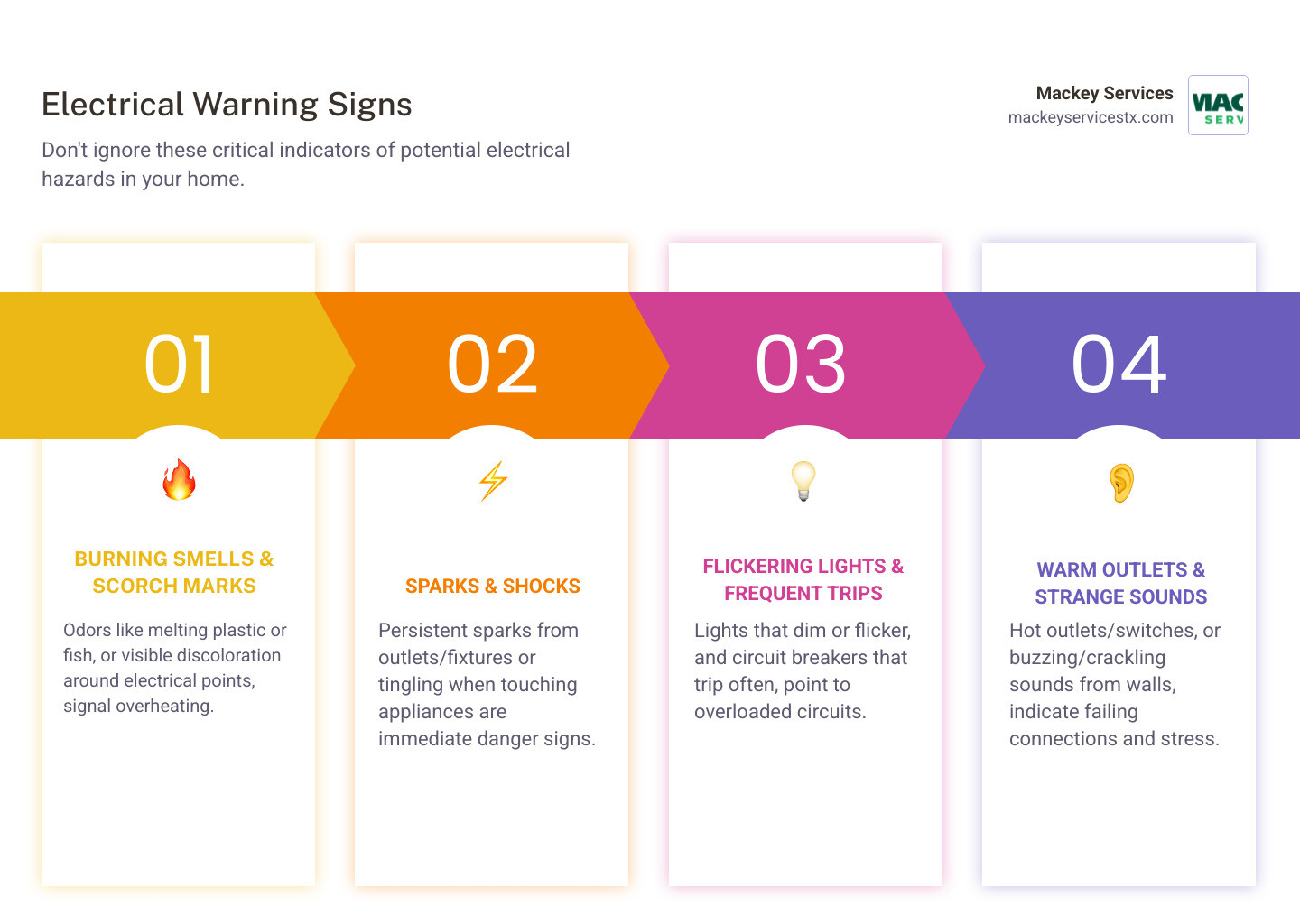
Immediate Red Flags: When Should You Call an Electrician for Emergencies?
In home maintenance, some things can wait until Monday morning. Electrical emergencies are not among them. If you detect a burning smell—often described as acrid, like melting plastic, or even a strange "fishy" odor—you are likely smelling the insulation on your wires melting. This is a massive red flag. When insulation melts, wires can touch, leading to arcing and immediate fire hazards.
If you notice scorch marks or discoloration around your outlets, don't just paint over them. This indicates that heat is building up behind the wall, likely due to a loose connection or a short circuit. Similarly, if you see sparks flying when you plug in a lamp or flip a switch, the system is telling you that something is wrong. While a tiny, momentary blue spark can sometimes be normal when a device is first powered, large, yellow, or persistent sparks are a sign of danger.
In these situations, the first step is safety. If you can do so safely, turn off the power at the main breaker and get everyone out of the house. Then, you need professional Electrical Repair Houston TX immediately. Dealing with live electricity and potential fire hazards is never a DIY job. For a deeper look at how to handle these crises, check out our Electrical Repair Houston TX Guide.
Persistent Nuisances That Signal Deeper Issues
We’ve all lived in a house where the lights dim for a split second when the air conditioner kicks on. In the humid heat of a Houston summer, our HVAC systems work overtime. However, just because it’s common doesn’t mean it’s safe. Frequent voltage fluctuations and circuit overloads are signs that your home’s electrical "heart" isn't strong enough to pump power to all your modern gadgets.
Statistics show that about 3 out of 10 homeowners deal with frequent circuit breaker trips. If you find yourself walking to the garage or the side of the house once a week to flip a switch back on, you aren't just dealing with a "quirky" house; you're dealing with a system that is struggling to keep up.
Why Flickering Lights Mean You Should Call an Electrician
Before you panic, check the bulb. A loose or dying bulb is the most common cause of a single flickering light. But if multiple lights in a room—or throughout the whole house—are flickering, the problem is deeper. This often indicates a loose service conductor in your main panel or an overloaded circuit.
When heavy appliances like your washing machine or microwave cause the lights to dip, it’s a sign that the appliance is pulling more current than the circuit can safely provide. This can lead to heat buildup and eventual failure. If you're in the suburbs and need a hand, you should Find a Certified Electrician for Electrical Repair Friendswood Who is Available This Week to diagnose the load balance of your home.
Frequent Breaker Trips and Blown Fuses
A circuit breaker has one job: to trip when it senses too much electricity. It is a safety device designed to prevent fires. If it trips constantly, it’s doing its job, but it’s also telling you that the circuit is overloaded, or there is a short circuit, ground fault, or arc fault.
If your home still uses a fuse box, or if your breaker panel is more than 25 years old, it might be time for an Electrical Panel Replacement Houston TX. Modern homes use significantly more power than homes did in the 1970s or 80s. To understand the long-term benefits of an upgrade, read our guide on When Does It Make Sense to Replace an Electrical Panel.
Physical Sensations and Sounds You Can't Ignore
Electricity should be silent and invisible. If you can hear it or feel it, you have a problem. Sounds like buzzing, humming, or crackling are often the result of "arcing." This happens when electricity tries to jump across a gap in a loose connection. Arcing creates intense heat—hotter than the surface of the sun in some cases—which can ignite the wooden studs and drywall inside your walls.
Buzzing, Crackling, and When Should You Call an Electrician for Shocks
Have you ever touched a toaster or a light switch and felt a tiny "zap" or a lingering tingling sensation? Many people mistake this for static electricity, but if it happens consistently with a specific appliance or switch, it’s a sign of a grounding problem.
This means electricity is straying from its intended path and using the metal frame of the appliance (and your body) to find a way to the ground. This is incredibly dangerous and can lead to a lethal electrocution. This is a primary reason Why DIY Electrical Work is Hazardous; you can't see the danger until it's too late. If you've ever wondered What Does an Electrician Do, one of their most vital tasks is ensuring every circuit in your home is properly grounded to keep you safe.
Warm Outlets and Switch Plates
An outlet should never feel warm to the touch, regardless of how many things are plugged into it. If a switch plate or outlet is warm, it indicates high resistance in the wiring. Think of it like water trying to squeeze through a tiny, clogged pipe—the friction creates heat.
Over time, this heat degrades the wire and the plastic outlet, creating a massive fire risk. Installing Surge Protection Houston TX can help protect your sensitive electronics from spikes, but it won't fix a failing, hot outlet. That requires an electrician to tighten connections or replace damaged wiring.
Outdated Systems and Hidden Hazards
In April 2026, we are seeing many older homes in areas like River Oaks and Galveston reaching a point where their original wiring simply can't cope. About half of the homes in the U.S. were built before 1973, and that date is a significant milestone in electrical history.
| Wiring Type | Era | Risk Level | Common Issues |
|---|---|---|---|
| Knob and Tube | Pre-1940s | Very High | No ground wire, brittle insulation, fire risk if covered by modern insulation. |
| Aluminum Wiring | 1965–1975 | High | Expands/contracts more than copper, leading to loose connections and fires. |
| Copper Wiring | Modern | Low | Stable, safe, and handles high loads efficiently. |
If your home was built during the aluminum wiring era (the mid-60s to mid-70s), you need a professional inspection. Aluminum is softer than copper and tends to "creep" or loosen at connection points. This is why House Rewiring Houston TX is such a popular service for older properties.
Other hazards include cloth-insulated wiring, which becomes brittle and flakes off over time, leaving bare wires exposed inside your walls. If you're unsure about the state of your home's "veins," check out our resource on When is Home Rewiring Necessary to learn about the safety standards your home should meet.
Modern Demands and Environmental Risks
We live in a world of "plug-in" everything. From EVs to smart fridges, our demand for power is higher than ever. If you find yourself using a "power strip octopus" or running extension cords under rugs, your home is telling you it needs more outlets. Extension cords are meant for temporary use only; using them long-term can lead to overheating and tripping hazards.
In the Greater Houston Area, moisture is another major player. Whether it’s from high humidity or storm flooding, water and electricity are a lethal combination. If you see rust on your service panel or near your outlets, it means moisture has compromised the metal components.
This is where understanding What Does GFCI Mean becomes vital. Ground Fault Circuit Interrupters are those outlets with "Test" and "Reset" buttons. They are required in wet areas like kitchens, bathrooms, and garages because they can shut off power in a fraction of a second if they detect a leak.
If you’re constantly tripping breakers in your home office or kitchen, you might be asking, "How Many Amps Do I Need in My House?" Most modern homes require at least 200-amp service to safely power today's lifestyle. For those in the Dickinson area looking for help, we provide the Best Electrical Repair in Dickinson TX to help you modernize your system.
Frequently Asked Questions about Electrical Safety
What does a "mystery" light switch signify?
We've all seen them—a switch on the wall that doesn't seem to turn anything on. Often, these were intended for "switched outlets" where a lamp would be plugged in. However, if a switch does nothing, it could also be the result of a botched DIY project where a previous owner disconnected a fixture but left the switch live. If a mystery switch feels warm or makes noise, call an electrician immediately to ensure there isn't a "live" wire hanging out behind your drywall.
Is rust on my electrical panel a serious concern?
Yes. Rust indicates that water has been present inside or around your electrical service. This can lead to corrosion of the bus bars and breakers, preventing them from tripping when they should. A "frozen" breaker that won't trip during a surge is one of the leading causes of electrical fires.
Why are extension cords dangerous for long-term use?
Extension cords are not designed to carry a permanent load. They are often made of thinner gauge wire than the wires inside your walls. When used long-term, they can overheat, and the insulation can degrade. Furthermore, running them under rugs or furniture traps heat and can lead to a fire that you won't see until it's too late.
Conclusion
At Mackey Services, we’ve spent 30 years helping our neighbors across the Greater Houston Area stay safe and comfortable. With our A+ BBB rating and deep roots in communities like Dickinson, League City, and Pearland, we treat every home like it’s our own.
Electrical issues can be scary, but they don't have to be. By recognizing the warning signs early—from the acrid smell of a hot outlet to the nuisance of a flickering kitchen light—you can protect your family and your property. Whether you need a simple repair or a full system upgrade, we’re here to provide the reliable, family-like service you deserve.
When you're ready to secure your home's future, contact a trusted Electrician Houston TX from Mackey Services. We’ll make sure your "shocking discovery" turns into a safe, well-lit home.
Ready for a better day?
One call handles it all — HVAC, electrical, and generators across the Texas Gulf Coast. Less to pay. Better day. That's the Mackey way.
Mon–Fri: 7 AM – 8 PM · Sat: 8 AM – 5 PM · Licensed & insured · #TACLA 112769C · #TECL 558211