
Signs Your Home Needs an Electrical Panel Upgrade
Discover the signs your home needs an electrical panel upgrade and learn when to schedule a safe, professional replacement.
Is Your Home's Electrical Panel Keeping Up? Key Warning Signs to Know
Knowing the signs your home needs an electrical panel upgrade could be the difference between a safe home and a serious hazard. Electrical panels quietly manage every circuit in your house, but they don't last forever — and in the Greater Houston area, where summer heat pushes HVAC systems hard and storms can stress electrical infrastructure, an aging or overloaded panel becomes a real concern fast.
Here are the most common signs your home needs an electrical panel upgrade:
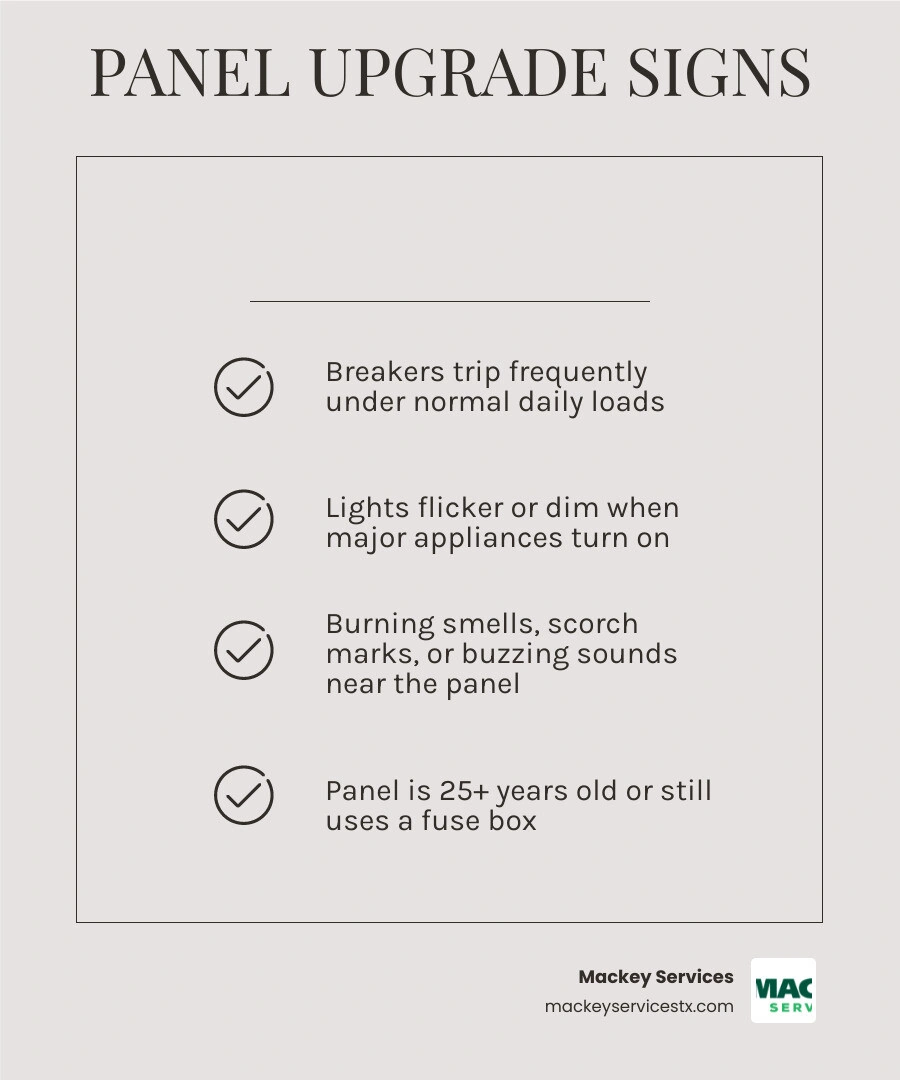
- Breakers trip frequently — especially under normal, everyday loads
- Lights flicker or dim when large appliances like your AC or microwave kick on
- Burning smells, scorch marks, or buzzing sounds near the panel
- The panel feels warm or hot to the touch
- You still have a fuse box instead of a circuit breaker panel
- Your panel is from a recalled brand such as Federal Pacific Electric or Zinsco
- You're planning to add an EV charger, heat pump, or major appliance
- Your panel is 25 years old or more
- You rely heavily on power strips because you don't have enough outlets or circuits
- Your home still runs on 100-amp service in an era when most modern homes need 200 amps
Most residential electrical panels have a functional lifespan of 25 to 40 years. According to the Electrical Safety Foundation International, roughly 51,000 home electrical fires occur in the U.S. every year — and many are linked to aging or faulty panels. With 35 to 45 million U.S. homes potentially needing panel upgrades to support modern electrification demands, this isn't a minor issue to put off.
If any of the signs above sound familiar, your panel may be overdue for a professional inspection.
What Is an Electrical Panel and How Long Does It Last?
To understand why your panel might need help, it helps to know exactly what this device does. Often called the breaker box or service panel, your electrical panel is the central nervous system of your home’s power supply. It receives high-voltage electricity from your local utility company and distributes it across individual branch circuits to power your lights, outlets, appliances, and electronics.
Inside the panel, circuit breakers serve as safety switches. If a circuit draws too much current, the breaker trips, cutting off the power to prevent the wires from overheating and catching fire.
How long can you expect this hardworking piece of equipment to last? Most residential electrical panels have a functional lifespan of 25 to 40 years.
However, many homes across the Greater Houston Area are running on aging infrastructure. If you live in an older neighborhood in Pearland, Pasadena, or Webster, your home might still be relying on its original, decades-old panel. Over time, internal components degrade, connection points loosen, and the unit simply wears out.
Furthermore, our local climate puts extra stress on these systems. High coastal humidity in Galveston and Texas City, combined with heavy summer air conditioning loads, accelerates wear and tear. If you are trying to figure out if your system is still up to par, our Electrical Panels Friendswood TX Guide provides an excellent, localized breakdown of what to expect from your home’s electrical hub.
Telltale Signs Your Home Needs an Electrical Panel Upgrade
Recognizing the early warning signs of panel failure can prevent minor electrical annoyances from turning into major emergencies. Your panel will usually try to tell you when it is struggling.
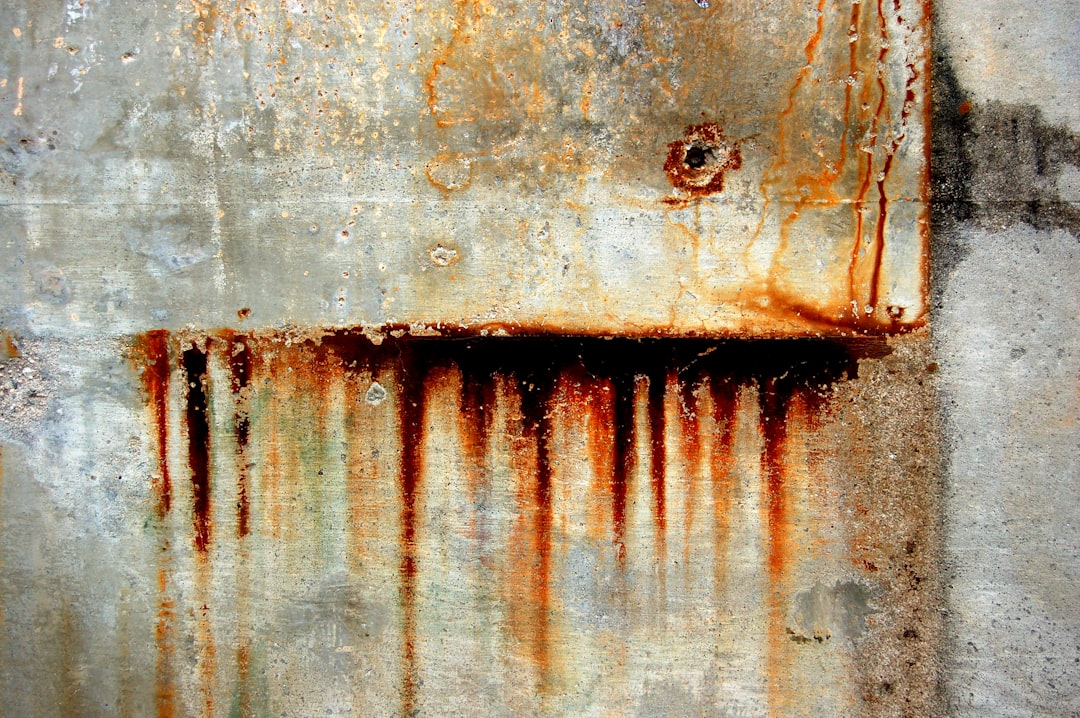
Physical damage, rust, and corrosion are some of the most obvious visual clues. In our humid Texas climate, moisture can find its way into panels located in garages, utility closets, or outdoor walls. If you open your panel door and see orange rust, white powdery corrosion, or water stains, the structural integrity of your electrical connections is compromised. Corroded connections create electrical resistance, which generates dangerous heat.
Other physical warning signs include:
- A panel that is warm or hot to the touch: Your breaker box should never radiate heat.
- Burning smells or scorch marks: If you notice a plastic or metallic burning odor near the box, or see black discoloration on the breakers, shut off power and call a professional immediately.
- Buzzing, humming, or sizzling sounds: These noises usually indicate loose wiring, a failing breaker, or dangerous electrical arcing.
Another incredibly common sign is flickering or dimming lights. If your overhead lights temporarily lose brightness whenever your central AC compressor kicks on, your system is struggling with the sudden voltage drop. To understand why this happens and what it means for your home’s safety, check out our guide on Flickering Lights: What It Means for Your Wiring.
Frequent Breaker Trips: A Clear Sign Your Home Needs an Electrical Panel Upgrade
Do you find yourself regularly making trips to the garage or utility room to flip a tripped breaker back on? While a tripped breaker is doing its job as a safety mechanism, frequent trips are a clear warning that your electrical demands are exceeding what your panel can safely deliver.
When you run too many high-draw appliances on the same line — such as running a microwave and a toaster simultaneously in the kitchen — the circuit becomes overloaded. The breaker trips to prevent the wires from melting.
However, if breakers trip under normal, everyday usage, it often means the panel itself is undersized or the breakers have grown weak with age. In older properties, outdated wiring configurations simply cannot handle modern lifestyles. To dive deeper into how these issues manifest in older properties, read our article on Common Electrical Problems in Older Homes.
Outdated Systems: Another Sign Your Home Needs an Electrical Panel Upgrade
If your home was built before 1980, your electrical panel might be outdated by design. The two most common culprits are old fuse boxes and recalled breaker panels.
Fuses were the standard safety device in homes built before the 1960s. Instead of flipping a switch when an overload occurs, a fuse contains a small wire that melts, breaking the circuit. While fuses are not inherently unsafe when used correctly, they are vastly outdated. They were designed for a time when a home’s entire electrical load consisted of a few lights, a refrigerator, and a radio.
Today, fuse boxes are often unsafely modified by homeowners who put in oversized fuses to stop them from blowing, which is an extreme fire hazard. Many insurance companies will refuse to write policies for homes with fuse boxes, or will charge incredibly high premiums.
Additionally, certain brands of circuit breaker panels installed between the 1950s and 1980s have documented safety defects. The most notable are:
- Federal Pacific Electric (FPE) Stab-Lok panels: Testing has shown that these breakers fail to trip under overload conditions up to 25% of the time, leading to thousands of electrical fires.
- Zinsco panels: These panels have a design flaw where the breakers can melt directly to the bus bar, preventing them from tripping and creating severe shock and fire hazards.
If your home in Dickinson, League City, or La Porte still has one of these brands, replacing it is a matter of safety, not just convenience. For a comprehensive look at choosing a safe, reliable replacement, see our Best Electrical Panels Dickinson TX Ultimate Guide.
When to Plan an Upgrade: Modern Demands and Electrification
The way we use electricity in our homes has changed dramatically. A standard home in 1970 had a fraction of the electrical devices we use today. Between high-efficiency HVAC systems, smart home networks, home offices, and charging our devices, our daily power consumption is immense.
Furthermore, we are in the midst of a massive shift toward home electrification. Many homeowners in communities like Clear Lake, League City, and Seabrook are installing:
- Level 2 EV Chargers: These typically require a dedicated 240-volt circuit supplying 40 to 50 amps of continuous current.
- Heat Pumps and Electric HVAC Systems: These offer incredible energy efficiency but require robust electrical support.
- Tankless Water Heaters & Hot Tubs: These high-draw appliances demand dedicated, high-amperage lines.
If your home currently runs on an older 100-amp panel, you likely do not have the physical space or the electrical capacity to support these modern upgrades. Upgrading to a standard 200-amp service panel provides the headroom needed for modern life.
| Feature / Capacity | 100-Amp Panel | 200-Amp Panel |
|---|---|---|
| Era Standard | Standard for homes built pre-1980 | Modern standard for new construction |
| Typical Space | 12 to 20 circuit slots | 30 to 42 circuit slots |
| EV Charger Support | Extremely limited; requires load management | Fully supports Level 2 charging |
| Major Appliance Support | Struggles with multiple high-draw electric appliances | Easily handles electric HVAC, dryers, and ranges |
| Expansion Headroom | Very little to none | High; plenty of space for future additions |
If you are planning home renovations, adding a room, or prepping your home for green energy upgrades, scheduling a panel replacement is the first step. You can read more about aligning these upgrades with modern standards in our guide on Residential Electric Panel Upgrade: Maximize 2025 Savings.
The Risks of Delaying and Why DIY Is Not an Option
Delaying a necessary electrical panel upgrade is a gamble with your home's safety. When an outdated or overloaded panel fails to trip, the excess current generates intense heat. This heat can melt wire insulation inside your walls, leading to arc faults and devastating electrical fires.
Beyond fire hazards, overloaded systems can cause frequent brownouts that damage sensitive electronics like computers, smart TVs, and expensive HVAC control boards. You may also face issues with insurance eligibility; many carrier companies require proof of a modern breaker panel before renewing a homeowner’s policy.
When it comes to performing the upgrade, this is absolutely not a do-it-yourself project.
Even if you turn off your home’s main breaker, the heavy-duty cables coming into the panel from the utility line remain fully energized with lethal levels of voltage. One slip of a tool can cause severe injury, electrocution, or arc flash explosions.
Upgrading a panel requires:
- Pulling local electrical permits to comply with municipal codes in cities like Houston, League City, or Pearland.
- Complex load calculations to ensure the new panel size matches your home’s demands.
- Coordination with local utility companies (like CenterPoint Energy or Texas City municipal power) to safely disconnect and reconnect service.
- Compliance with the National Electrical Code (NEC), including proper grounding, bonding, and the installation of modern Arc-Fault Circuit Interrupter (AFCI) and Ground-Fault Circuit Interrupter (GFCI) protection.
A licensed electrician has the training, specialized safety equipment, and code knowledge to complete this work safely and legally. For a complete look at how local codes and professional standards protect your property, read our article on Navigating Electrical Panels in League City: A Comprehensive Overview.
Frequently Asked Questions About Electrical Panels
How can I safely check my panel's amperage rating?
You can easily find your panel’s main amperage rating with a quick visual inspection.
- Locate your main electrical panel (usually found in the garage, utility room, basement, or on an exterior wall).
- Open the metal panel door.
- Look for the main circuit breaker, which is typically a large double-width switch located at the very top or bottom of the breaker columns.
- Read the number printed on the switch handle. It will usually say 100, 125, 150, or 200. This number represents your home’s total amperage capacity.
Safety First: Never remove the outer metal cover (the dead front) of the panel to look inside. Only look at the switches and labels visible when you open the simple swinging door. If there is no clear main breaker, or if the labels are faded and unreadable, consult a licensed electrician to verify your system's capacity safely.
What are the benefits of upgrading to a modern smart panel?
Upgrading to a modern smart panel or installing smart load management technology offers incredible benefits:
- Enhanced Energy Efficiency: Smart panels allow you to monitor your home's real-time energy consumption down to the individual circuit level via a smartphone app.
- Intelligent Load Management: If you are charging an EV and running your HVAC system, a smart panel can temporarily cycle down non-essential circuits to avoid overloading your electrical service. This can sometimes prevent the need for an expensive utility-side service line upgrade.
- Increased Home Value: Modern buyers look for homes with updated, smart-capable infrastructure.
- Safety Alerts: Get instant notifications if a circuit is drawing unusual amounts of power or behaving erratically.
How long does a professional panel replacement take?
A standard residential panel replacement typically takes 4 to 8 hours to complete. During this time, your home's power will be completely shut off.
A professional team handles all the heavy lifting, which includes coordinating with your local utility company to disconnect the power in the morning, removing the old box, installing the new panel, labeling the new breakers clearly, and coordinating the final municipal inspection to get your power safely restored by late afternoon.
Conclusion
Your electrical panel is the heart of your home’s safety and convenience. Ignoring the warning signs of an overloaded or outdated system puts your property, appliances, and family at risk. Whether you are dealing with flickering lights in Friendswood, frequent breaker trips in League City, or planning an exciting home renovation in Dickinson, upgrading your electrical service is one of the smartest investments you can make.
At Mackey Services, we have spent over 30 years providing reliable, family-like service and unwavering comfort to our neighbors across the Greater Houston Area. Our licensed, highly trained electricians are ready to evaluate your home's electrical health and provide safe, code-compliant upgrades.
Don't wait for a warning sign to turn into an emergency. Schedule your service with Mackey Services today to keep your home running safely and efficiently.
Ready for a better day?
One call handles it all — HVAC, electrical, and generators across the Texas Gulf Coast. Less to pay. Better day. That's the Mackey way.
Mon–Fri: 7 AM – 8 PM · Sat: 8 AM – 5 PM · Licensed & insured · #TACLA 112769C · #TECL 558211