
12 Summer Energy Efficiency Tips for Coastal Homes and Hot Humid Weather
Discover 12 summer energy saving tips for Gulf Coast homeowners: optimize thermostats, control humidity, seal leaks & slash AC bills in hot, humid weather!
Why Summer Energy Bills Hit Gulf Coast Homeowners So Hard
If you're looking for summer energy saving tips for Gulf Coast homeowners, here's a quick overview of the most effective steps you can take right now:
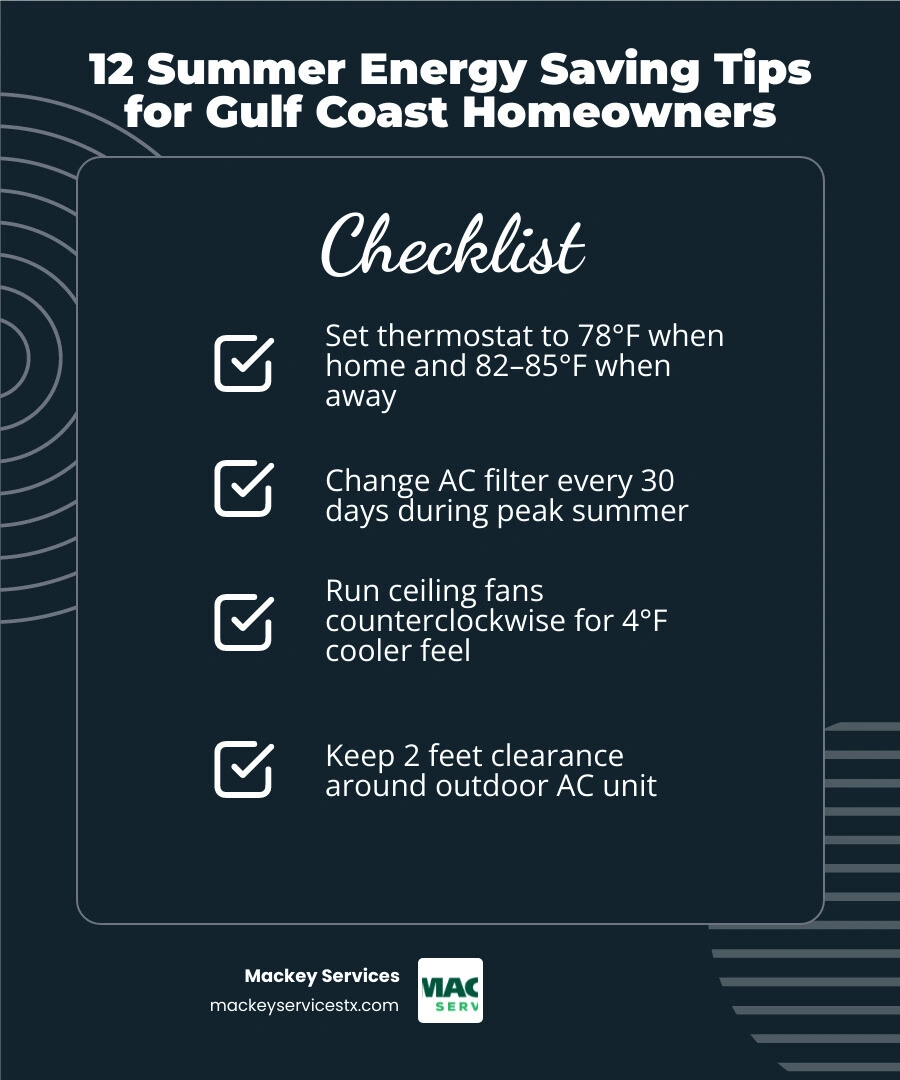
- Set your thermostat to 78°F when home and 82–85°F when away
- Change your AC filter every 30 days during peak summer months
- Run ceiling fans counterclockwise to feel up to 4°F cooler without lowering the thermostat
- Seal air leaks around doors, windows, and ductwork with caulk or weatherstripping
- Block solar heat gain with blackout curtains, solar screens, or window film on south- and west-facing windows
- Keep 2 feet of clearance around your outdoor AC unit and protect it from salt air corrosion
- Control indoor humidity between 45–55% to stay comfortable at higher thermostat settings
- Run heat-generating appliances like dryers and dishwashers after 9 PM
- Schedule two professional HVAC tune-ups per year — spring and fall
- Upgrade attic insulation to R-38 or higher to combat extreme attic heat
- Install a smart thermostat to automate savings during Houston's long cooling season
- Shade your outdoor AC unit with shrubs or trees to improve efficiency by up to 10%
Living on the Gulf Coast means summers are no joke. From Dickinson to League City, Houston-area homeowners deal with a punishing combination of intense heat, relentless humidity, and a cooling season that can stretch from March all the way through October. That's a long time to run an air conditioner — and your utility bill knows it.
Cooling can account for up to 50% of your home's total summer power bill. In a climate where your AC barely gets a break, that number adds up fast. But high bills aren't inevitable. The right combination of smart habits, proper maintenance, and a few targeted upgrades can make a real difference — keeping your home comfortable without sending your energy costs through the roof.
The challenge on the Gulf Coast isn't just heat. It's humid heat. That sticky, heavy air makes your home feel warmer than the thermostat reads, pushes your AC to work harder than it should, and creates conditions where mold and moisture problems can develop quickly. Understanding how heat actually enters your home — and where your system is losing efficiency — is the first step toward taking control.
Optimize Your Thermostat Settings for Maximum Savings
If we had to pick one starting point, thermostat settings would be near the top of the list. For most Gulf Coast homes, 78°F is the best baseline when you're home and awake. It strikes a solid balance between comfort and efficiency in hot, humid weather.
When you're away, bump it up to 82°F to 85°F. A helpful rule of thumb is the 4-by-4 rule: if you'll be gone for more than 4 hours, raise the temperature by about 4 degrees. That cuts unnecessary runtime without forcing your system to play catch-up all day.
A few important notes:
- Setting the thermostat super low does not cool the house faster
- Big temperature swings can make humidity control harder
- Keeping your fan set to "Auto" is usually better than "On" in summer, because constant fan operation can re-circulate moisture
Research shows each degree above 75°F can reduce the energy used for cooling by roughly 10% to 15%. Even if your actual results vary by home and system, the general point stands: small thermostat changes can make a noticeable difference.
If you've ever wondered whether nonstop cooling is normal, our guide on whether your AC should run 24/7 explains when long runtimes are expected and when they point to a problem. And because a clean, tuned system handles summer demand much better, regular upkeep also supports longer equipment life, as we explain in How Regular Maintenance Gives Your HVAC System a Longer Lifespan.
Smart Thermostats: The Best Summer Energy Saving Tips for Gulf Coast Homeowners
For Houston-area homeowners with long cooling seasons, smart thermostats are one of the easiest upgrades to appreciate quickly. They help by:
- Creating automatic schedules for workdays, weekends, and vacations
- Letting you adjust settings remotely from your phone
- Tracking runtime and indoor conditions
- Some models using occupancy sensors to reduce cooling in empty periods
Used correctly, smart thermostats can trim annual heating and cooling energy use by around 8% to 10%. In our climate, that matters because AC runs for so many months of the year.
They also help prevent common mistakes, like leaving the house for Galveston or League City errands and forgetting to raise the temperature before you go. If you're planning seasonal upkeep too, our AC Maintenance Houston TX Guide is a helpful next read.
Master Humidity Control and Airflow
Temperature is only half the comfort equation here. On the Gulf Coast, humidity can be the real troublemaker. A house at 78°F with high humidity can feel sticky and uncomfortable, while that same temperature with proper moisture control can feel surprisingly comfortable.
Your target indoor humidity should usually be 45% to 55%.
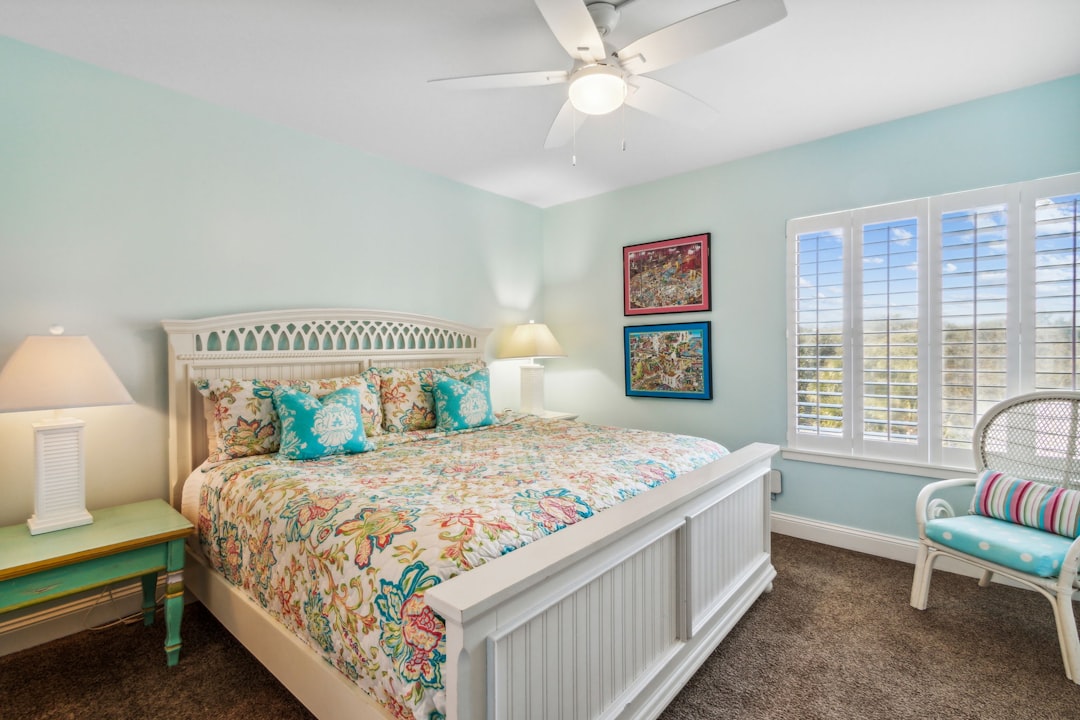
One of the simplest ways to feel cooler without dropping the thermostat is to use ceiling fans correctly:
- Set them to rotate counterclockwise in summer
- Use them only in occupied rooms
- Let them supplement the AC, not replace it
A ceiling fan can make a room feel up to 4°F cooler because of the wind-chill effect on your skin. That often lets you raise the thermostat by 2 to 4 degrees and still stay comfortable. The catch: fans cool people, not rooms. Leaving them on in empty rooms just adds a little heat and uses electricity for nobody. That is a pretty rude hobby for a fan.
Good airflow also means:
- Keeping supply and return vents unblocked
- Leaving interior doors open when possible
- Avoiding the temptation to close vents in unused rooms, which can increase duct pressure and reduce system efficiency
If indoor air feels stale, dusty, or damp, better filtration and air quality improvements may help. Our article on clean air systems covers useful options for improving airflow and indoor comfort.
Why Humidity Management is Key for Summer Energy Saving Tips for Gulf Coast Homeowners
Air conditioners do not just cool the air. They also remove moisture. In Gulf Coast homes, that moisture removal is essential.
When humidity is too high:
- Your home feels warmer than the thermostat reading suggests
- Mold and mildew risk goes up
- Your AC may run longer trying to make the space feel comfortable
- Condensation problems become more likely
That last point matters in our area. If you've noticed water near your system, it could be normal condensation or a sign of a drainage issue. Our guide on AC condensation and leak issues in Greater Houston explains what to watch for.
For homes that always feel clammy, a few solutions are especially effective:
- Variable-speed HVAC systems, which run longer at lower speeds and remove moisture better
- Whole-home dehumidifiers
- Bathroom and kitchen exhaust fans used during and after showers or cooking
- Fixing oversized AC systems that cool too fast without enough dehumidification
Humidity control is one of the most overlooked summer energy saving tips for Gulf Coast homeowners because comfort and efficiency are tied together. Drier air feels cooler, so you can often keep the thermostat a little higher without sacrificing comfort.
Fortify the Home Envelope Against Solar Heat Gain
Your AC is fighting two enemies in summer: outdoor heat and indoor heat gain. Windows, attic spaces, and leaky construction details all let that heat in.
On the Gulf Coast, south- and west-facing windows usually take the biggest beating. Blocking that solar heat before it spreads through the room can lower the burden on your cooling system.
Here is a simple comparison of two common options:
| Window treatment | Best use | Main benefit | Limitation |
|---|---|---|---|
| Solar screens | Exterior-facing, sun-heavy windows | Can block a large share of solar heat before it enters the glass | Installation is more involved |
| Blackout curtains | Bedrooms and living areas with strong afternoon sun | Affordable and effective for reducing indoor heat gain and glare | Heat has already reached the window |
Exterior shading is generally more effective than interior shading because it stops heat earlier. But interior treatments still help, especially when paired with window film or improved glazing.
Other smart upgrades include:
- Low-E windows or film to reduce solar heat gain
- Radiant barriers in attics
- Lighter roof colors when reroofing
- Covered patios, awnings, or strategic landscaping
Attics are a big deal here. In Gulf Coast summers, attic temperatures can exceed 130°F. That heat radiates downward into living areas and can bake ductwork at the same time.
For homes with additions, converted garages, or rooms that never seem comfortable, you may also want to explore adding cooling without ductwork if the main system cannot serve those spaces efficiently.
Sealing Air Leaks and Improving Insulation
Air sealing and insulation are not flashy upgrades, but they are incredibly effective.
Start with the usual suspects:
- Window frames
- Exterior doors
- Attic hatches
- Recessed lights
- Plumbing and wiring penetrations
- Duct connections
Use caulk for stationary gaps and weatherstripping for moving parts like doors and operable windows. Door sweeps can also help stop conditioned air from slipping out underneath exterior doors.
Insulation matters just as much. In this region, attic insulation in the R-38 range is a strong target for many homes, and some need more depending on existing conditions. Better insulation slows heat transfer from superheated attics into your rooms.
Don't forget ductwork. Leaky or poorly insulated ducts can waste up to 30% of cooled air, and the average home may lose 20% to 30% of the air moving through the duct system. If those ducts sit in a hot attic, the losses hit even harder.
If you're weighing alternatives for spaces with comfort issues, ductless HVAC systems can be a smart fit for certain rooms without putting more strain on existing ductwork.
Implementing Summer Energy Saving Tips for Gulf Coast Homeowners through Maintenance
Maintenance is where efficiency advice becomes real-world results. Even a high-quality system wastes energy if coils are dirty, airflow is restricted, or moving parts are struggling.
For Gulf Coast homeowners, regular maintenance matters even more because systems deal with:
- Long cooling seasons
- High humidity
- Heavy pollen
- Salt air in coastal communities like Galveston, Kemah, and Seabrook
- Storm debris and fast-growing vegetation
Professional tune-ups should be scheduled twice a year, ideally in spring and fall. That schedule helps catch wear before summer demand peaks and keeps the system operating efficiently into shoulder seasons.
A thorough visit may include:
- Checking refrigerant performance
- Cleaning coils
- Inspecting electrical components
- Clearing the condensate drain
- Verifying airflow and thermostat operation
- Looking for corrosion or salt-air damage on outdoor components
For more on what that should include, see our Best AC Maintenance Guide Baytown TX.
Your outdoor unit also needs breathing room. Keep at least 2 feet of clearance around it and clear away grass clippings, leaves, shrubs, and fences that block airflow. If you can provide light shade without crowding the unit, efficiency may improve by up to 10%.
More Summer Energy Saving Tips for Gulf Coast Homeowners: Filter and Duct Care
If there is one easy maintenance task homeowners can do themselves, it is changing the filter on time.
In our climate, the usual recommendation is every 30 to 60 days in summer, but every 30 days is often best if you have:
- Pets
- Allergy concerns
- Heavy dust
- High pollen exposure
- Frequent AC use, which basically describes Houston summer
A clogged filter can increase energy use by 5% to 15% because it forces the system to work harder to move air. It can also hurt humidity control and put extra stress on the blower.
For a deeper maintenance checklist, our AC Maintenance Baytown TX Complete Guide is a helpful resource. And if you want the bigger picture on why tune-ups matter, review the benefits of routine AC maintenance.
A quick note on filters: higher MERV is not always better unless your system is designed for it. A filter that is too restrictive can reduce airflow. The goal is a filter your system can handle well, replaced on schedule.
Adjust Daily Habits to Reduce Internal Heat Loads
Not all summer heat comes from outside. A surprising amount is created right inside your home.
A few habit changes can reduce that internal load:
- Run dishwashers, dryers, and ovens after 9 PM or early in the morning
- Use an outdoor grill, slow cooker, microwave, or air fryer instead of the oven on the hottest days
- Wash laundry in cold water
- Air-dry clothes or dishes when possible
- Use bathroom and kitchen exhaust fans to remove heat and moisture at the source
Laundry is a sneaky one. Heating water can account for up to 90% of the energy a washing machine uses, so cold-water cycles help twice: they use less energy and add less heat indoors.
Lighting matters too. Switch old incandescent bulbs to LEDs. LEDs use far less energy and produce much less heat, which means the AC has less extra warmth to remove. If you're updating cooling in a room addition or garage conversion at the same time, our mini-split vs central AC comparison can help you think through the options.
And don't ignore phantom energy from electronics, chargers, game consoles, and entertainment systems. Smart power strips or simply unplugging unused devices can shave off some wasted electricity, especially in rooms packed with electronics.
Frequently Asked Questions about Gulf Coast Energy Savings
What is the ideal thermostat setting for Houston summers?
For most homes, 78°F while you're home is the best balance of comfort and efficiency. When you're away, set it to 82°F to 85°F. If you use ceiling fans correctly and keep humidity in check, many homeowners stay comfortable at that 78°F setting.
A useful benchmark is that every degree higher can reduce cooling use, and some guidance suggests around 3% savings per degree in certain ranges. The exact number varies, but the overall strategy is solid.
How often should I change my AC filter in a humid climate?
Check it monthly, and expect to replace it every 30 days during peak summer if you have pets, allergies, or heavy AC use. In cleaner homes, some filters may last 60 days, but waiting too long is risky in Gulf Coast conditions.
A dirty filter can raise energy use by 5% to 15%, reduce airflow, and make humidity problems worse.
Does shading my outdoor AC unit really help?
Yes, if it is done correctly. Light shading from shrubs or trees can improve efficiency by up to 10%, but the unit still needs plenty of airflow. Keep at least 2 feet of open clearance around the sides and avoid boxing it in.
Think "shade above and open space around," not "hide it in a leafy closet."
Conclusion
The best summer energy savings usually come from doing several small things well at once: smart thermostat settings, better humidity control, cleaner airflow, less solar heat gain, and steady maintenance. For Gulf Coast homes, that combination matters because the heat is intense, the humidity is relentless, and your cooling system works hard for much of the year.
At Mackey Services, we've served homeowners across Dickinson, Houston, League City, Friendswood, Baytown, Pearland, and surrounding communities since 1992. As a family-owned company, we focus on reliable comfort, straightforward service, and local care. We also offer 24/7 emergency readiness, custom ductwork and fabrication capabilities, and support for homeowners who want their cooling systems ready for hot, humid weather.
Learn more about our Air Conditioning Services and keep your home comfortable through every Gulf Coast summer.
Ready for a better day?
One call handles it all — HVAC, electrical, and generators across the Texas Gulf Coast. Less to pay. Better day. That's the Mackey way.
Mon–Fri: 7 AM – 8 PM · Sat: 8 AM – 5 PM · Licensed & insured · #TACLA 112769C · #TECL 558211