
Checking Commercial RTUs for Storm Damage Before the Winter Winds
Why checking commercial RTUs for storm damage before the winter winds is critical. See how hidden summer wear impacts your facility and schedule service today.
Why the September Window is Critical for Commercial RTU Assessments
The brutal heat of summer is finally breaking, but before facility managers can relax, there is one critical priority: checking commercial RTUs for storm damage before the winter winds arrive. The early fall (September) transition is underway across the Texas Gulf Coast, marking the narrow window between peak hurricane season and the arrival of aggressive winter cold fronts. In our experience servicing local commercial buildings, we know that during the summer months, commercial rooftop units take a relentless beating from severe thunderstorms, high winds, and heavy rainfall. Because these units sit out of sight, the structural and mechanical wear they sustain often goes completely unnoticed until the seasons change.
To ensure your facility is fully protected as the temperatures drop, reviewing comprehensive commercial heating preparation strategies with our team is the best first step.
Many building owners assume that because their HVAC system successfully cooled the building through August, the equipment is perfectly fine. This is a dangerous misconception we encounter frequently. A unit can continue pushing cold air even while its external cabinet is severely compromised, its coils are battered, and its drainage systems are clogged with storm debris. If you wait until a winter gale hits to find out how much damage your equipment took over the summer, you risk catastrophic mechanical failure, severe water intrusion, and even structural liabilities on your roof. Taking a proactive approach right now allows you to secure your equipment, restore its efficiency, and protect your commercial investment before the weather turns hostile.
The Compounding Threat: How Summer Storms Create Winter Liabilities
The Problem: In our years of providing commercial HVAC support to Dickinson TX properties, we've noticed a distinct pattern: rooftop equipment survives the summer but unexpectedly fails during the first major winter storm. Facility managers often view these as isolated winter breakdowns, but our technicians know the reality is that the damage was initiated months earlier during severe summer weather.
The Cause: Cumulative exposure to high winds, heavy rain, and flying debris systematically weakens the structural integrity of a rooftop unit. Every severe thunderstorm flexes the metal panels, rattles the fasteners, and drives moisture into places it doesn't belong. Over a long summer, this constant vibration and impact wear down the unit's physical defenses. Securing a proactive fall HVAC maintenance plan is the most effective way we've found to identify this hidden wear and tear.
The Solution: Bridging the gap between summer damage and winter risk requires a thorough structural and mechanical assessment. If minor vulnerabilities are left unaddressed, winter gales will exploit them, turning small gaps into major hazards. Building owners carry significant liability if rooftop equipment is not properly secured, making this assessment a matter of safety as much as comfort.
| Summer Damage Source | Hidden RTU Weakness | Resulting Winter Liability |
|---|---|---|
| Hurricane-force wind gusts | Stripped screws and loose panel latches | Panels blowing off and becoming dangerous projectiles |
| Heavy flying debris / hail | Dented cabinets and flattened condenser fins | Severely restricted airflow causing compressor failure |
| Torrential driving rain | Washed-out seals and compromised gaskets | Water intrusion shorting out internal electrical components |
| Wind-blown leaves and dirt | Clogged internal condensate drain lines | Trapped water freezing and cracking the drain pan |
Hail-Flattened Condenser Fins and Winter Heating Strain
One of the most common and destructive forms of summer weather damage our team encounters is hail impact. Because Commercial Rooftop Units (RTUs) sit completely exposed on flat roofs, their delicate aluminum condenser fins take the direct brunt of falling ice. When hail strikes these fins, the soft metal bends and flattens, effectively sealing off the gaps where air is supposed to flow. From the ground, the unit looks perfectly normal, but when our technicians get up close, the coils can look like they have been smashed flat with a hammer.
The physics of this damage create a severe problem for your HVAC system. Heat pumps and commercial heating systems rely on a precise, unobstructed volume of airflow to transfer heat effectively. When hail flattens a significant percentage of the condenser fins, the system is starved for air. The blower motor and compressor are forced to work much harder to pull air through the restricted coils. This overexertion draws more electricity, driving up your facility's energy costs month after month.
More alarmingly, this restricted airflow sets the stage for a major mechanical breakdown. As the system struggles to breathe, the internal operating temperatures and pressures climb outside of their safe design parameters. If the unit is already strained from summer hail damage, the added demand of the first major winter freeze can push the compressor past its breaking point. Catastrophic compressor failure requires extensive downtime and expensive replacement—a scenario that we help our clients avoid entirely by having a professional technician carefully comb out and straighten the damaged fins during the fall transition.
Compromised Access Panels: A Severe Wind and Water Liability
The Problem: High winds from summer squalls consistently loosen the screws, latches, and heavy access panels on Commercial Rooftop Units (RTUs). While a slightly loose panel might not seem like an immediate threat on a calm autumn day, our service crews consider it a massive liability for building owners.
The Cause: The constant buffering of hurricane-force winds creates metal fatigue and strips the threading on cabinet fasteners. Once a panel loses its tight seal, the wind can get underneath the metal edge, acting like a sail. During a strong winter gale, the sheer force of the wind can rip these compromised panels completely off the unit.
The Solution: A comprehensive fall assessment must include verifying the structural integrity of every panel, latch, and tie-down on the roof. If panels are blown off, they become heavy, sharp projectiles that can damage other roof structures, break windows, or fall to the parking lot below. Beyond the physical danger, a missing or unsealed panel leaves the unit's sensitive internal components completely exposed to the elements. Severe water intrusion from winter storms will flood the electrical compartments, leading to short circuits, blown fuses, and complete system downtime. Re-securing these panels and replacing damaged weather stripping is a non-negotiable step in protecting your facility.
Trapped Debris and Blocked RTU Drainage Systems
Summer storms do more than just batter the outside of your equipment; they also drive a massive amount of debris inside the cabinet. High winds carry leaves, small branches, dirt, and industrial fallout across the roof, forcing this material through the vents and into the base of the HVAC unit. As the early fall (September) transition begins, we routinely pull buckets of accumulated debris out of internal drain pans and clogged condensate drainage systems.
During normal operation, your HVAC system produces condensation that must safely drain away from the unit. When the internal drain lines are packed with wet leaves and summer dirt, that water has nowhere to go. It begins to pool inside the base of the cabinet, creating a stagnant environment that promotes rust, corrosion, and bacterial growth. If this standing water goes unnoticed, it poses a severe threat to the equipment as the seasons change.
The real danger arrives with the first winter cold snap. When temperatures drop below freezing, the standing water trapped inside the blocked drain pan will freeze and expand. This expansion can easily crack the heavy plastic or metal drain pans, rupture internal drain lines, and cause severe ice damage to the surrounding mechanical components. By the time the ice thaws, the structural damage is done, and the unit will likely leak directly into the building structure below. Clearing all internal debris and flushing the condensate lines before the heating season begins is the only way to prevent this hidden hazard.
Executing a Specialized Fall Inspection Protocol
Protecting your Dickinson TX commercial properties requires more than a casual glance at the equipment. It demands a rigorous, specialized approach to uncover the hidden wear left behind by severe weather. Mackey Services utilizes a specialized fall inspection protocol tailored specifically for commercial units operating in the harsh Gulf Coast climate. This methodology goes far beyond standard residential tune-ups, focusing heavily on structural integrity, wind resistance, and the specific vulnerabilities created by extreme coastal weather.
During a recent late-summer service call, one local property owner reached out to us needing a complete condenser replacement after severe weather took a toll on their equipment. Our technicians not only replaced the unit but patiently explained the technical details of the damage and exactly how the new system would operate. We bring that exact same commitment to transparent communication and technical excellence to every commercial inspection we perform. Partnering with a dedicated team for your commercial HVAC services ensures your equipment is evaluated by professionals who understand the unique demands of this region.
A professional fall inspection protocol includes these critical steps performed by our licensed technicians:
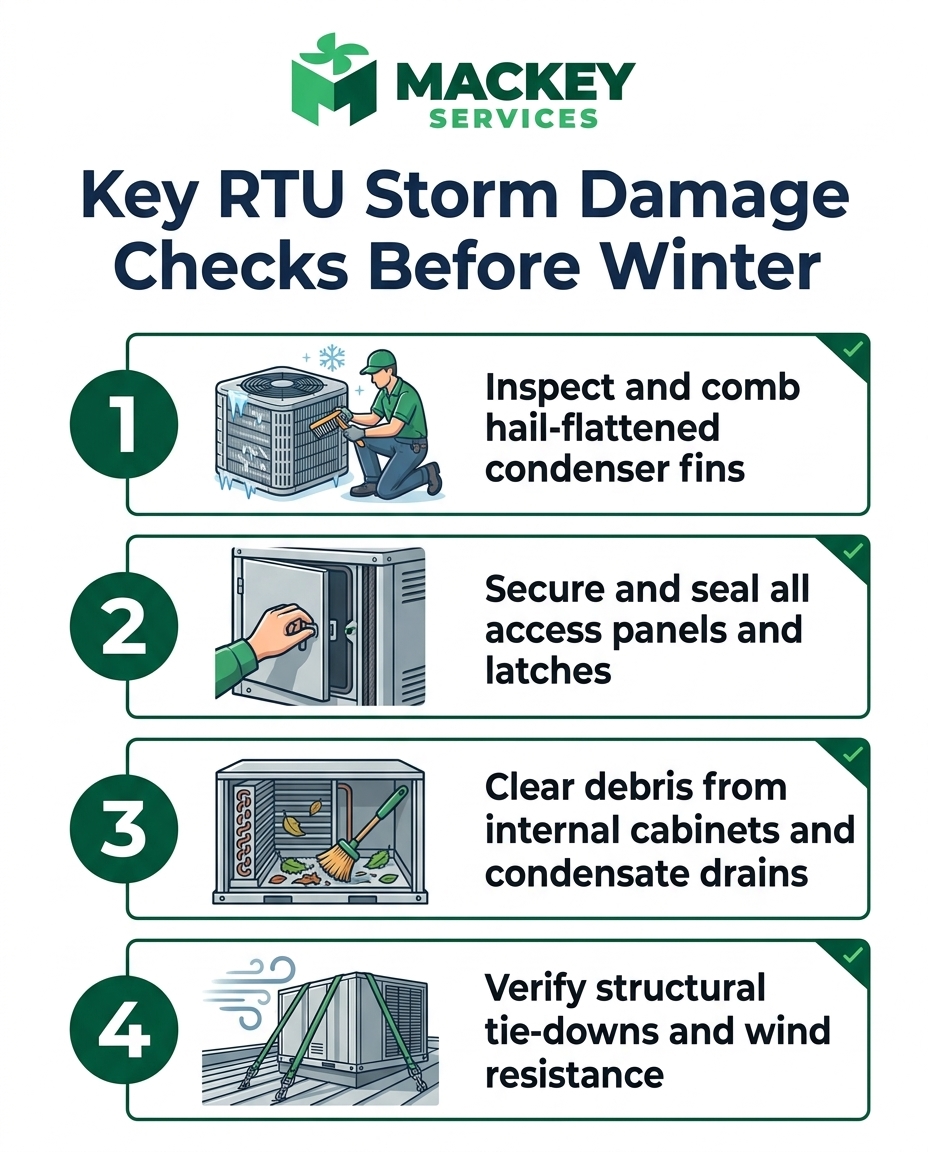
- Fin Combing and Coil Restoration: Our technicians meticulously inspect the condenser coils for hail impacts. Using specialized tools, we carefully comb out flattened fins to restore proper airflow and reduce mechanical strain on the compressor.
- Structural Fastener Verification: We check every access panel, latch, and cabinet screw for tightness. Any stripped screws are replaced, and weather seals are inspected to ensure the unit is watertight and wind-resistant.
- Internal Debris Evacuation: The cabinet is opened, and our crew removes all trapped summer debris—leaves, dirt, and branches—from the base pan to prevent moisture retention and rust.
- Drainage System Flushing: We clear and flush condensate lines and drain pans to ensure water flows freely away from the unit, eliminating the risk of standing water freezing during winter cold snaps.
- Electrical Connection Tightening: Our technicians inspect all internal wiring and contactors, looking for any signs of water intrusion or corrosion caused by compromised summer weather seals.
Beyond Routine Checks
It is important to differentiate between a standard commercial filter change and the comprehensive structural assessments our team provides. While swapping out air filters is necessary for indoor air quality, it does nothing to protect the unit from a winter gale. A true post-summer inspection looks closely at the heat exchangers, ensuring no hairline cracks have developed from the stress of summer cycling. We also verify the heavy structural tie-downs that keep the entire unit anchored to the roof curb. Clear communication and thorough documentation provided by our professional technicians give facility managers the exact data they need to make informed maintenance decisions, preventing costly emergency downtime.
Frequently Asked Questions About Commercial RTU Storm Damage
Before diving into the specifics of your own facility's maintenance schedule, it helps to understand the common concerns our clients share regarding post-storm equipment health. If you are curious about standard maintenance procedures alongside these commercial checks, you can read more about routine AC checks and inspections.
What happens if rooftop unit panels are loose?
If rooftop unit panels are loose, they become a severe safety hazard and an operational liability. High winds can rip the panels completely off the unit, turning them into dangerous projectiles that can damage the roof or fall to the ground below. Additionally, missing panels expose the sensitive electrical components and blower motors to direct rain and snow, which usually results in short circuits and complete system failure.
How does hail damage affect HVAC efficiency?
Hail damage heavily restricts HVAC efficiency by flattening the delicate aluminum fins on the outer condenser coil. When these fins are smashed flat, air can no longer flow through the coil to release or absorb heat. This restriction forces the system's compressor and blower motor to run longer and work much harder, which drives up electrical costs and significantly shortens the lifespan of the equipment.
How often should commercial RTUs be inspected?
We recommend that Commercial Rooftop Units (RTUs) be professionally inspected at least twice a year, typically in the spring and early fall. The fall inspection is particularly critical because it identifies hidden structural and mechanical damage caused by intense summer storms. Catching this wear and tear before the heating season begins prevents unexpected breakdowns during winter cold fronts.
When should I winterize my commercial HVAC system?
We advise winterizing your commercial HVAC system during the early fall transition, ideally in September or October. This timing allows our technicians to repair any summer storm damage and clear debris before the first major freeze arrives. Waiting until late November or December leaves your equipment vulnerable to sudden temperature drops and high winter winds.
Can hidden storm damage cause my RTU to fail in the winter?
Yes, hidden summer storm damage is a leading cause of winter RTU failure. Minor issues like a slightly compromised weather seal, a dented coil, or a partially clogged drain pan will rapidly deteriorate when subjected to freezing temperatures and winter gales. Proactively addressing these hidden weaknesses ensures the unit can handle the heavy mechanical strain of winter heating.
Secure Your Commercial Facility Before the First Winter Gale
There is immense peace of mind that comes from knowing your facility's rooftop equipment is structurally sound, mechanically prepared, and fully capable of handling whatever the season brings. For Dickinson TX commercial properties, our team at Mackey Services warns that the window to act is closing rapidly. Every week that passes brings the region closer to the harsh winter gales that will exploit any hidden weaknesses left behind by summer storms. Checking commercial RTUs for storm damage before the winter winds is not just a maintenance task; it is a critical step in protecting your building, your occupants, and your bottom line. Do not wait for an unexpected freeze to test the limits of your equipment. Schedule a specialized fall inspection with us today to ensure your HVAC systems are secure, efficient, and ready to perform flawlessly all winter long.
Ready for a better day?
One call handles it all — HVAC, electrical, and generators across the Texas Gulf Coast. Less to pay. Better day. That's the Mackey way.
Mon–Fri: 7 AM – 8 PM · Sat: 8 AM – 5 PM · Licensed & insured · #TACLA 112769C · #TECL 558211