
Placement Strategies for Carbon Monoxide Detectors Near Gas Furnaces
See why close alarms cause false alerts. Review proper placement strategies for carbon monoxide detectors near gas furnaces to protect your home this fall.
The Hidden Danger of Placing Detectors Too Close to Your Heating System
Your alarm starts blaring in the middle of the night, but finding the right placement strategies for carbon monoxide detectors near gas furnaces could have prevented the panic entirely. As we head into early fall 2026, our team at Mackey Services frequently receives frantic calls from homeowners dealing with this exact scenario. A functioning carbon monoxide detector is an absolute necessity for any home with gas appliances, serving as a critical life-saving device. However, homeowners frequently make a well-intentioned mistake during their early fall heating prep: they install the detector directly above, on, or immediately next to the gas furnace, assuming that closer placement guarantees the fastest possible warning.
Placing the unit too close to the combustion source actually creates a significant nuisance. Modern detectors are highly sensitive, and when positioned just a few feet from a furnace, they capture harmless trace byproducts that naturally escape during normal combustion cycles. This triggers false alarms that disrupt your household and, over time, can lead to alarm fatigue where real threats are ignored. Identifying the correct distance and height ensures accurate, life-saving alerts without the frustration of unwarranted sirens. If you are scheduling your seasonal heating services, addressing detector placement is just as critical as checking the filter.
Why Early Fall Startups Trigger Carbon Monoxide Alarms
The Problem: Gas furnaces sit completely dormant for months on end. In the Gulf Coast region, because Dickinson winters are relatively mild, a standard 80% AFUE gas furnace might experience an extended dormancy of eight to nine months. During this long off-season, dust, pet dander, and airborne debris settle heavily across the heat exchanger and burners.
The Cause: During the very first heating cycle of the season—usually triggered by a sudden cold snap—this accumulated dust burns off rapidly. This initial combustion burst produces a distinct, often unpleasant odor and releases trace emissions into the immediate utility area. While this startup burn-off is a normal mechanical process and typically harmless, the concentrated burst of byproducts is more than enough to trip a highly sensitive detector if it is mounted too close to the unit.
The Solution: Understanding this normal mechanical behavior highlights exactly why distance from the combustion source is critical. Moving the detector away from the immediate vicinity of the furnace allows these trace, harmless gases to dissipate naturally into the surrounding air before they can reach the sensor and trigger a false alarm.
The stress placed on a dormant system during a sudden temperature drop is significant. For example, during a severe winter freeze, one local Dickinson homeowner in a 2015-built home experienced a complete malfunction of their zoned heating system. Our technicians had to diagnose the problem under freezing conditions, return with specific parts, and make necessary emergency repairs to restore warmth to the house. When a system is pushed from zero to maximum capacity instantly after months of inactivity, any underlying issues—including heavy dust accumulation and sudden trace emissions—are magnified. Proper early fall heating prep mitigates these sudden failures and false alarms.
The Mechanics of Initial Combustion
To fully understand why false alarms happen, you have to look at how a gas furnace ignites and vents its byproducts. When the thermostat calls for heat, the draft inducer motor turns on to clear the heat exchanger of any leftover gases. Then, the igniter lights the gas burners. For a brief second before the draft inducer creates a perfect vacuum—a process our HVAC technicians observe daily during fall tune-ups—a minuscule amount of combustion gas can escape the immediate burner area.
There is a massive difference between a dangerous, sustained carbon monoxide leak caused by a cracked heat exchanger and the normal, fleeting trace emissions of a startup burn-off. A dangerous leak continuously pumps CO into the home, whereas startup emissions are minor and temporary. Proper ventilation in your utility space handles these trace emissions safely, diluting them into the air almost instantly. If your detector is placed 15 to 20 feet away from the furnace, the sensor will ignore the harmless startup burst but will absolutely sound the alarm if a sustained, dangerous leak occurs.
The NFPA Standard: The 15 to 20 Feet Rule
The National Fire Protection Association (NFPA) provides strict, scientifically backed guidelines for residential carbon monoxide safety. Following these guidelines is the exact strategy our team relies on to protect your household while eliminating nuisance alarms.
- Identify all fossil-fuel-burning appliances: Before mounting any safety device, locate your gas furnace, gas water heater, gas dryer, and any gas fireplaces. These are your primary combustion zones.
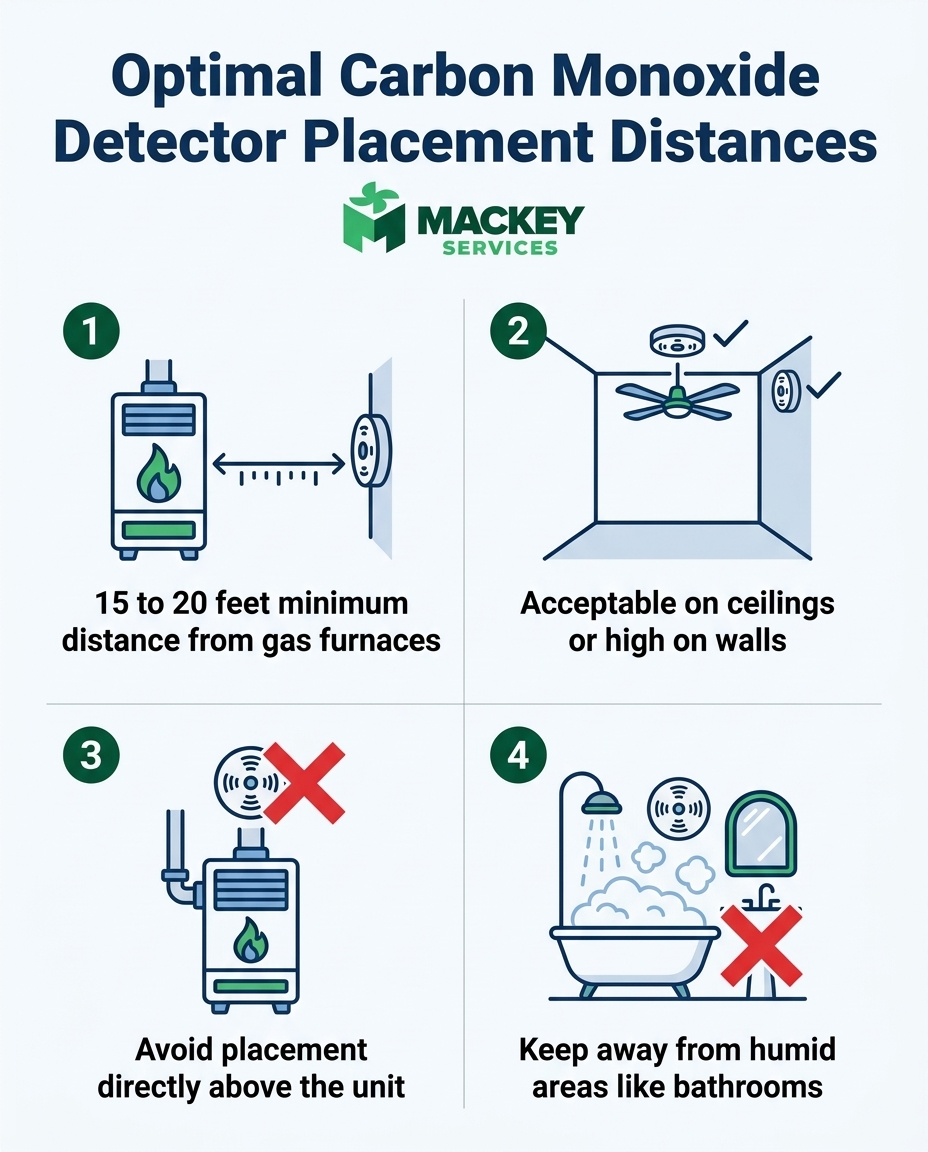
- Measure the minimum safe distance: Detectors should be installed a minimum of 15 to 20 feet away from the furnace and any other fuel-burning appliances. Use a tape measure to find the appropriate radius outside the utility room or closet.
- Ensure proper airflow: The chosen location must have unobstructed airflow. Do not place the detector behind heavy curtains, inside enclosed cabinets, or directly next to an open window where drafts could blow dangerous gases away from the sensor.
- Verify alarm audibility: The alarm must be loud enough to wake sleeping family members. If the 15 to 20 feet away from the furnace rule places the detector in a distant hallway, ensure you have additional interconnected detectors closer to the bedrooms.
This specific distance allows the harmless trace gases from an initial startup to dissipate safely into the room's air volume before reaching the sensor, ensuring that only a genuine, continuous leak triggers the siren.
Measuring Your Utility Space
Measuring the layout of your utility room, basement, or attic is the first step in ensuring compliant and safe placement. If your furnace is located in a tight utility closet in a hallway—a layout we frequently see in 1990s-era Dickinson tract homes—placing the detector inside that closet is a guaranteed way to trigger false alarms. Instead, measure 15 to 20 feet down the hallway or into the adjacent living space.
For homes with open-concept basements, calculating the 15-foot radius around the HVAC unit is straightforward. However, for tight spaces, alternative placement strategies might include mounting the unit in the stairwell leading up from the basement, provided it still meets the manufacturer's distance requirements. Always prioritize placing the first line of defense just outside the immediate combustion zone.
Wall vs. Ceiling Mounting: Understanding Carbon Monoxide Spread
A persistent and common myth suggests that carbon monoxide is a heavy gas that sinks to the floor, leading many homeowners to insist on improper low-wall installations, sometimes plugging units into baseboard outlets just inches from the carpet. In reality, carbon monoxide has a molar mass slightly lighter than the air we breathe. It does not sink; instead, it mixes evenly and thoroughly throughout the room's atmosphere, much like warm air spreading through a cold space.
Because of this even diffusion, detectors can be highly effective when placed on the ceiling or high on a wall. In our experience, placing them higher up often keeps them safer from physical damage, curious toddlers, and household pets. When mounting high on a wall, a good rule of thumb is to place the unit at least six inches below where the wall meets the ceiling to avoid dead air spaces where gases might not circulate properly.
However, you must ensure the unit is placed out of the way of ceiling fans, supply registers, or direct return vents. A strong draft from a nearby HVAC vent can continuously blow room air over the sensor, effectively shielding it from a carbon monoxide leak that is happening elsewhere in the room. Always cross-reference the specific manufacturer's instructions included in the box, as different sensor designs dictate optimal mounting heights. Whether on the ceiling or the wall, maintaining that critical distance of 15 to 20 feet away from the furnace remains the most important factor.
Hardwired vs. Battery Detectors: The Electrical Advantage
When upgrading your home's safety systems during early fall heating prep, choosing the right type of power source for your detectors is a major decision. Standalone battery-operated detectors are convenient and easy to install, but they rely entirely on diligent battery replacement and only sound in one localized area.
Hardwired carbon monoxide detectors tap directly into the home's 120-volt electrical system, providing continuous, uninterrupted power with a reliable battery backup for power outages. The greatest advantage of hardwiring is interconnectivity: if the detector positioned 15 to 20 feet away from the furnace senses a dangerous leak, every single alarm in the house—from the basement to the master bedroom—sounds simultaneously.
| Feature | Battery-Operated Detectors | Hardwired Interconnected Detectors |
|---|---|---|
| Power Source | Relies 100% on AA, 9V, or sealed 10-year lithium batteries. | Powered by the home's electrical grid with a battery backup. |
| Alarm Spread | Localized. Only the unit detecting the gas will sound the alarm. | System-wide. When one unit detects a threat, all units sound instantly. |
| Maintenance | Requires frequent battery testing and replacement (unless sealed). | Low maintenance; backup batteries need occasional changing. |
| Installation | Simple DIY installation; can be placed anywhere instantly. | Requires professional electrical installation to meet local codes. |
Transitioning to a hardwired system requires licensed electrical expertise to ensure the wiring meets all local safety and building codes. Working with a company like Mackey Services that offers dual expertise in both HVAC systems and electrical services provides a superior, whole-home safety solution. Understanding the combustion mechanics of the furnace ensures the detectors are placed at the exact right distance, while professional electrical knowledge ensures the hardwiring is flawless, creating an interconnected safety net that never sleeps.
System-Wide Safety and Indoor Air Quality
Proper carbon monoxide detector placement is just one component of a comprehensive home safety strategy. Broadening the discussion from isolated gas leaks to overall ventilation and air quality within the home reveals how deeply connected your HVAC system is to your daily health. Poor ventilation around the furnace can exacerbate the buildup of dust, allergens, and trace gases, severely impacting your overall comfort and safety.
Indoor air quality issues can manifest in surprising ways. For instance, one homeowner in a newly built 2022 property experienced persistent eye and skin irritation during the spring season. A thorough inspection by a Mackey Services technician identified the root cause within the home's air circulation and ventilation setup, explaining exactly what was wrong and how to correct it. If a home is sealed too tightly without proper fresh air intake, even minor pollutants become trapped.
Ensuring clear intake and exhaust flues is mandatory. If a flue is blocked by a bird's nest, leaves, or heavy debris, it prevents the safe venting of combustion gases, leading to dangerous backdrafting where carbon monoxide is forced back into the living space. Proactive measures, such as monitoring your home's indoor air quality, can eliminate the root causes of poor air circulation before they trigger alarms or cause physical discomfort. Checking these vents should be a priority during your early fall heating prep.
Preparing Your Heating Equipment for Safe Operation
Transitioning from detector placement to the actionable, safe preparation of the furnace itself ensures your equipment is ready to handle the winter workload. Testing the placement of your safety devices should always coincide with a preliminary test run of the heating system.
- Clear the perimeter: The area immediately surrounding the furnace must be completely clear of stored items, boxes, cleaning supplies, and especially combustible materials. This ensures proper airflow for combustion and removes severe fire hazards.
- Perform a test run: Do not wait for the first freezing night to turn on the heat. Running the system early allows you to monitor the initial burn-off in a controlled environment.
- Listen and smell: During the initial startup, listen for unusual grinding or banging noises, and monitor for persistent odors. A brief dusty smell is normal; the smell of rotten eggs or burning plastic is an immediate red flag.
- Check the filter: A clogged air filter forces the heat exchanger to run hotter than designed, which can stress the metal and eventually lead to cracks where carbon monoxide can escape.
Scheduling a professional inspection with our team verifies that the heat exchanger is completely intact and venting perfectly, preventing CO leaks at the source. If you are unsure of how to safely conduct a preliminary check, reviewing a guide on turning on your furnace before you need it can provide the necessary context to keep your home safe.
Frequently Asked Questions About Furnace Safety and CO Detectors
How far should a carbon monoxide detector be from a gas furnace?
Our technicians advise installing the detector 15 to 20 feet away from the furnace. This specific distance prevents false alarms caused by the harmless, trace amounts of combustion gas that can escape during the initial seconds of a furnace startup. Placing it any closer increases the risk of nuisance alarms, while placing it too far away delays the warning in the event of a real emergency.
Why does my CO detector go off when the furnace turns on for the first time?
Your detector is likely picking up the initial burst of dust and trace emissions burning off the heat exchanger after months of dormancy. If the detector is mounted too close to the unit, these harmless startup byproducts hit the sensor before they can dissipate into the air. Relocating the unit 15 to 20 feet away from the furnace usually solves this problem permanently.
Can I put a carbon monoxide detector in the same room as the furnace?
It is generally not recommended to put the detector inside the exact same utility closet or small mechanical room as the furnace. The concentrated startup emissions in a confined space will almost certainly trigger false alarms. Instead, mount the detector just outside the utility room door or in the adjacent hallway to ensure accurate readings.
Does a carbon monoxide detector go on the ceiling or the wall?
Carbon monoxide mixes evenly with the air in a room, meaning it does not sink to the floor or aggressively rise to the ceiling like smoke. Therefore, you can safely mount detectors on the ceiling or high up on a wall. Always ensure the placement avoids dead air spaces, ceiling fans, and direct supply vents that could disrupt the sensor's accuracy.
How do I know if my furnace is leaking carbon monoxide or if it's a false alarm?
You should always treat every carbon monoxide alarm as a genuine emergency. Evacuate the home immediately and contact emergency services or your utility provider to test the air quality. You cannot smell, taste, or see carbon monoxide, so you must rely on professionals with specialized metering equipment to determine if the furnace is leaking or if the detector simply needs to be relocated.
Are hardwired carbon monoxide detectors better than battery-operated ones?
Hardwired detectors offer a higher level of safety because they are interconnected throughout the home's electrical system. If a hardwired unit in the basement detects carbon monoxide, the units in the upstairs bedrooms will sound simultaneously, providing immediate, whole-home awareness. While battery-operated units are easier to install, they only provide localized alerts and rely entirely on strict battery maintenance.
Ensure Complete Heating Safety This Season
Proper placement of carbon monoxide detectors is a critical step in protecting your household as the temperatures begin to drop. By keeping these sensors 15 to 20 feet away from the furnace, you eliminate the stress of false alarms while guaranteeing life-saving detection when it truly matters. Combining accurate detector installation with proactive, professional equipment care guarantees that your home remains both warm and secure. A comprehensive inspection by a licensed professional ensures your system operates cleanly and safely all winter long. To keep your equipment running at peak safety and efficiency year after year, consider enrolling in a routine HVAC maintenance plan today.
Ready for a better day?
One call handles it all — HVAC, electrical, and generators across the Texas Gulf Coast. Less to pay. Better day. That's the Mackey way.
Mon–Fri: 7 AM – 8 PM · Sat: 8 AM – 5 PM · Licensed & insured · #TACLA 112769C · #TECL 558211