
Clean Your Coils or Lose Your Cool
Discover the dirty condenser coil and ac performance connection. Clean coils now to boost efficiency, cut bills, and extend AC life in Houston!
Why the Dirty Condenser Coil and AC Performance Connection Could Be Costing You More Than You Think
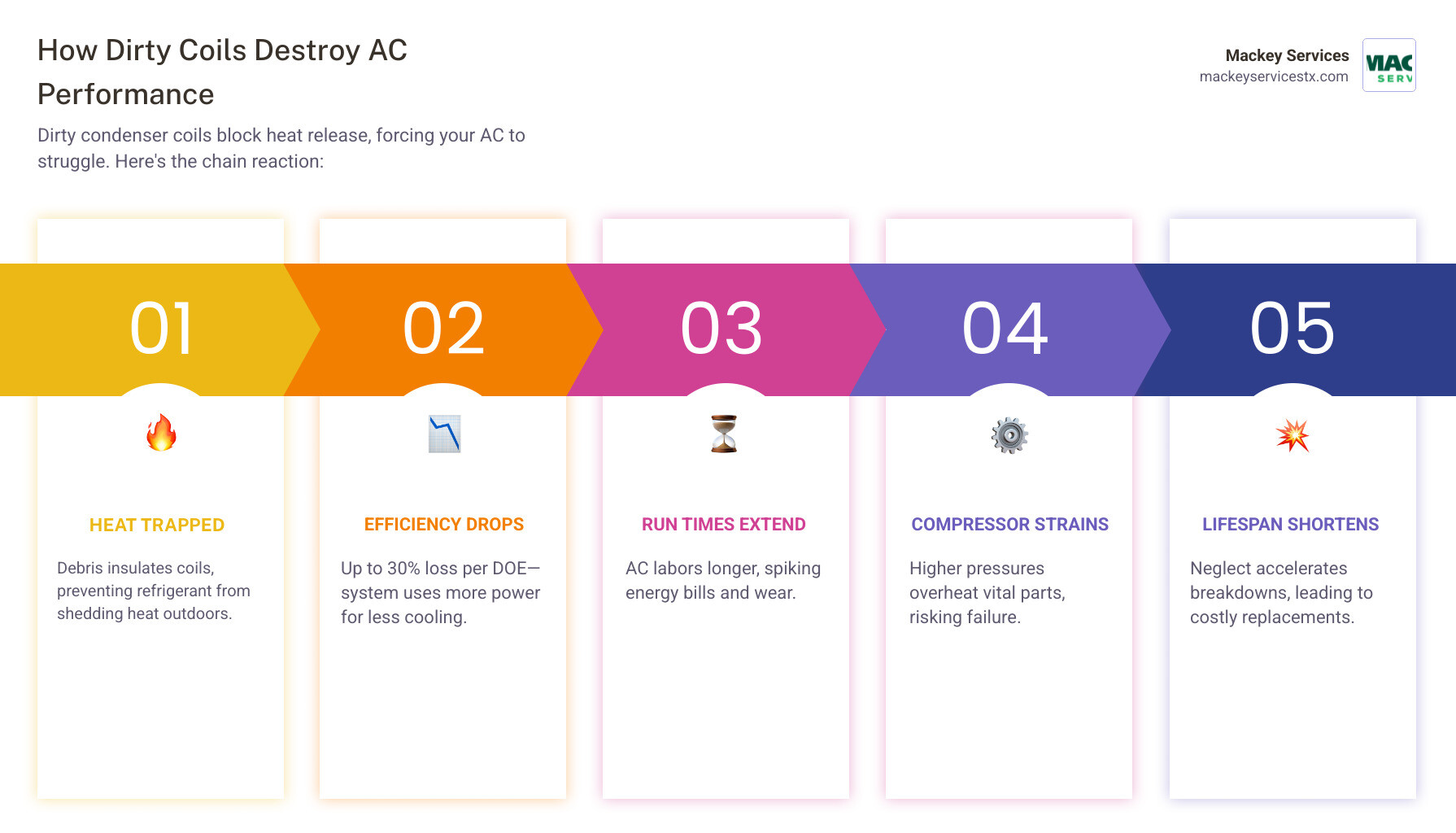
The dirty condenser coil and ac performance connection is straightforward: when dirt, debris, and grime build up on your outdoor AC unit's coils, your system can't release heat properly — and everything suffers as a result. Here's what that means in practice:
- Reduced cooling capacity — your home stays warmer even when the AC runs constantly
- Higher energy bills — dirty coils can cut efficiency by up to 30%, according to the U.S. Department of Energy
- Longer run times — the system works harder to do the same job
- Increased wear — components like the compressor face higher pressures and temperatures
- Shortened system lifespan — neglected coils accelerate the breakdown of expensive parts
For homeowners in the Greater Houston area, this isn't a minor inconvenience. With brutal summer heat and high humidity, your AC is one of the hardest-working systems in your home. A layer of dust, pollen, or grass clippings on your condenser coils isn't just an eyesore — it acts like an insulating blanket, trapping heat that your system is desperately trying to shed. Think of it like covering your car's radiator with cardboard and then wondering why the engine overheats.
The good news? This is one of the most preventable AC problems there is.
Understanding the Dirty Condenser Coil and AC Performance Connection
To understand the dirty condenser coil and ac performance connection, we first need to look at what that big metal box sitting outside your house actually does. Most people think an air conditioner "creates" cold air. In reality, it’s a heat mover. It picks up heat from inside your home and dumps it outside.
The condenser coil is the "dumping ground." It consists of long loops of copper tubing surrounded by thousands of tiny aluminum fins. These fins are designed to provide as much surface area as possible so that the heat traveling through the refrigerant can escape into the outdoor air.
When these coils are clean, the heat escapes easily. However, when they become coated in grime, that dirt acts as a layer of thermal insulation. Instead of the heat moving from the copper to the air, it gets trapped. This forces the system to work much harder to reject the same amount of heat. Furthermore, thick layers of debris cause airflow restriction. If the large fan on top of your unit can't pull air through those fins, the heat has nowhere to go. This is the primary reason why Air Conditioning Services are so vital for maintaining efficiency in April 2026.
How Environmental Debris Impacts the Cooling Cycle
Living in places like Dickinson, Pearland, or League City means our AC units face a constant barrage of environmental "gunk." The cooling cycle is delicate, and several common culprits can throw it out of balance:
- Pollen and Dust: During the heavy pollen seasons we experience in the Greater Houston Area, a fine yellow or grey film can coat the coils, creating an insulating "blanket."
- Grass Clippings: If you or your landscaper mows toward the AC unit, those clippings get sucked right into the fins, essentially choking the machine.
- Pet Hair: If your furry friends like to lounge near the outdoor unit, their hair can become matted against the coils.
- Houston Humidity: High humidity doesn't just make us uncomfortable; it makes dirt "sticky." When dust hits a damp coil, it turns into a mud-like substance that is much harder to remove than dry dust.
For those managing larger properties, our Commercial AC Maintenance Houston TX Guide goes into even more detail about how industrial pollutants can further complicate this process.
Common Signs Your System is Struggling
How do you know if your unit is a victim of the dirty condenser coil and ac performance connection? Your system usually tries to tell you long before it actually breaks down.
One of the first things we notice is a "creeping" utility bill. If your lifestyle hasn't changed but your electricity usage is climbing, your AC is likely running longer cycles to reach the temperature set on your thermostat. You might also notice uneven cooling—some rooms feel fine while others stay stubbornly warm. If you’re seeing these red flags, check out these 9 Tips to Troubleshoot an AC Problem to see if a simple cleaning is the answer.
Physical Symptoms of a Dirty Condenser Coil and AC Performance Connection
Beyond the bills, there are physical signs you can check for yourself:
- Warm Supply Air: Put your hand up to the vents inside. If the air feels "room temperature" or only slightly cool rather than crisp and cold, the heat isn't being rejected properly outside.
- Hot Condenser Cabinet: While the air blowing out the top of the outdoor unit should be warm, the sides of the cabinet shouldn't feel like an oven. If the metal is hot to the touch, the coils are likely overwhelmed.
- Audible Fan Strain: Listen to your outdoor unit. If the fan sounds like it’s struggling or making a deeper "thrumming" noise than usual, it’s fighting against restricted airflow.
In some cases, the lack of heat exchange outside causes the indoor side to malfunction too. This is a common reason for What to Do When Your AC Unit Freezes Up, as the refrigerant pressures fall out of their designed range.
Operational Red Flags in 2026
As we move through 2026, modern AC units are becoming more sensitive to efficiency losses. You might notice short cycling, where the unit turns on and off every few minutes. This happens because the compressor is overheating and a safety switch is shutting it down to prevent a fire or total meltdown.
You might also find yourself calling for frequent repairs for small electrical components. When a unit is forced to run 24/7 due to dirty coils, the capacitors and contactors wear out much faster than they should. If you've ever wondered, "Is It Okay for My AC to Run 24/7?", the answer is generally "no"—it’s usually a sign that something like your coils is preventing the system from finishing its job.
The Risks of Neglecting Outdoor Coil Maintenance
Neglecting the dirty condenser coil and ac performance connection isn't just about comfort; it's about protecting your investment. The compressor is the "heart" of your air conditioner, and it is the most expensive part to replace.
When coils are dirty, the compressor has to pump refrigerant at much higher pressures and temperatures. This causes the lubricating oil inside the compressor to break down or "carbonize." Once the oil loses its ability to lubricate, the compressor will eventually seize up. This is a catastrophic failure that often results in needing a completely new system.
Long-term Impact of the Dirty Condenser Coil and AC Performance Connection
The long-term consequences of dirty coils are a slow drain on your finances and peace of mind:
- Efficiency Degradation: A system that starts out at a high SEER rating can drop significantly in efficiency if it’s never cleaned, meaning you’re paying for a high-performance machine but getting "clunker" results.
- Component Wear: It’s not just the compressor. Fan motors and electrical relays age prematurely when they are forced to work double-time.
- Warranty Voidance: Many manufacturers require proof of annual professional maintenance to honor a warranty claim. If your compressor dies and the technician finds years of matted dirt on the coils, the manufacturer may deny your claim.
- Refrigerant Leaks: Dirt and debris can trap moisture and chemicals against the copper tubing, leading to "pitting" or corrosion that eventually causes refrigerant leaks.
Following A Homeowner's Guide to Extending Your HVAC System's Lifespan is the best way to avoid these expensive pitfalls. The Benefits of Routine AC Maintenance far outweigh the small effort of keeping things clean.
How to Clean and Maintain Your AC Condenser Coils
Keeping your coils clean can be a mix of DIY effort and professional expertise. Here is a quick breakdown of how these two approaches compare:
| Feature | DIY Cleaning | Professional Maintenance |
|---|---|---|
| Tools Needed | Garden hose, soft brush | Specialized foaming cleaners, fin combs, gauges |
| Depth of Clean | Surface level debris | Deep-tissue flush of the entire coil stack |
| Safety | High risk if power isn't fully cut | Expert handling of electrical and moving parts |
| System Check | Visual only | Pressure testing, amperage draws, and diagnostics |
| Frequency | Monthly visual checks | Annual or Bi-annual deep clean |
If you want to handle the basics yourself, follow these steps:
- Power Safety: Turn off the AC at the thermostat AND the outdoor disconnect box.
- Debris Removal: Clear away any leaves, tall grass, or trash within two feet of the unit.
- Brush Gently: Use a soft brush to remove loose dust from the outside fins.
- Low-Pressure Rinse: Use a garden hose (NEVER a pressure washer) to spray the coils. Aim the water from the inside out if possible, or at a downward angle to wash the dirt away rather than pushing it deeper into the fins.
- Fin Straightening: If you see bent fins, you can use a "fin comb" to carefully straighten them, though this requires a very steady hand.
For residents in specialized areas, our AC Maintenance Alvin TX page provides localized tips for dealing with the specific dust and vegetation found in our community.
Professional Solutions for Deep Contamination
Sometimes, a garden hose just isn't enough. If your coils haven't been cleaned in years, the dirt can become "baked on." This is where we step in with professional solutions. We use specialized chemical cleaners that are alkaline or acidic (depending on the type of grime) to chemically break down the bond between the dirt and the metal. These foaming cleaners expand between the fins, pushing out debris that a hose simply can't reach.
Furthermore, we don't just clean; we diagnose. We perform performance diagnostics to ensure the dirty condenser coil and ac performance connection hasn't already caused deeper issues. This includes pressure testing the refrigerant lines and checking the "subcooling" levels to ensure your system is factory-perfect. If we find that the dirt has hidden a leak or a failing part, we can handle the AC Repair Nassau Bay TX right then and there.
Frequently Asked Questions about AC Coil Cleaning
How often should I clean my AC condenser coils?
In the Greater Houston Area, we recommend a professional deep clean at least once a year, ideally in the spring before the summer heat hits. However, if you live near a construction site, a busy dirt road, or have heavy Houston pollen and "cottonwood" trees nearby, you might need a quick rinse every three months. We suggest a monthly visual inspection—if you can't see the metal of the fins because of a grey or brown film, it’s time to clean.
Can dirty coils cause my AC to leak water?
Indirectly, yes. While the condenser coil is outside, the dirty condenser coil and ac performance connection affects the entire system's pressures. If the outdoor coil is filthy, it can cause the indoor evaporator coil to operate at the wrong temperature, leading to ice buildup. When that ice melts, it can overwhelm the drain pan and lead to a messy leak inside your home. If you're seeing puddles, check out our guide: Are Air Conditioners Supposed to Leak Water?
Does cleaning the coils really save energy?
Absolutely. Studies from the Department of Energy and various HVAC research groups show that cleaning a heavily soiled coil can reduce energy consumption by up to 30%. By optimizing the heat transfer, the compressor pulls fewer "amps" (electricity) and runs for shorter periods. This efficiency recovery is the fastest way to lower your summer cooling costs.
Conclusion
The dirty condenser coil and ac performance connection is a powerful reminder that sometimes the smallest things—like a layer of dust—can have the biggest impact on your home’s comfort and your wallet. At Mackey Services, we’ve spent 30 years helping our neighbors in Dickinson, League City, Pearland, and across the Greater Houston Area keep their systems running at peak performance.
We are a family-owned business dedicated to providing reliable, family-like service. Whether you need a simple seasonal tune-up or a deep chemical coil cleaning to restore your system’s "cool," we’re here to help. Don't wait for your compressor to fail or your energy bills to skyrocket.
Ready to restore your system's efficiency? Air Conditioning Services from Mackey Services are just a call away. Let us take care of the grime so you can stay cool all summer long!
Ready for a better day?
One call handles it all — HVAC, electrical, and generators across the Texas Gulf Coast. Less to pay. Better day. That's the Mackey way.
Mon–Fri: 7 AM – 8 PM · Sat: 8 AM – 5 PM · Licensed & insured · #TACLA 112769C · #TECL 558211