
How to Install an EV Charger in Your Home
Learn the complete ev charger installation guide for homeowners and get your Level 2 charger safely installed by Mackey Services in the Greater Houston area.
Why Every Houston Homeowner Needs an EV Charger Installation Guide
This ev charger installation guide for homeowners covers everything you need to know before adding a Level 2 charger to your home:
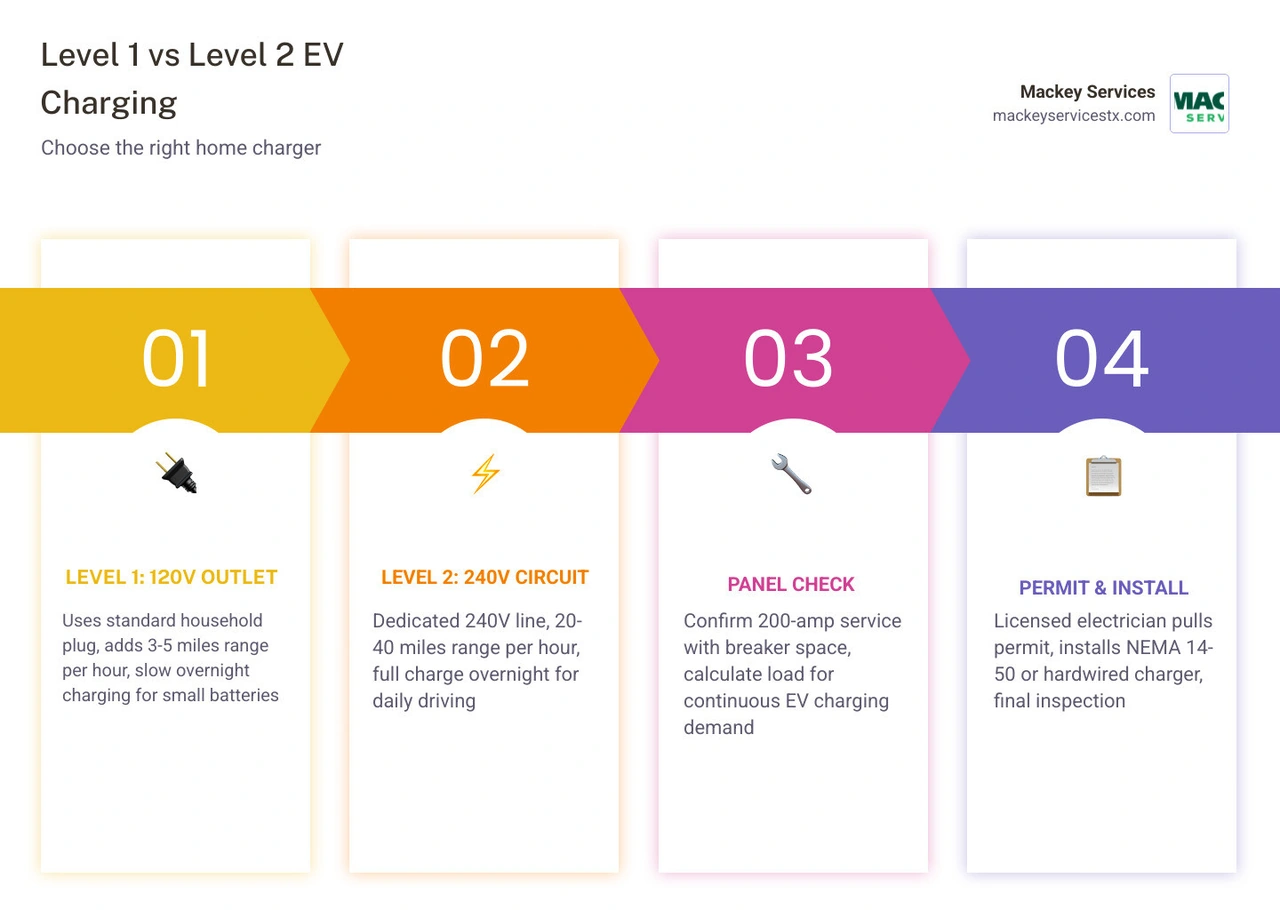
- Check your electrical panel - Confirm you have a 200-amp panel with available breaker space
- Choose your charger type - Decide between a plug-in (NEMA 14-50) or hardwired unit
- Pick the right location - Close to your parking spot and electrical panel
- Pull the required permit - Most Houston-area jurisdictions require one for new 240V circuits
- Hire a licensed electrician - Required by the National Electrical Code for dedicated 240V EV circuits
- Schedule inspection - A final inspection confirms your installation is safe and code-compliant
If you've recently bought an electric vehicle — or you're about to — you've probably already hit the limits of the standard 120-volt outlet that came with your car. Plugging into a regular household socket adds only 3 to 5 miles of range per hour. For most Houston-area commuters, that simply doesn't keep up with daily driving needs.
A Level 2 home charger changes everything. It runs on a 240-volt dedicated circuit — the same kind that powers an electric dryer — and delivers 20 to 40 miles of range per hour. That means most EVs go from nearly empty to fully charged overnight, without a second thought.
More than 90% of EV owners do the bulk of their charging at home once a Level 2 charger is installed. It's one of the most practical upgrades you can make after buying an electric vehicle. But the installation involves your home's electrical system, local permitting, and code compliance — so getting it right from the start matters.
At Mackey Services, our licensed electricians have been helping homeowners across Dickinson, League City, Friendswood, and the greater Houston area handle exactly this kind of upgrade safely and correctly.
Understanding the EV Charger Installation Guide for Homeowners: Level 1 vs. Level 2
When you start your journey into home charging, the first thing you need to understand is the difference between "levels." It's a bit like the difference between a garden hose and a fire hose. Both will eventually fill a swimming pool, but one is going to take a lot more of your weekend than the other.
| Feature | Level 1 Charging | Level 2 Charging |
|---|---|---|
| Voltage | 120V (Standard Outlet) | 240V (Heavy-duty Circuit) |
| Range Added Per Hour | 3–5 miles | 20–40 miles |
| Full Charge Time | 20–40+ hours | 4–10 hours |
| Installation | Plug and play | Professional electrical work |
| Best For | Low-mileage drivers/PHEVs | Daily commuters/Full EVs |
For residents in the Greater Houston Area, where a trip to the store can easily be a 20-mile round trip, Level 1 often leaves drivers with "range anxiety." If you are looking for a more reliable solution, our team provides EV Charging Station Installation in Houston TX to help you make the jump to Level 2.
Why Level 2 is the standard EV charger installation guide for homeowners
In May 2026, Level 2 charging has become the gold standard for residential properties. Why? Because it aligns perfectly with the way we live. We drive during the day, and we sleep at night. A Level 2 charger allows you to treat your car like your smartphone: plug it in when you get home, and wake up to a "full tank" every morning.
This setup requires a dedicated 240-volt circuit and a dedicated breaker in your electrical panel. Because EV charging is considered a "continuous load" by the National Electrical Code (NEC), the circuit must be sized at 125% of the charger’s amperage. For example, a 40-amp charger requires a 50-amp breaker. This ensures that the wires don't overheat during those 6-to-8-hour charging sessions.
Assessing Your Home’s Electrical Capacity and Panel Requirements
Before you buy a charger, we need to look at the "brain" of your home’s electrical system: the service panel. This is where many homeowners run into their first hurdle.
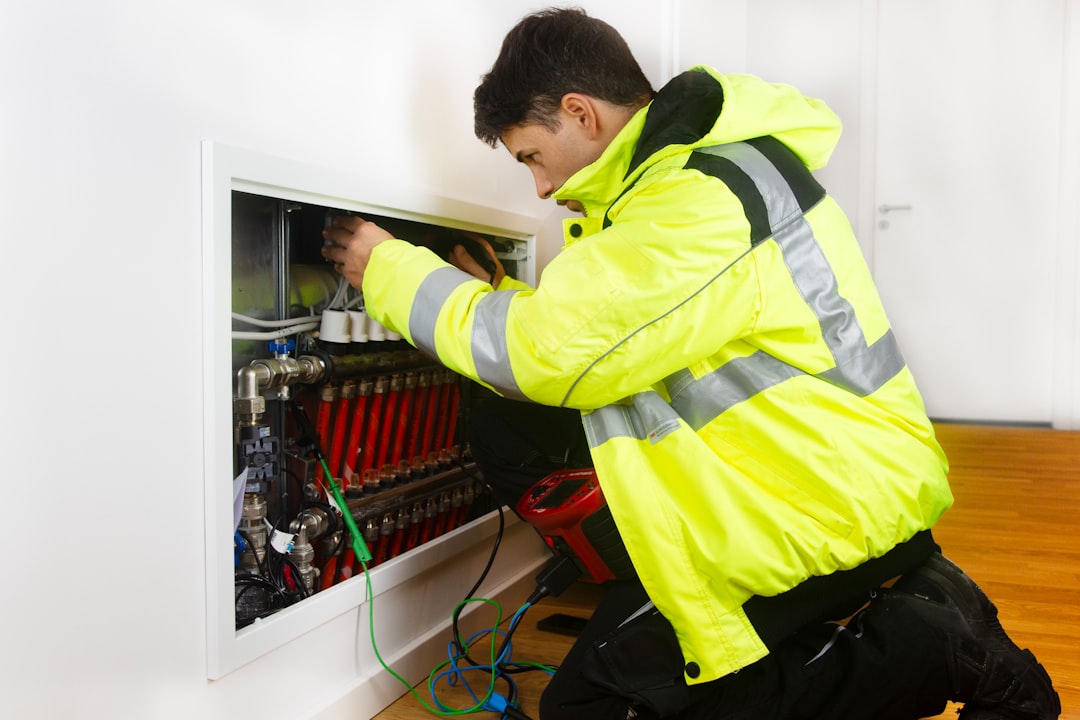
To safely add an EV charger, we perform a "load calculation." This isn't just checking if there is a physical empty slot for a new breaker. We have to look at the total amount of power your home is already using. If you have an electric oven, a central AC system (crucial for our Texas summers!), and a pool pump all running at once, adding a 50-amp EV circuit might push your panel past its safe limit.
Most modern homes built in the last 20 years have 200-amp service, which is usually sufficient for a Level 2 charger. However, if you live in one of the beautiful older neighborhoods in the area, you might need professional assistance. We specialize in EV Charging Station Installation in Dickinson TX and can help determine if your current setup meets NEC 2023 and 2026 safety standards.
Determining if you need a panel upgrade for your EV charger installation guide for homeowners
If your home has a 100-amp or 60-amp panel, an upgrade is almost always necessary. Trying to run a modern EV charger on an undersized panel is a fire hazard. Signs that your panel is struggling include flickering lights when the AC kicks on or breakers that trip frequently.
For homeowners in communities like League City, ensuring your panel can handle a continuous load is the first step toward a safe installation. You can learn more about our process for EV Charging Station Installation in League City TX to see how we handle these service upgrades. In some cases, smart load-management devices can be used to avoid a full panel replacement by pausing the car's charging when other heavy appliances are in use, but a dedicated 200-amp panel remains the best long-term investment for your home's value.
Key Steps for a Successful Home EV Charger Setup
Once we’ve confirmed your panel can handle the load, it’s time to plan the physical installation. This is more than just picking a spot on the wall; it’s about daily convenience and long-term durability.
Location Selection: Most homeowners choose the garage, but outdoor installations are common for those with driveways. You want the charger mounted in a spot where the cable can reach your vehicle’s charging port without being stretched tight or creating a tripping hazard. Most charger cables are 18 to 25 feet long.
Mounting Height: The NEC suggests mounting the charger at a height of 42 to 48 inches. This keeps the unit accessible while ensuring the cable is easy to wrap around the holster and stays off the floor where it could be stepped on or driven over.
If you’re in a neighboring area and need help planning your layout, we offer EV Charging Station Installation in Friendswood TX to ensure your setup is both functional and aesthetically pleasing.
Choosing between hardwired and plug-in NEMA 14-50 models
This is one of the most common questions in our ev charger installation guide for homeowners.
- Plug-In (NEMA 14-50): This uses a heavy-duty 240V outlet (like a dryer outlet). It offers portability; if you move, you can simply unplug the charger and take it with you. However, current codes often require a GFCI breaker for these outlets, which can sometimes cause "nuisance tripping" with certain charger models.
- Hardwired: The charger is wired directly into a junction box. This is generally considered more reliable and allows for higher amperage (up to 48 or 50 amps). Hardwired units are also better for outdoor installations as they provide a more weather-tight seal.
Whether you choose the flexibility of a plug-in or the power of a hardwired unit, our experts in EV Charging Station Installation in Pearland TX can ensure the wiring is sized correctly for your specific vehicle and charger.
Safety, Permits, and Professional Requirements
While there are plenty of DIY videos online, installing a Level 2 charger is not a weekend hobby project. Working with 240-volt electricity is dangerous. A single loose connection can cause heat to build up over time, leading to a fire.
In the Greater Houston Area, including cities like Pasadena, a permit is required for any new electrical circuit. This isn't just red tape; it's for your protection. Once the installation is complete, a city inspector will visit to verify that the work meets the National Electrical Code. This documentation is vital for your homeowner's insurance and for when you eventually sell your home.
We handle the permitting process for our clients, ensuring that every EV Charging Station Installation in Pasadena TX is fully compliant and safe for your family.
Navigating tax credits and incentives in 2026
One of the best parts of installing a charger in 2026 is the financial support available. The Federal Tax Credit (Section 30C) currently covers 30% of the cost of the hardware and installation, capped at $1,000 for residential properties.
Additionally, many local utility companies in the Houston area offer rebates or "off-peak" charging programs that can save you money on your monthly bill. For those looking for EV Charging Station Installation in Sugarland TX, we can help you identify which local programs are currently active to help offset your investment.
Frequently Asked Questions about Home EV Charging
Can I take my charger with me if I move?
If you have a plug-in model, yes! You simply unplug it from the NEMA 14-50 outlet and take it to your new home. However, you should leave the outlet and the dedicated breaker behind. If you have a hardwired unit, it’s technically part of the home’s electrical system. While you can have an electrician disconnect it, many homeowners find that leaving the charger adds significant resale value to the home, making it a major selling point for the growing number of EV drivers.
How long does the installation process take?
The actual physical installation usually takes between 2 and 4 hours. However, the total timeline is often longer due to the permitting and inspection process. Typically, we perform a site assessment, order the permit (which can take a few days to a week), and then schedule the installation day. Once the work is done, the city inspection usually happens within a few days.
Is outdoor installation safe in the Houston humidity?
Absolutely, provided you use the right equipment. You must choose a charger with a NEMA 3R or NEMA 4X rating, which is designed to withstand rain, humidity, and our intense Texas sun. We also use weather-rated conduit and fittings to protect the wiring from the elements. If you park in a driveway rather than a garage, our EV Charging Station Installation in Baytown TX services focus on these rugged, weatherproof solutions.
Conclusion
Installing a home EV charger is the ultimate "quality of life" upgrade for any electric vehicle owner. No more hunting for public chargers or waiting hours for a few miles of range. By following this ev charger installation guide for homeowners, you can ensure your home is ready for the future of transportation.
With over 30 years of experience serving the Greater Houston Area, Mackey Services is here to make the transition easy. We are a family-owned business based in Dickinson, TX, and we treat every home like it’s our own. From calculating your panel’s capacity to pulling the final permits, our licensed technicians provide the reliable, professional service you deserve.
Ready to wake up to a full charge every morning? Whether you're in Friendswood, League City, or right here in Dickinson, give us a call. We’re ready to help you power your journey.
Learn more about our Electrical Services and schedule your home assessment today!
Ready for a better day?
One call handles it all — HVAC, electrical, and generators across the Texas Gulf Coast. Less to pay. Better day. That's the Mackey way.
Mon–Fri: 7 AM – 8 PM · Sat: 8 AM – 5 PM · Licensed & insured · #TACLA 112769C · #TECL 558211