
How Smart Thermostats Reduce Summer Energy Costs: A Quick Start Guide
Discover how smart thermostats reduce summer energy costs with smart features, geofencing, and demand-response integration for maximum cooling savings.
Why Your Summer Energy Bills Keep Climbing — and What to Do About It
Understanding how smart thermostats reduce summer energy costs starts with one simple fact: your air conditioner is likely the single biggest driver of your summer electric bill. For most Houston-area homeowners, cooling alone can account for half of total household energy use — and that bill spikes hard from June through September.
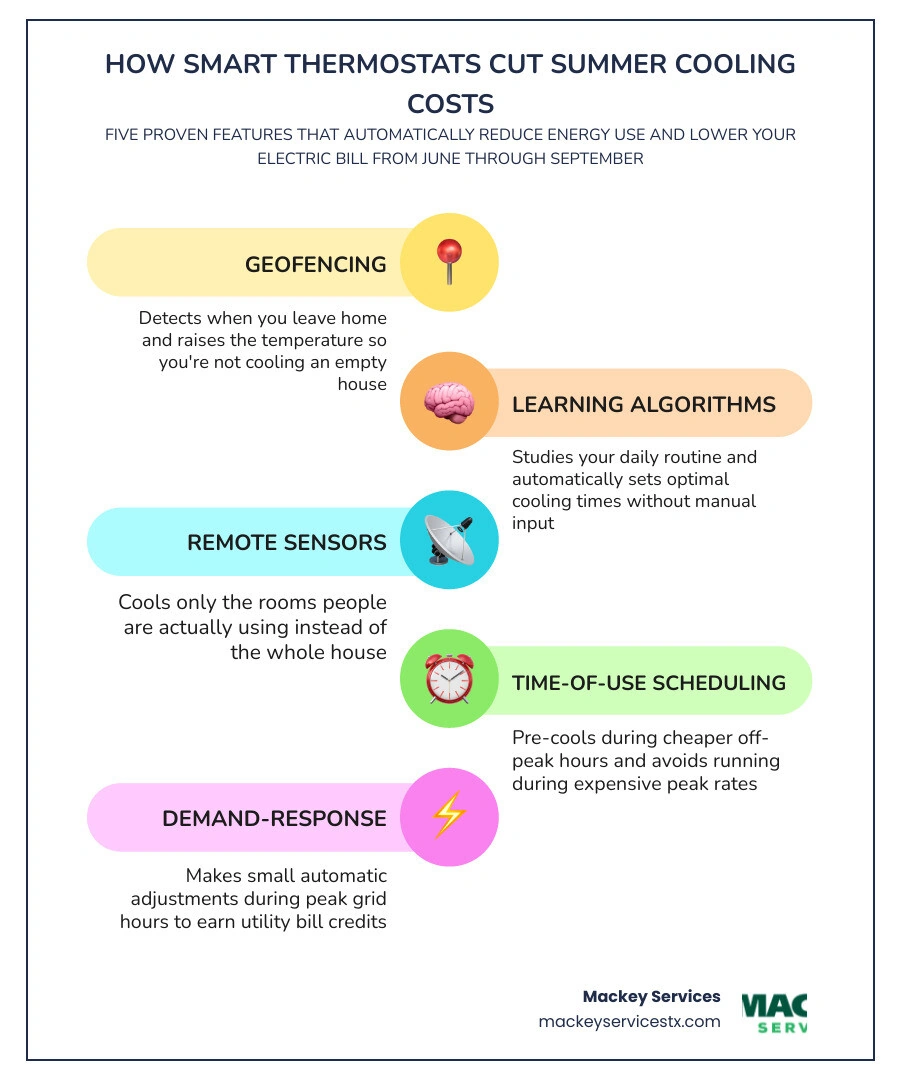
Here is a quick look at how smart thermostats cut summer cooling costs:
- Geofencing — automatically raises the temperature when you leave home, so you're not cooling an empty house
- Learning algorithms — study your schedule and adjust temperatures without you lifting a finger
- Remote sensors — cool the rooms people actually use, not empty spaces
- Time-of-use scheduling — pre-cools your home during cheaper off-peak hours before rates climb
- Demand-response programs — small automatic adjustments during peak grid hours earn you bill credits from your utility
- Eco and away modes — reduce unnecessary runtime during unoccupied hours
Together, these features can cut cooling costs by around 15%, with many homeowners saving between $131 and $145 annually — and more in hot climates like ours here in the greater Houston area.
If you've been living with a basic manual or older programmable thermostat, there's a good chance it's quietly costing you more than it should every single summer. The good news? The fix is straightforward, and the savings start almost immediately once your new device learns your routine.
How Smart Thermostats Reduce Summer Energy Costs Compared to Traditional Models
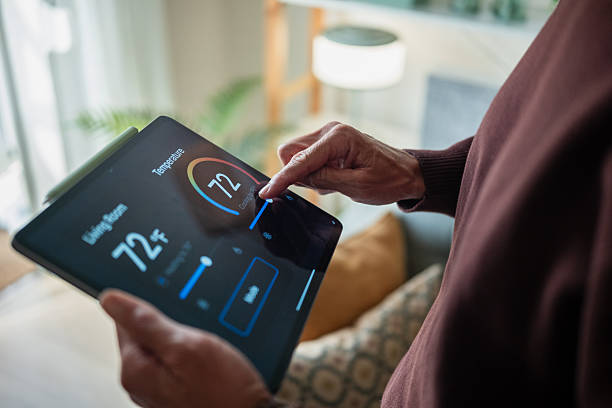
If you are still using an old-school manual thermostat, or even a basic programmable unit that requires manual scheduling, you are likely leaving money on the table. Traditional thermostats require constant human intervention. When life gets busy, we forget to turn down the AC before leaving for work, or we leave the cooling blasting while we are away on a weekend trip to Galveston. This human error is the primary cause of summer energy waste.
An EPA Energy Star study indicates that a properly managed thermostat can reduce heating and cooling bills by an average of 8% to 12%. However, industry research reveals a major problem: only about one-third of programmable thermostat owners actually program their devices. Most people find the interfaces too clunky, so they leave them on a single, static temperature year-round. This is where upgrading to a smart model makes a massive difference.
When you transition to a smart thermostat, the device takes over the heavy lifting. By utilizing Wi-Fi connectivity, machine learning, and onboard sensors, these units eliminate the need for you to constantly micromanage your HVAC system. They dynamically adjust your indoor temperature based on whether you are home or away, ensuring you never waste money cooling an empty house.
Beyond convenience, these devices optimize how your system runs. Instead of turning your system on and off abruptly, smart thermostats utilize adaptive recovery to reach your target comfort level gradually and efficiently. If you are wondering how this impacts your overall system health, you can read more about how Can Installing a Smart Thermostat Enhance HVAC System Performance to keep your cooling equipment running smoothly.
How Smart Thermostats Reduce Summer Energy Costs Through Geofencing
One of the most powerful features of a smart thermostat is geofencing. This technology connects to your smartphone's GPS location via a mobile app. You can establish a virtual "boundary" around your home—for instance, a two-mile radius.
When you and your family cross this boundary on your morning commute out of Dickinson or League City, the thermostat automatically detects that the house is empty. It immediately transitions into "Away Mode," raising the target temperature to a more economical baseline, such as 78°F or 80°F.
As you head back home after a long day, the thermostat tracks your return. Once you cross the geofence boundary again, the system activates your air conditioner so your living space is perfectly cool and comfortable the moment you walk through the front door. This seamless transition prevents your system from running unnecessarily for eight to ten hours a day, yielding substantial energy savings without sacrificing a single ounce of personal comfort.
How Smart Thermostats Reduce Summer Energy Costs with Time-of-Use Rates
For many residents in the Greater Houston Area, electricity providers offer time-of-use (TOU) rate plans. Under these plans, the cost of electricity fluctuates dramatically depending on the time of day, with peak pricing typically occurring during the hottest afternoon hours (often between 4:00 PM and 9:00 PM) when grid demand is highest.
Smart thermostats can be programmed to align with your specific utility rate structure. Instead of running your air conditioner during peak rate windows, the thermostat uses "pre-cooling" strategies. It will run your cooling system slightly below your normal setpoint during the cheaper, off-peak morning and early afternoon hours.
Once peak pricing begins, the thermostat scales back your AC usage, allowing the pre-cooled air to keep your home comfortable while you avoid paying premium electricity rates. This smart scheduling feature can save you a significant amount on your monthly summer utility bills.
Key Features That Deliver the Biggest Summer Savings
Smart thermostats are packed with advanced technology designed to optimize your home's thermal efficiency. To help you understand what features matter most, let's look at a quick comparison:
| Smart Feature | How It Works | Primary Summer Benefit |
|---|---|---|
| Geofencing & Occupancy Sensors | Tracks smartphone location and physical movement | Prevents cooling an empty home |
| Learning Algorithms | Analyzes daily routines and manual adjustments | Automates schedule creation within two weeks |
| Remote Room Sensors | Monitors temperatures in individual rooms | Eliminates hot spots and balances system runtime |
| Demand-Response Integration | Coordinates with local utility peak events | Earns bill credits and reduces grid strain |
Adaptive Learning and Scheduling
The best smart thermostats do not require you to program a complicated calendar. Instead, they use adaptive learning algorithms to build a schedule for you. During your first week or two of ownership, you simply adjust the temperature manually as you normally would—cooling it down when you get home, and raising it when you go to bed.
The thermostat records these inputs, cross-references them with local weather patterns, and automatically constructs a personalized, highly efficient cooling schedule. If your routine changes—for example, if you start working from home on Fridays—the thermostat detects the shift in behavior and adjusts your schedule accordingly.
Remote Room Sensors and Zoned Comfort
In many Texas homes, a single thermostat located in a central hallway does not accurately reflect the temperature of the rest of the house. Upstairs bedrooms can become sweltering hot spots, while the living room feels like an icebox. This temperature stratification often causes homeowners to crank down the thermostat, forcing the AC to run continuously just to make the hot rooms tolerable.
By pairing your smart thermostat with remote room sensors, you can measure both temperature and occupancy in specific spaces. If you are spending your afternoon in your home office, the thermostat can prioritize that room's sensor, cooling only the occupied space to your desired comfort level rather than over-conditioning empty rooms. If you are looking to upgrade your home's zoning capabilities, scheduling a Smart Thermostats Installation League City TX is an excellent step toward balanced, efficient comfort.
Utility Demand-Response Integration
During the hottest summer days, the Texas electrical grid experiences extreme stress. To prevent blackouts and manage load, local utilities offer demand-response programs. When you enroll your smart thermostat in these voluntary programs, your utility provider can send a signal to your thermostat to temporarily adjust your temperature by a few degrees during peak demand events (which usually last only an hour or two).
In exchange for participating, homeowners receive immediate bill credits or annual incentives. Because these minor temperature adjustments are often paired with brief pre-cooling periods right before the peak event, most residents barely notice a difference in indoor comfort, yet they enjoy lower overall energy costs and help keep the local grid stable.
Best Practices for Maximizing Your Summer Cooling Efficiency
Simply installing a smart thermostat is only the first step. To unlock its full energy-saving potential, you should pair the device with smart habits and consistent home maintenance.
To start, make sure you are regularly replacing your air filters. A clogged filter restricts airflow, forcing your air conditioner to work much harder and consume more electricity to cool your home. Additionally, keeping your system in peak condition is vital for energy efficiency. To learn more about keeping your system running optimally, read about the Benefits of Routine AC Maintenance and discover How Often Should HVAC Systems Be Serviced to protect your investment.
Setting the Right Temperature Baselines
The U.S. Department of Energy recommends setting your thermostat to 78°F during the summer when you are at home and active. While this might sound warm to some, pairing this baseline with ceiling fans can make your living spaces feel several degrees cooler due to the wind-chill effect.
When you leave your home for eight hours or more, aim for a setback of 7 to 10 degrees. This simple practice can save you up to 10% a year on your cooling costs.
Avoid the temptation to set your thermostat to an ultra-low temperature when you return home; air conditioners cool at the same steady rate regardless of how low you set the temperature, and setting it to 65°F will only result in unnecessary energy consumption and higher bills.
Leveraging Smart Home Integrations
Smart thermostats function beautifully as standalone devices, but they deliver even greater efficiency when integrated with other smart home technology.
By connecting your thermostat to smart window sensors, your system can automatically pause your AC if a window or patio door is left open. Integrating your thermostat with smart blinds allows your home to automatically lower window coverings during the hottest hours of the afternoon, blocking out intense solar heat gain and reducing the cooling load on your air conditioner.
Professional Placement and Calibration
Where your thermostat is installed inside your home matters just as much as how you program it. If your thermostat is placed on an exterior wall, near a drafty window, or in the direct path of afternoon sunlight, it will experience "ghost readings." The thermostat will believe your home is much warmer than it actually is, causing your air conditioner to run constantly and skyrocket your utility bills.
To ensure accurate readings and optimal performance, your thermostat should always be installed on an interior wall in a centrally located, frequently used room. If you need help finding the ideal location or want to ensure your system is perfectly calibrated, contact us for a professional Smart Thermostats Installation The Woodlands TX.
Frequently Asked Questions About Smart Thermostats
How much can I realistically save on my summer cooling bills with a smart thermostat?
On average, homeowners save about 15% on their summer cooling costs after installing an ENERGY STAR certified smart thermostat. In our hot and humid coastal Texas climate, where air conditioners run heavily for several months out of the year, these percentage savings can translate into significant monthly utility bill reductions. Your exact savings will depend on your home's insulation, your previous thermostat habits, and your local utility rate structure.
What is the typical payback period for a smart thermostat investment?
Most homeowners recoup the initial cost of a smart thermostat within 12 to 18 months. This rapid return on investment is driven by immediate monthly energy savings, which can be further accelerated by taking advantage of local utility rebates and federal tax credits. Under the Inflation Reduction Act, homeowners may qualify for a federal tax credit covering 30% of the cost of a smart thermostat, up to a maximum of $150. Many local electricity providers also offer instant rebates ranging from $50 to $100 just for registering your device.
Do smart thermostats work with heat pumps and older HVAC systems?
Yes, modern smart thermostats are compatible with approximately 95% of residential heating and cooling systems, including heat pumps and multi-stage systems. However, most smart models require a "C-wire" (common wire) to provide continuous, low-voltage power to run the Wi-Fi radio and color display. If your older home's wiring lacks a C-wire, you can utilize a specialized C-wire adapter kit (which is included in the box with many Ecobee and Nest models) or have a professional technician install a new wire to ensure safe, reliable operation.
Conclusion
Upgrading to a smart thermostat is one of the easiest, most cost-effective home improvements you can make to lower your summer energy bills and improve your indoor comfort. By automating your cooling schedule, leveraging geofencing, and integrating with local utility programs, these intelligent devices ensure you only pay to cool your home when you actually need it.
At Mackey Services, we have been keeping families comfortable across the Greater Houston Area—including Dickinson, Friendswood, League City, and Pearland—since 1992. As a local, family-owned business with an A+ rating from the Better Business Bureau, we pride ourselves on providing honest, reliable HVAC and electrical services.
Whether you need help selecting the perfect smart thermostat, need professional installation and calibration, or want to schedule a comprehensive AC tune-up to prepare your system for the summer heat, our licensed technicians are here to help.
Ready to maximize your home's energy efficiency and enjoy unwavering summer comfort? Schedule professional AC services with Mackey Services today, or call us to learn more about our custom indoor comfort solutions!
Ready for a better day?
One call handles it all — HVAC, electrical, and generators across the Texas Gulf Coast. Less to pay. Better day. That's the Mackey way.
Mon–Fri: 7 AM – 8 PM · Sat: 8 AM – 5 PM · Licensed & insured · #TACLA 112769C · #TECL 558211