
How Texas Pollen and Humidity Affect Indoor Air Quality
Discover how texas pollen and humidity affect indoor air. Combat allergens, mold & IAQ issues with expert Houston solutions.
Why Texas Pollen and Humidity Are an Indoor Air Quality Problem
How Texas pollen and humidity affect indoor air is something every Houston-area homeowner deals with — often without realizing it. Texas has one of the longest and most intense pollen seasons in the country, running almost year-round thanks to mild winters and warm, wet conditions. Add in Houston's notorious humidity — which can hit 90% on a typical morning — and you have a recipe for seriously compromised air inside your home.
Here is a quick summary of how outdoor conditions get inside and why it matters:
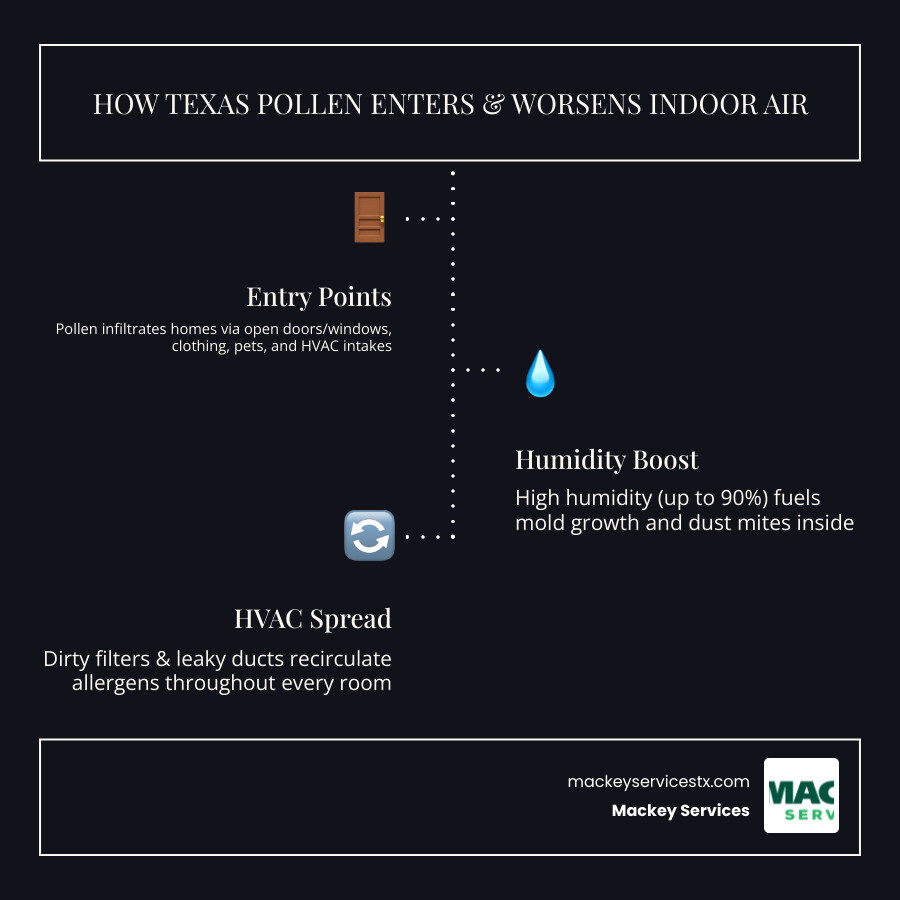
- Pollen infiltrates your home through open doors, windows, clothing, pets, and even your HVAC system's air intake
- High humidity feeds mold and dust mites, two of the most common indoor allergens
- Your HVAC system can spread allergens throughout every room if filters are dirty or ducts are leaking
- Indoor air can be 2 to 5 times more polluted than outdoor air, according to the EPA
- Symptoms like sneezing, fatigue, and brain fog that get worse at home are often a sign of poor indoor air quality
The problem does not stop when you close the windows. Once pollen and moisture get inside, your home's air circulation system can keep recirculating them for weeks.
The Year-Round Cycle: How Texas Pollen and Humidity Affect Indoor Air
In many parts of the country, "allergy season" is a polite way of saying "spring." Here in the Greater Houston Area, it is more like a permanent lifestyle. Because our winters in April 2026 remain mild, the growing season never truly stops. This creates a "triple threat" of trees, grasses, and weeds that take turns attacking our nasal passages.
The Four Seasons of Texas Pollen
Each season brings a new airborne adversary. Understanding this cycle is the first step in managing how texas pollen and humidity affect indoor air.
- Winter (December – February): Mountain Cedar. Also known as Ashe Juniper, this is the culprit behind the infamous "Cedar Fever." These trees release massive amounts of pollen that the Texas wind carries for hundreds of miles. Even if you don't have a cedar tree in your backyard in Alvin or Pearland, the wind ensures you still breathe it in.
- Spring (March – May): Oak, Pecan, and Elm. This is when you see that thick yellow film on your car. Oak pollen is heavy and sticky. When combined with our high humidity, it becomes a "sludge" that can coat your outdoor AC unit and find its way into your home's entryways.
- Summer (June – July): Grasses. Bermuda and Johnson grass are the primary offenders during the hot Houston summers.
- Fall (August – November): Ragweed. A single ragweed plant can produce up to one billion pollen grains in a single season. Because these grains are lightweight, they stay airborne longer and infiltrate homes through even the smallest gaps.
If you are feeling the weight of these seasons, our Indoor Air Quality Service Jersey Village TX can help identify which pollutants are most prevalent in your living space.
The Role of Wind and Weather
Texas weather is rarely subtle. On dry, windy days, pollen counts skyrocket as the wind shakes trees and grasses, sending microscopic particles into the air. When the wind dies down and the humidity rises, these particles don't just disappear; they settle. They land on your porch, your pets, and your clothes. Without proper filtration, they eventually settle into your carpets and upholstery, where they can be kicked back into the air every time someone walks across the room.
The Humidity Factor: Mold, Dust Mites, and IAQ
While pollen gets most of the headlines, humidity is the silent partner that makes indoor air quality worse. Houston averages 90 percent humidity in the mornings and 55 percent in the evening. This isn't just uncomfortable for your skin; it is an invitation for biological growth.
Mold: The Moisture-Loving Menace
Mold spores are everywhere, but they need two things to thrive: a food source (like drywall or dust) and moisture. When indoor humidity levels rise above 50%, mold begins to colonize. In the coastal climate of cities like Galveston or Seabrook, managing this moisture is a constant battle. High humidity causes condensation on windows and inside air ducts, creating the perfect damp environment for mold to grow and release even more spores into your breathing air.
If you've noticed a musty smell in your home, it’s time to look into Whole House Dehumidification Houston TX to bring those levels back into a healthy range.
Dust Mites: The Number One Indoor Allergen
Dust mites are microscopic organisms that are the leading cause of indoor allergies. They don't drink water; they absorb moisture from the air. This means that in a humid Texas home, dust mites are essentially at an all-you-can-eat buffet. They thrive in bedding, carpets, and upholstered furniture. By keeping your home’s humidity high, you are inadvertently helping these pests reproduce.
Using a Hygrometer
We always recommend that homeowners in areas like The Woodlands keep a digital hygrometer in the house. This inexpensive device measures the relative humidity. If you see that number consistently climbing above 50%, you are in the "danger zone" for mold and dust mites. For residents in the northern reaches of our service area, Whole House Dehumidification The Woodlands TX is often the most effective way to keep the air crisp and clean.
Recognizing how texas pollen and humidity affect indoor air health symptoms
It is easy to mistake poor indoor air quality for a common cold or "just the weather." However, if your symptoms improve when you leave the house and worsen when you are relaxing in the living room, your home's air is likely the culprit. Common red flags include:
- Sneezing and Congestion: Often triggered by pollen that has settled indoors.
- Itchy, Watery Eyes: A classic reaction to both outdoor pollen and indoor dust mites.
- Fatigue and Brain Fog: Your body works harder to breathe when the air is thick with pollutants.
- Sinus Inflammation: High humidity can make it harder for your sinuses to drain, leading to pressure and headaches.
- Asthma Triggers: Mold spores and dust mites are notorious for causing flare-ups.
If these symptoms sound familiar, residents can seek relief through Indoor Air Quality Service Pasadena TX to clean and purify the air they breathe every day.
Infiltration and Circulation: How Allergens Enter the Home
You might think that keeping the doors and windows shut is enough to keep the Texas outdoors... well, outdoors. Unfortunately, your home is not a sealed vault.
The "Stack Effect" and Negative Pressure
Homes breathe. Due to temperature differences between the inside and outside, air naturally moves through the structure. This is called the "stack effect." Warm air rises and escapes through the attic, creating negative pressure in the lower levels of your home. This pressure literally "sucks" outdoor air — and all the pollen it carries — through tiny cracks around windows, door seals, and even electrical outlets.
Pets and Clothing: The Pollen Taxis
Your golden retriever doesn't just bring back a ball; his fur is a magnet for oak and ragweed pollen. Similarly, when you walk from your car to your front door in League City, pollen hitches a ride on your hair and clothes. Once you sit on the couch, those allergens are transferred to your furniture.
The HVAC System: Friend or Foe?
Your HVAC system is the "lungs" of your home. If it is working correctly, it filters out these particles. However, if your system has leaky ducts, it can actually pull unfiltered air from your attic or crawlspace and distribute it to every room. The EPA estimates that the average home loses 20 to 30 percent of its air to duct leaks.
To combat this, many homeowners opt for Whole House Air Purification Pearland TX to catch the particles that standard filters miss. And if you’ve ever wondered, "Can I Clean My Air Ducts Myself," the answer is usually that professional equipment is needed to truly remove the "sludge" created by pollen and moisture. For those in the coastal areas, our Indoor Air Quality Service League City TX ensures your system is a barrier, not a bridge, for allergens.
Understanding how texas pollen and humidity affect indoor air infiltration
Infiltration is often worse in older homes, but even new construction in Baytown can suffer. Microscopic particles are small enough to pass through standard weather stripping.
Common infiltration points include:
- Attic Leaks: Pollen settles in the attic and is pulled down through recessed lighting or pull-down stairs.
- Window and Door Seals: Even a gap the size of a nickel can let in millions of pollen grains.
- HVAC Intake: If the return vents are near a door that is frequently opened, the system sucks in the outdoor air immediately.
Upgrading your home's defense with Whole House Air Purification Houston TX or professional sealing via Indoor Air Quality Service Baytown TX can significantly reduce the "pollen load" your family breathes.
Actionable Solutions for Texas Homeowners
The good news is that you don't have to just live with the sneezing. There are several concrete steps we can take to reclaim our indoor air.
Upgrade Your Filtration
Standard fiberglass filters are designed to protect the HVAC equipment from large dust bunnies, not to protect your lungs from microscopic pollen. We recommend upgrading to pleated filters with a MERV rating of 11 or higher during peak seasons.
For the ultimate protection, HEPA (High-Efficiency Particulate Air) filters can remove up to 99.97% of airborne particles as small as 0.3 microns. While most residential systems can't handle a true HEPA filter without modification, we can install Whole House Air Purification Katy TX systems that offer HEPA-level cleaning without straining your AC motor.
The Power of UV Lights
In our humid climate, the evaporator coil in your AC unit is often damp. This is a prime spot for mold and bacteria. Installing UV Lights Spring TX inside your HVAC system uses ultraviolet light to neutralize these biological contaminants before they can be blown into your home.
Lifestyle Changes
Beyond mechanical solutions, simple habits make a big difference. Check out our guide on 9 Ways to Improve Indoor Air Quality at Home for more tips, but here are the big ones:
- Implement a Shoes-Off Policy: This prevents tracking pollen and pesticides across your floors.
- Wash Bedding Weekly: Use hot water to kill dust mites.
- Groom Pets Frequently: Wipe them down with a damp cloth after they've been outside.
Maintaining the ideal environment for allergy relief
To truly win the battle against how texas pollen and humidity affect indoor air, you need to maintain a "Goldilocks" environment — not too dry, and definitely not too humid.
The CDC and other health organizations recommend keeping indoor humidity between 30% and 45%.
- Below 30%: Your nasal passages become dry and irritated, making you more susceptible to allergens.
- Above 50%: Mold and dust mites begin to thrive.
In cities like Texas City, achieving this balance usually requires more than just running the AC. Whole House Dehumidification Texas City TX allows you to pull moisture out of the air even on those mild, rainy days when the AC isn't running.
Pairing this with UV Lights Seabrook TX creates a two-pronged defense: the dehumidifier stops the growth, and the UV lights neutralize any spores that remain. Modern smart thermostats can also be integrated with Whole House Dehumidification Sugarland TX systems to give you real-time control over your home's climate from your smartphone.
Frequently Asked Questions about Texas Air Quality
What is the ideal indoor humidity level for Texas homes?
We recommend staying within the 30-45% range. This is the "sweet spot" that prevents mold growth and dust mite proliferation while keeping your respiratory system comfortable. In highly humid areas, achieving this consistently often requires Whole House Dehumidification Alvin TX.
How often should I change my HVAC filters during peak pollen season?
During the height of oak or ragweed season, you should check your filter every 30 days. If it looks grey or fuzzy, change it. A clogged filter doesn't just stop cleaning the air; it puts massive strain on your HVAC system, leading to higher energy bills. For residents in Dickinson, our Indoor Air Quality Service Dickinson TX can help you set up a maintenance schedule that keeps your air fresh year-round.
Can UV lights help with indoor mold caused by humidity?
Yes! UV lights are incredibly effective at biological neutralization. By installing UV Lights Galveston TX, you are targeting mold at its source — the damp AC coils. This prevents mold from colonizing and spreading spores through the ductwork. It is a popular choice for UV Lights Sugarland TX as well, where the combination of heat and humidity can lead to rapid biological growth inside HVAC units.
Conclusion
Living in the Greater Houston Area means we get to enjoy beautiful landscapes and warm weather, but it also means we have to be proactive about our indoor environment. Understanding how texas pollen and humidity affect indoor air is the key to a healthy, comfortable home. From the "Cedar Fever" of winter to the ragweed of fall, the outdoor elements are always trying to find a way inside.
At Mackey Services, we bring 30 years of experience and an A+ BBB rating to every home we visit. Whether you are in Alvin, Pasadena, or right here in Dickinson, TX, we treat you like family. We understand the unique challenges of the Texas climate because we live here too.
Don't let the pollen and humidity dictate your comfort. From high-efficiency filtration to whole-house dehumidification, we have the tools to make your home a true sanctuary. Breathe easier with professional indoor air quality solutions and let us help you find the unwavering comfort you deserve.
Ready for a better day?
One call handles it all — HVAC, electrical, and generators across the Texas Gulf Coast. Less to pay. Better day. That's the Mackey way.
Mon–Fri: 7 AM – 8 PM · Sat: 8 AM – 5 PM · Licensed & insured · #TACLA 112769C · #TECL 558211