
What's Included in an HVAC Maintenance Plan?
Discover what does an HVAC maintenance plan include, from inspections to tune-ups that keep your Dickinson home comfortable year-round.
What is an HVAC Maintenance Plan and How Does It Differ From Warranties?
What does an HVAC maintenance plan include is one of the most common questions homeowners ask before signing a service agreement — and it's a smart one to ask before the Houston summer heat arrives.
Here's a quick answer:
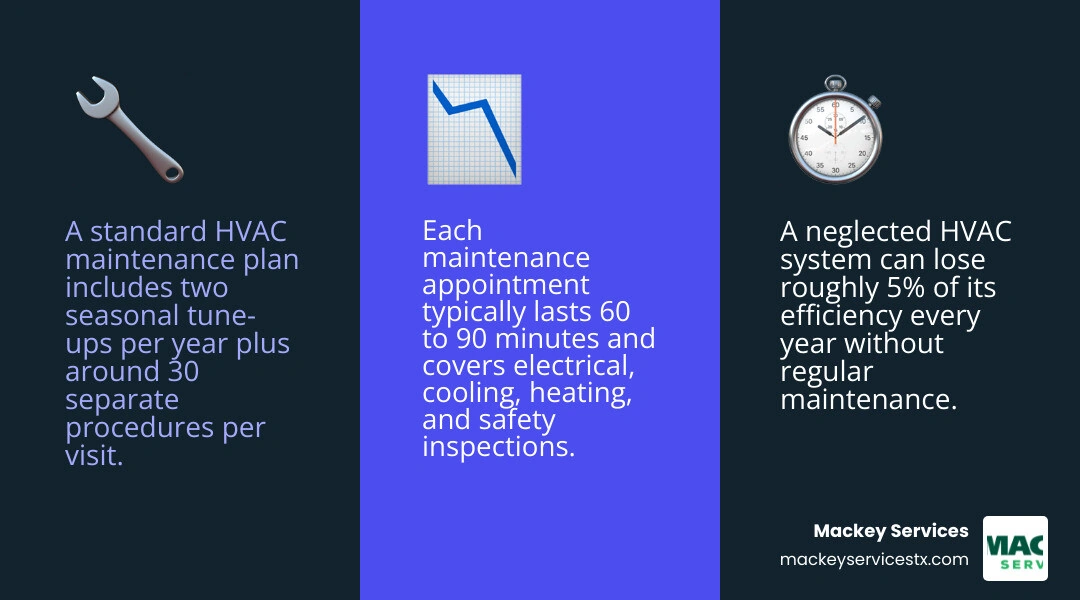
A standard HVAC maintenance plan typically includes:
- Two seasonal tune-ups per year (spring for cooling, fall for heating)
- Multi-point inspection of electrical components, motors, and safety controls
- Cleaning of condenser coils, evaporator coils, and condensate drain lines
- Refrigerant level check
- Thermostat calibration
- Filter inspection or replacement
- Carbon monoxide and heat exchanger inspection (heating visit)
- Priority scheduling and repair discounts depending on plan tier
Most plans cover around 30 separate procedures per visit, with each appointment lasting 60 to 90 minutes.
For homeowners in Dickinson, League City, Friendswood, and the greater Houston area, a maintenance plan isn't just a nice-to-have — it's a practical way to protect your system against the region's intense heat, humidity, and sudden cold snaps. A neglected HVAC system can lose roughly 5% of its efficiency every year, and skipping service is one of the leading causes of premature system failure. Regular preventative care keeps your system running longer, your energy bills lower, and your home comfortable year-round.
Similar topics to what does an hvac maintenance plan include:
An HVAC maintenance plan is a proactive service agreement between you and a professional heating and cooling company. Think of it as a wellness plan for your home’s climate control system. Instead of waiting for your air conditioner to break down on a scorching July afternoon in Dickinson, a maintenance plan ensures that licensed technicians regularly inspect, clean, and tune up your equipment. This consistent attention prevents minor wear and tear from turning into catastrophic failures.
To truly understand the value of these plans, it is important to distinguish them from other types of coverage. Many homeowners confuse maintenance plans with equipment warranties or home warranties, but they serve completely different purposes:
- Equipment Warranty (Manufacturer’s Warranty): This is provided by the system manufacturer (like Trane, Carrier, or Lennox) when your unit is installed. It covers the cost of replacement parts if a component fails due to a manufacturing defect within a specific timeframe (often 5 to 10 years). However, there is a major catch: almost all manufacturers explicitly state that their warranty is voided if the system is not professionally maintained every year.
- Home Warranty: This is a broad service contract purchased by a homeowner that covers repairs and replacements for various home systems (plumbing, electrical, appliances, and HVAC) when they break down. Home warranties are reactive. You pay a service fee, and they send a contractor to fix a broken item. They do not cover preventative maintenance, and they can refuse coverage if they determine a system failed due to neglect.
Investing in a maintenance plan is the key to preserving your equipment warranty and avoiding the headache of home warranty disputes. By keeping detailed records of your regular tune-ups, you establish a clear "medical history" for your system. To explore how these preventative measures translate into direct advantages for your household, read about the Benefits of Routine AC Maintenance.
Understanding what does an hvac maintenance plan include vs. a home warranty
A home warranty is designed to act as a reactive safety net when something goes wrong, but it does nothing to keep your systems running efficiently. When you rely solely on a home warranty, you run the risk of experiencing unexpected breakdowns during peak seasonal shifts. Furthermore, home warranty companies often have strict coverage limits and may use the cheapest available parts or technicians, leading to prolonged outages.
In contrast, an HVAC maintenance plan is a proactive partnership. It includes scheduled bi-annual inspections designed to optimize energy efficiency, clean vital components, and detect safety hazards like carbon monoxide leaks. While a home warranty might eventually replace a seized compressor after weeks of waiting in the Texas heat, a maintenance plan prevents that compressor from seizing in the first place by keeping the coils clean and the electrical contacts tight.
What Does an HVAC Maintenance Plan Include?
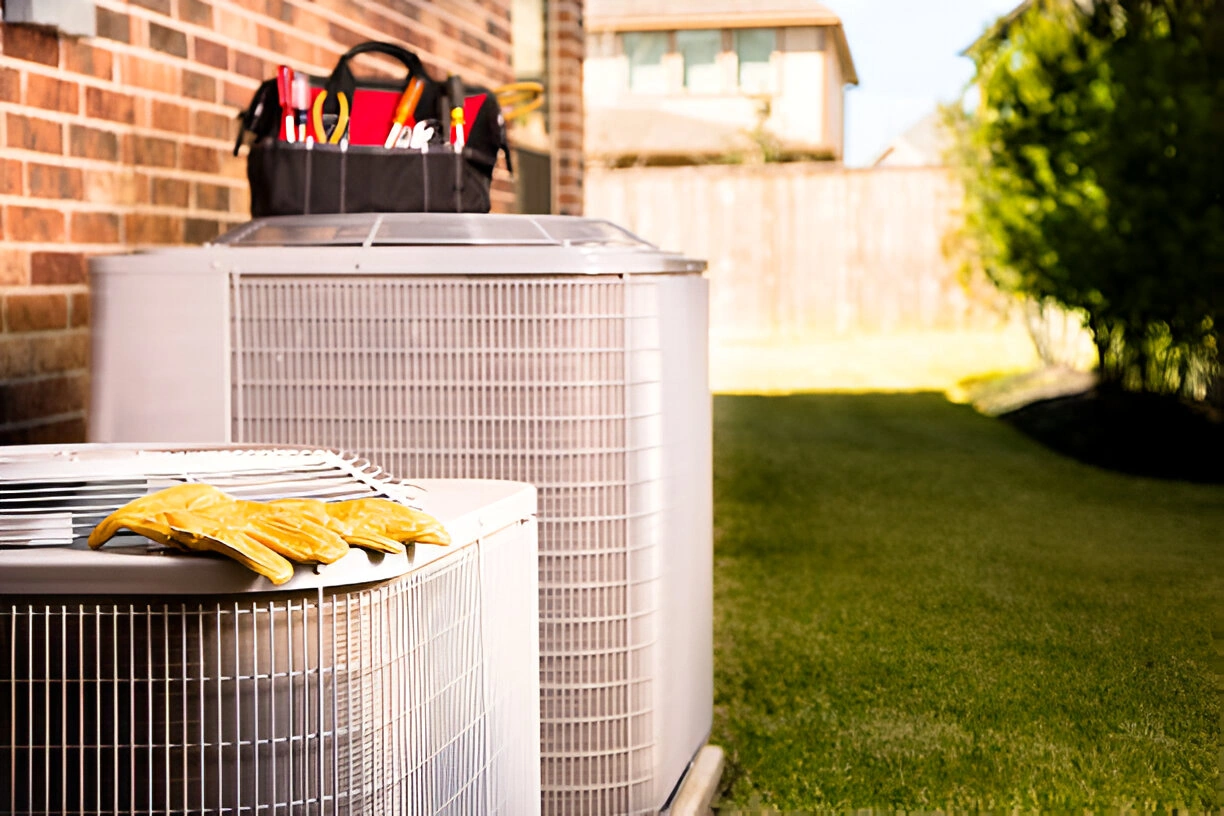
A comprehensive maintenance plan goes far beyond a simple filter swap. When a professional technician arrives at your home, they perform a rigorous multi-point inspection that covers both the indoor and outdoor portions of your heating and cooling system. This process is structured to ensure electrical safety, mechanical reliability, and peak thermodynamic performance.
To help you prepare for your first appointment, we have put together a detailed breakdown of What to Expect During HVAC System Maintenance. During a standard visit, our professionals will examine everything from the thermostat settings to the physical integrity of your ductwork, ensuring no hidden issues are left unresolved.
What does an hvac maintenance plan include for cooling and heating systems?
Because our weather in the Greater Houston Area swings from sweltering humidity to unexpected winter freezes, your HVAC system has two distinct jobs. Consequently, professional maintenance is divided into two specialized seasonal visits: a spring cooling check and a fall heating check.
| Maintenance Task | Spring Cooling Visit | Fall Heating Visit |
|---|---|---|
| Condenser Coil Cleaning | Yes (Deep Clean) | No |
| Evaporator Coil Inspection | Yes | No |
| Refrigerant Level Check & Sub-cooling Measurement | Yes | No |
| Condensate Drain Line Flushing | Yes | No |
| Heat Exchanger Inspection for Cracks | No | Yes (Critical Safety) |
| Carbon Monoxide Testing | No | Yes (Critical Safety) |
| Thermostat Calibration | Yes | Yes |
| Blower Motor & Fan Belt Inspection | Yes | Yes |
| Electrical Connection Tightening & Amperage Check | Yes | Yes |
| Burner Assembly Cleaning & Ignition Testing | No | Yes |
Let's look closer at why these specific tasks are so vital:
- Coil Cleaning: Your outdoor condenser coil and indoor evaporator coil are responsible for transferring heat. In coastal Texas, dust, pollen, and salt air can coat these coils. A dirty condenser coil can reduce your system's cooling capacity by up to 30%, forcing the compressor to run hotter and work harder.
- Refrigerant Levels: Technicians check refrigerant levels using precise super-heat and sub-cooling measurements. Incorrect refrigerant levels—whether too high or too low—can destroy your compressor, leading to an incredibly expensive repair.
- Condensate Drain Line Cleaning: High humidity means your air conditioner pulls gallons of water out of the air every day. Algae and sludge love to grow in these warm, wet drain lines. Flushing these lines prevents clogs that can cause water to back up, ruining your drywall and flooring.
- Heat Exchanger & Carbon Monoxide Testing: During the heating visit, inspecting the heat exchanger for cracks is a non-negotiable safety step. A cracked heat exchanger can allow deadly carbon monoxide gas to leak directly into your home’s air supply.
- Electrical and Mechanical Components: Tightening loose electrical connections prevents voltage drops that shorten the lifespan of motors and capacitors. Calibrating your thermostat ensures your system doesn't run longer than necessary, keeping your energy bills under control.
Knowing how these components work together helps explain why timing is everything. For a complete look at scheduling your tune-ups, check out our guide on How Often Should You Service Your HVAC System.
The Recommended Schedule and the Risks of Skipping Service
To keep your home comfortable and safe, professional HVAC maintenance should be performed at least twice a year. The ideal schedule is to arrange your air conditioning tune-up in the spring (typically March or April) before the extreme heat arrives, and your heating tune-up in the fall (September or October) before temperatures drop.
For homeowners utilizing heat pumps, this bi-annual schedule is even more critical. Because heat pumps provide both heating and cooling, they operate year-round without a seasonal break. Without regular maintenance, these hard-working systems can experience rapid component wear and a sharp decline in operating efficiency.
Skipping even a single maintenance visit can trigger a domino effect of household issues:
- Declining Efficiency: Dust and dirt accumulation forces your system to work harder to move air and transfer heat. This extra effort can increase your energy use by 15% or more.
- Premature System Failure: Statistically, systems that do not receive regular maintenance fail 30% to 40% earlier than well-maintained units. A system designed to last 15 to 20 years may break down permanently after just 10 years of neglect.
- Poor Indoor Air Quality: Dust, pet dander, and mold spores can accumulate inside dirty ductwork and blower assemblies, circulating throughout your living spaces.
- Ductwork Energy Loss: During a professional inspection, technicians look for leaky ducts. Unsealed or damaged ductwork can lose 20% to 30% of conditioned air before it ever reaches your rooms.
Whether you live north of the bay or closer to the coast, local expertise is essential to combatting regional humidity. If you are located near Trinity Bay, consult our Best AC Maintenance Guide Baytown TX. If you are closer to our home base, check out the AC Maintenance League City TX Guide for localized advice on protecting your system from coastal wear.
The $5,000 Rule for HVAC Repair vs. Replacement
When an older HVAC system experiences a major breakdown, homeowners are faced with a tough choice: should you repair the unit or replace it entirely? This is where the $5,000 Rule becomes an incredibly helpful decision-making tool.
To use the $5,000 Rule, simply multiply the age of your HVAC system by the estimated cost of the repair:
Age of System (Years) × Cost of Repair = Score
- If the result is less than $5,000, repairing the system is generally the smarter financial move.
- If the result is more than $5,000, your money is likely better spent investing in a new, energy-efficient system replacement.
For example, if a 12-year-old system needs a compressor replacement:
12 years × repair cost = Score
Because a compressor is one of the most expensive components to replace, this calculation will almost always exceed $5,000, pointing toward a system replacement. Conversely, if a 5-year-old system needs a simple electrical capacitor replaced, the calculation will fall well below the threshold, making a repair the obvious choice.
Regular maintenance acts as a financial safety net by preventing these high-dollar component failures in the first place. For more strategies on keeping your home comfort affordable, take a look at our Affordable AC Maintenance Guide Houston TX.
Choosing the Right Plan and Understanding Exclusions
When selecting an HVAC maintenance plan, it is important to read the terms and conditions carefully. Not all service agreements are created equal. Many companies offer tiered plans—such as Basic, Standard, and Premium options—to fit different budgets and household needs.
When comparing agreements, look for these valuable member perks:
- Priority Scheduling: If your system breaks down during a peak summer heatwave, plan members are moved to the front of the service line, ensuring you aren't left waiting in a hot house.
- Repair Discounts: Most high-quality plans include a 10% to 20% discount on any parts and labor if repairs are needed.
- No Diagnostic Fees: Some premium tiers waive the standard diagnostic fee entirely when a technician comes out to troubleshoot an issue.
- Transferability: If you sell your home, a transferable maintenance agreement adds immediate value for the buyer, proving that the home's heating and cooling systems have been meticulously cared for.
It is equally important to understand what is not included. Maintenance plans are service contracts, not insurance policies. They cover the labor and procedures required to clean and inspect your system, but they typically exclude the cost of major replacement parts, emergency repair labor, ductwork modifications, or refrigerant refills.
If you live along the Gulf, salt-heavy air requires highly specialized attention. Homeowners on the island can find tailored advice in our guide to AC Maintenance Galveston TX, while those further inland can refer to AC Maintenance Pasadena TX to choose the best local protection plan.
DIY Maintenance Tasks vs. Professional Service
While a professional maintenance plan is essential for the technical aspects of your system, there are several simple tasks homeowners can—and should—perform to keep things running smoothly between professional visits:
- Air Filter Replacement: This is the single most important DIY task. Inspect your air filters every 30 days and replace them at least every 1 to 3 months. A dirty filter blocks airflow, forcing your blower motor to work harder, which can cause the evaporator coil to freeze.
- Outdoor Unit Clearance: Keep shrubs, weeds, and lawn debris cut back at least two feet away from your outdoor condenser unit. Your system needs plenty of open air space around it to release heat efficiently.
- Keep Vents Clear: Make sure indoor return and supply vents are not blocked by furniture, curtains, or rugs. Restricted airflow strains the entire system.
However, many tasks must be left to licensed professionals. Working with high-voltage electrical connections, testing safety controls, inspecting gas valves, and handling chemical refrigerants require specialized tools and certifications. Attempting these tasks yourself can void your warranty, damage your system, or cause serious personal injury.
For a complete breakdown of how to care for your system in our unique coastal environment, check out our HVAC Maintenance Tips for Coastal Texas Homeowners.
Frequently Asked Questions About HVAC Maintenance Plans
What is typically not covered by an HVAC maintenance plan?
A standard maintenance plan covers preventive care, meaning major repairs, replacement parts (like a failed compressor or fan motor), ductwork modifications, and refrigerant refills are not covered. If a technician identifies a worn-out part during an inspection, they will provide a written recommendation and an estimate for the repair, which is usually discounted for plan members.
Will a maintenance plan keep my manufacturer warranty valid?
Yes! Most major HVAC manufacturers explicitly require documented annual professional maintenance to honor their parts warranties. If a major component fails and you cannot provide proof of regular service, the manufacturer can deny your warranty claim, leaving you responsible for the full cost of the replacement part.
How long does a typical maintenance visit take?
A thorough, professional maintenance visit typically takes between 60 to 90 minutes per system. During this time, the technician executes around 30 separate diagnostic and cleaning procedures to ensure your system is completely safe and operating at peak performance.
Conclusion
A comprehensive HVAC maintenance plan is one of the smartest investments you can make for your home’s comfort, safety, and long-term budget. By staying ahead of seasonal wear and tear, you can prevent unexpected breakdowns, lower your monthly energy bills, and extend the lifespan of your system by several years.
At Mackey Services, we have been keeping families comfortable in Dickinson, Friendswood, League City, and the surrounding communities since 1992. As a family-owned business with over 30 years of local experience and an A+ rating from the Better Business Bureau, we treat your home like our own. Our licensed technicians provide reliable, honest service without high-pressure sales tactics. From custom ductwork fabrication to our 24/7 emergency readiness, we are here to support you through every hot summer and unexpected winter cold snap.
Ready to secure year-round peace of mind for your home? Schedule your HVAC maintenance plan with Mackey Services today, and let our family take care of yours!
Ready for a better day?
One call handles it all — HVAC, electrical, and generators across the Texas Gulf Coast. Less to pay. Better day. That's the Mackey way.
Mon–Fri: 7 AM – 8 PM · Sat: 8 AM – 5 PM · Licensed & insured · #TACLA 112769C · #TECL 558211