
Navigating GFCI Requirements for Custom Pool Lighting in Greater Houston
See what local codes demand this summer. Navigating GFCI requirements for custom pool lighting in Greater Houston keeps water features safe. Schedule a pro.
The Hidden Electrical Risks in Your Pool This Summer
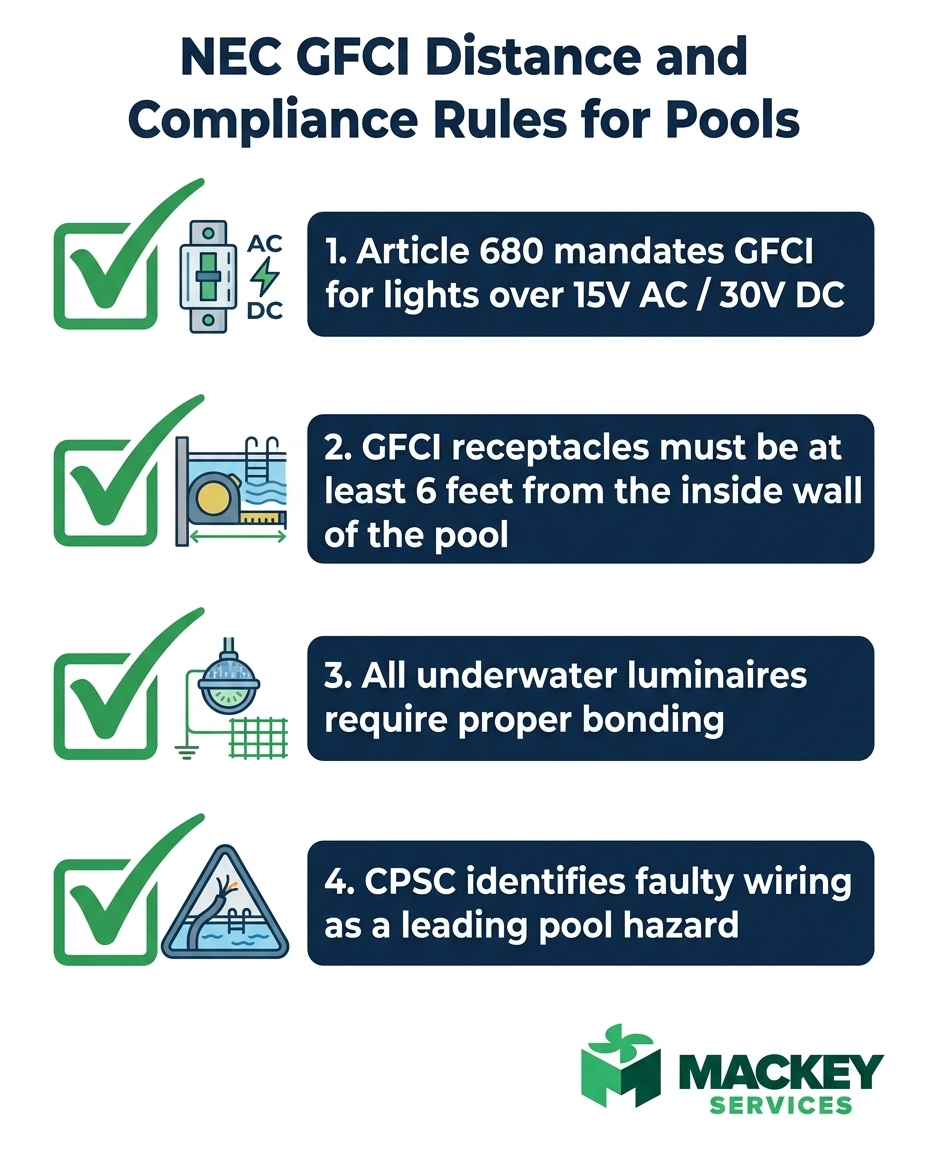
According to the U.S. Consumer Product Safety Commission (CPSC), faulty underwater lighting and aging electrical wiring are among the leading causes of severe electrical shock in residential swimming pools. Navigating GFCI Requirements for Custom Pool Lighting in Greater Houston starts with understanding that these statistics represent a very real danger in your own backyard. As we enter the July peak summer season, your outdoor electrical systems are placed under maximum load. The combination of intense heat, continuous pool pump operation, and prolonged lighting use creates an environment where any electrical vulnerability can quickly become a serious hazard.
To ensure your outdoor living space remains safe, it is critical to rely on licensed professionals for your electrical services and specialized upgrades. Upgrading or repairing underwater illumination requires highly technical specialty electrical services that go far beyond standard indoor wiring.
The concrete problem many homeowners face is ensuring that their custom pool lighting meets strict Ground Fault Circuit Interrupter (GFCI) safety codes without attempting dangerous DIY work. Water and electricity are a deadly combination, leaving absolutely zero margin for error. When electrical currents escape their intended path in a wet environment, the results can be catastrophic. Licensed electricians use specialized diagnostic tools to verify that every component, from the breaker panel to the underwater luminaire, is fully sealed, properly grounded, and entirely code-compliant.
Common Warning Signs of Pool Electrical Issues
Most electrical failures in wet environments do not happen overnight. They give subtle warning signs before a critical failure occurs. If you notice any of the following symptoms during the July peak summer usage months, shut off the power at the main breaker and contact a professional immediately:
- Flickering underwater lights: This often indicates a loose connection or water intrusion inside the sealed housing.
- Tripping breakers: A GFCI breaker that frequently trips is doing its job by detecting a fault; resetting it repeatedly without finding the root cause is highly dangerous.
- Mild tingling sensations: Feeling a slight shock or tingle when touching the water, metal ladders, or wet concrete is an emergency that requires immediate professional intervention.
- Condensation inside the lens: Visible moisture behind the glass of a pool light means the waterproof seal has failed.
Decoding NEC Article 680 for Custom Water Features
The National Electrical Code (NEC) is the benchmark for safe electrical design, and Article 680 specifically governs Swimming Pools, Fountains, and Similar Installations. The primary goal of this code is to prevent electrocution in environments where the human body is highly conductive due to wet skin. For homeowners upgrading their Dickinson backyards, understanding the basics of this code helps explain why professional installation is so rigorous.
A core mandate of NEC Article 680 is the strict requirement for GFCI protection on underwater luminaires operating over the low-voltage contact limit, which is defined as 15V AC or 30V DC. If a pool light exceeds this threshold, a GFCI device must protect the circuit to instantly cut power if a fault occurs. Furthermore, the code dictates precise distance requirements. For instance, GFCI receptacles for pool pumps or general outdoor use must generally be located at least six feet away from the inside wall of the pool to prevent splashing water from causing a short circuit.
The root cause of many code violations is a misunderstanding of how these rules apply to modern, high-end water features. Homeowners sometimes assume that newer LED lights are inherently safe and skip the necessary GFCI upgrades. The solution is comprehensive professional planning that accounts for every wire, conduit, and transformer. For broader guidance on keeping your entire yard safe, reviewing outdoor electrical safety tips is a smart first step.
Line-Voltage vs. Low-Voltage Lighting
When planning an upgrade, it helps to understand the two primary types of pool lighting systems. Even though low-voltage systems operate at lower power levels, they still require strict adherence to transformer and grounding codes.
| Feature | Line-Voltage (120V) | Low-Voltage (12V) |
|---|---|---|
| Shock Risk | High; requires strict GFCI compliance and heavy-duty sealing. | Lower, but still dangerous if transformers are improperly wired. |
| GFCI Requirement | Mandatory under NEC Article 680 for all installations. | Transformers must be GFCI protected on the supply side. |
| Transformer Need | No transformer required; runs directly from the panel. | Requires a specialized, listed pool lighting transformer. |
| Common Use | Older pools and large commercial water features. | Modern custom LED setups and residential upgrades. |
How GFCI Technology Prevents Shock in Wet Environments
To appreciate why building codes are so strict, it helps to understand exactly how a Ground Fault Circuit Interrupter works. A standard circuit breaker is designed primarily to protect your home's wiring from overheating and catching fire when too much current flows through it. A GFCI, on the other hand, is specifically engineered to protect human life from electrocution.
A GFCI device constantly monitors the balance of electrical current moving through a circuit. It measures the amount of current going out on the hot wire and compares it to the current returning on the neutral wire. Under normal, safe conditions, these two amounts are identical. However, if water breaches the seal of a pool light, some of that electrical current will "leak" out into the water, seeking an alternate path to the ground. This leakage creates an imbalance.
The moment the GFCI detects a difference of as little as 4 to 5 milliamps, it springs into action. The device features a rapid response time, shutting off the power in a fraction of a second (often within 25 to 30 milliseconds). This millisecond response is the only reliable defense against electrocution in water. By the time a person might feel the initial shock, the power is already dead.
During the July peak summer heat, continuous use of pool systems can degrade older electrical components. Testing and installing these highly sensitive devices requires professional diagnostic tools. A licensed electrician will use specialized meters to ensure the GFCI trips exactly when it should, verifying that the safety net is fully operational before anyone steps foot in the water.
The Impact of Gulf Coast Weather on Outdoor Wiring
Electrical codes apply nationwide, but the environmental challenges in the Gulf Coast region make strict compliance hyper-critical. The local climate places immense stress on outdoor electrical infrastructure, turning minor installation flaws into major safety hazards.
The primary problem is the region's intense weather profile. With over 50 inches of annual rainfall, persistent high humidity, and the constant threat of heavy localized flooding, outdoor wiring is subjected to a relentless barrage of moisture. Coastal salt air further accelerates the degradation and corrosion of non-compliant electrical seals, metal conduits, and junction boxes. When a seal fails, water enters the housing, leading directly to ground faults.
The solution requires more than just standard outdoor wiring. It demands specialized, marine-grade waterproof housings, corrosion-resistant conduits, and regular professional inspections. Weave in Greater Houston's high humidity, frequent heavy rains, and risk of flooding, and it becomes clear why strict waterproof GFCI electrical codes are absolutely critical here compared to drier, inland climates.
Homes across Greater Houston service areas face these exact environmental stressors year-round. A waterproof seal that might last a decade in a dry climate can degrade in just a few years under the harsh Texas sun and torrential downpours. Routine professional maintenance ensures that these vital seals remain intact and that the GFCI protection continues to function flawlessly in Dickinson backyards.
Specialized Electrical Needs for Luxury Pool Lighting
Basic above-ground pools often rely on simple plug-and-play systems, but high-end custom water features require an entirely different level of electrical engineering. Luxury installations involve complex networks of lighting and automation that must work seamlessly and safely together.
Mackey Services provides expert, code-compliant electrical installations specifically tailored for luxury outdoor living and wet coastal environments in the Dickinson area. Handling these advanced setups demands specialized electrical expertise beyond standard residential indoor wiring.
A professional installation for custom pool lighting typically follows a rigorous, multi-step process to ensure complete safety and synchronization:
- Evaluating the Total Electrical Load: A licensed electrician calculates the combined amperage of pool pumps, heaters, custom LED water features, spa lights, and surrounding deck illumination to ensure the main electrical panel can handle the July peak summer demand without overloading.
- Establishing a Comprehensive Bonding Grid: This is a critical safety step. Bonding connects all metallic components around the pool (ladders, handrails, light niches, and the water itself) using a heavy copper wire. This grid eliminates dangerous voltage gradients in the pool area, ensuring all parts share the same electrical potential.
- Installing Specialized Transformers: Low-voltage LED systems require listed isolation transformers that step down the dangerous 120V line voltage to a safe 12V or 14V level. These transformers must be specifically rated for swimming pool use and installed at exact distances from the water's edge.
- Synchronizing Multi-Zone Controllers: For luxury setups, electricians wire smart relays and automation panels that allow homeowners to control different lighting zones securely from a mobile device, ensuring that the control modules remain isolated from the high-voltage supply.
- Verifying GFCI Integration: Finally, the entire system is tested with professional load simulators to guarantee that the GFCI protection will trigger instantly across all synchronized zones in the event of a fault.
Why DIY Pool Lighting Installation is a Fatal Mistake
With the rise of online tutorials, some homeowners are tempted to tackle backyard electrical projects themselves to save time. When it comes to wet environments, this is a dangerous miscalculation. Water and electricity are a deadly combination, leaving zero margin for error.
The most common problem with DIY pool electrical work is a lack of deep code knowledge. Amateurs often use the wrong gauge wire, which can overheat under continuous load. They frequently use standard PVC instead of proper electrical conduit, or they fail to properly bond the water and surrounding metal structures. Missing a bonding connection creates invisible voltage gradients in the water, which can paralyze a swimmer without ever tripping a standard breaker.
Beyond the immediate physical danger, unpermitted and uninspected DIY work carries severe financial and legal risks. If an electrical fire or shock incident occurs due to improper installation, homeowners insurance providers will likely deny the claim. Furthermore, manufacturers of high-end pool equipment will immediately void warranties if the installation was not performed by a licensed professional.
The complexity and risk level of custom pool wiring is comparable to other major, high-stakes home systems. Just as you would never attempt to wire a massive whole-home backup power system without professional generator services, you should never attempt to wire underwater lighting in Dickinson backyards. The specialized knowledge required to navigate NEC Article 680, handle complex bonding grids, and ensure flawless GFCI operation is simply not something that can be learned from a weekend video tutorial.
Frequently Asked Questions About Pool Electrical Codes
Does pool lighting require GFCI?
Yes, strict NEC codes mandate that any underwater luminaire operating above 15V AC or 30V DC must have Ground Fault Circuit Interrupter protection. This device instantly cuts power if it detects current leaking into the water. Even lower-voltage systems require GFCI protection on the supply side of their transformers to ensure complete safety.
What are the electrical requirements for a swimming pool?
The requirements are extensive and governed by NEC Article 680, which dictates specific rules for wiring methods, grounding, and bonding. All metal parts within five feet of the inside wall of the pool must be bonded together, and all equipment must be properly grounded. A licensed electrician is required to ensure these highly technical specifications are met perfectly.
How far does a GFCI need to be from a pool?
General-purpose GFCI receptacles must be installed at least six feet away from the inside wall of the pool to prevent splashing water from reaching the outlet. The code also specifies maximum distances to ensure that cords for essential maintenance equipment do not have to stretch dangerously across the wet pool deck.
Are 12V pool lights safe without GFCI?
No electrical device in a pool is entirely safe without proper code adherence. While 12V lights fall below the high-voltage threshold, the transformer supplying that 12V power must still be connected to a GFCI-protected circuit. If the transformer fails, line voltage could cross over, making the GFCI safety net absolutely essential.
Why does my pool pump's GFCI breaker keep tripping?
A GFCI breaker trips when it detects an electrical current imbalance, which usually means moisture has breached a sealed housing, wire insulation has degraded, or a component is failing. During the July peak summer season, heavy usage can expose these flaws. Never ignore a repeatedly tripping GFCI; call a professional to diagnose the exact location of the ground fault.
Can I install my own pool lights if they are low voltage?
No, installing pool lights is never a safe DIY project, regardless of the voltage. Low-voltage systems still require complex bonding grids, specific listed transformers, and precise conduit sealing to prevent water intrusion. Attempting this work yourself risks fatal shock, violates local building codes, and will void your homeowners insurance.
Ensure Your Backyard Oasis is Safe and Code-Compliant
Navigating GFCI requirements is ultimately about protecting your family and friends while they enjoy the water. The intricate codes, the strict distance rules, and the complex bonding grids all serve one purpose: ensuring that a fun afternoon in the sun never turns into an electrical emergency.
When dealing with the harsh weather and heavy usage typical of Dickinson backyards, hiring a licensed professional is the only way to guarantee safety. A certified electrician brings the diagnostic tools, the code knowledge, and the premium materials required to build an enduring, waterproof system. If you are planning an upgrade or need to verify the safety of your current setup, reach out to a professional to learn more about comprehensive specialty electrical services for your outdoor living spaces.
Ready for a better day?
One call handles it all — HVAC, electrical, and generators across the Texas Gulf Coast. Less to pay. Better day. That's the Mackey way.
Mon–Fri: 7 AM – 8 PM · Sat: 8 AM – 5 PM · Licensed & insured · #TACLA 112769C · #TECL 558211