
Choosing Your Champion: A Whole Home vs Portable Generator Comparison
Discover whole home generator vs portable generator comparison: power capacity, fuel, safety & more. Choose the best backup for your Houston home today!
When the Lights Go Out: A Whole Home Generator vs Portable Generator Comparison
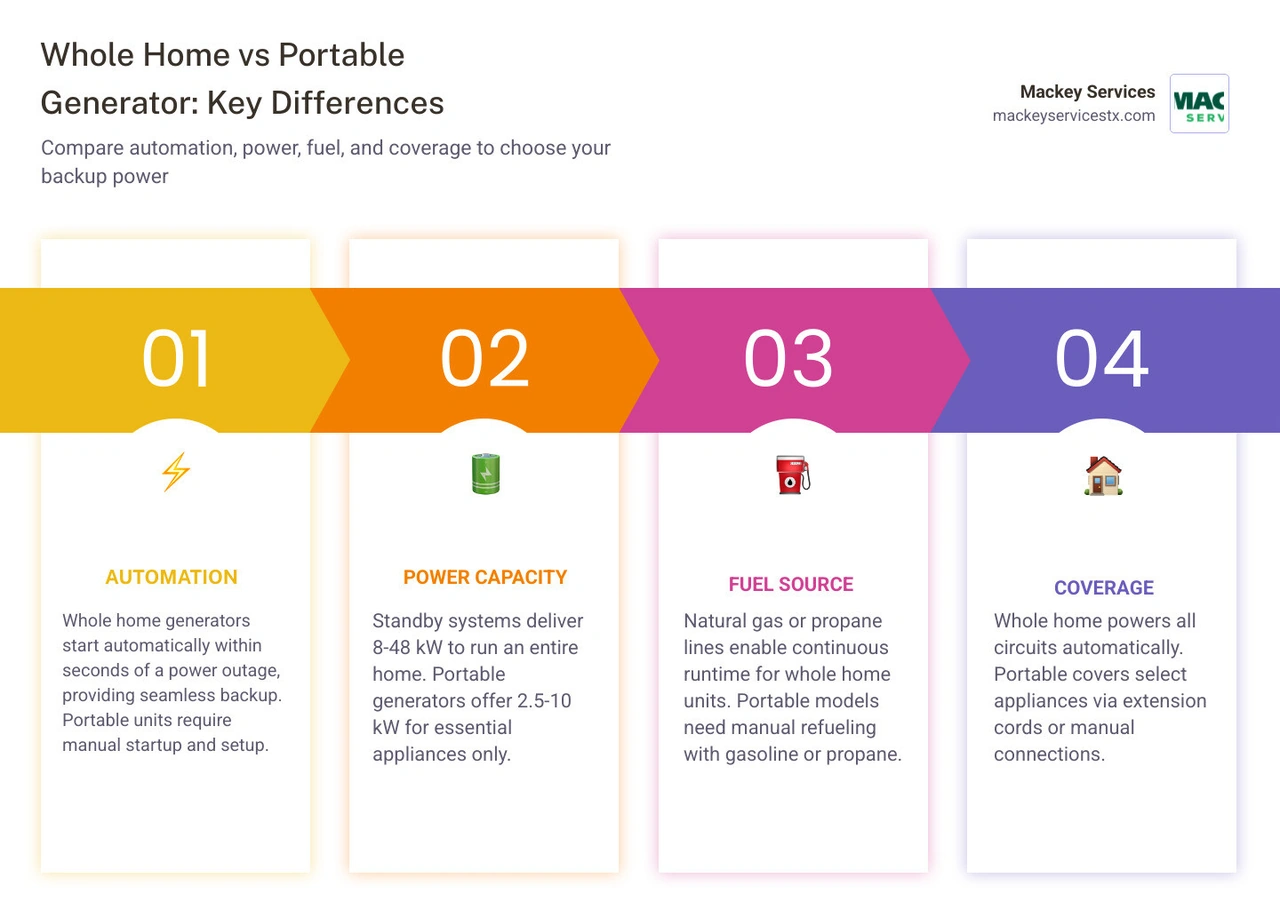
A whole home generator vs portable generator comparison comes down to four key factors: automation, power capacity, fuel source, and total cost.
| Factor | Whole Home (Standby) | Portable |
|---|---|---|
| Startup | Automatic (within seconds) | Manual setup required |
| Power Output | 8 kW – 48 kW | 2,500 W – 10,000 W+ |
| Fuel Source | Natural gas or propane (continuous) | Gasoline or propane (manual refueling) |
| Coverage | Entire home | Selected appliances |
| Installation | Permanent, professional | No install needed |
| Best For | Frequent outages, medical needs, whole-home comfort | Occasional outages, tight budgets, renters |
Here in the Greater Houston area, power outages are not a rare inconvenience — they are a real seasonal threat. Summer storms, hurricanes, and an aging grid mean that homes in Dickinson, League City, Friendswood, and surrounding communities can lose power for hours or even days at a stretch. When that happens, the backup power solution you chose weeks or months earlier suddenly matters a great deal.
The choice between a standby whole-home system and a portable unit is not purely technical. It is personal. It depends on your household, your health needs, how often your neighborhood loses power, and how much manual effort you are willing to put in during a storm. Both options can genuinely help — but they serve very different needs.
Understanding the Basics: Whole Home Generator vs Portable Generator Comparison
When we talk about backup power in May 2026, we are essentially looking at two different philosophies of preparedness. On one side, you have stationary models designed to stay put and act as a permanent part of your home’s infrastructure. On the other, you have mobile units that offer flexibility but require more "elbow grease."
Is a backup system right for you? Many homeowners find that Is a Whole House Generator a Wise Investment? depends largely on how much you value uninterrupted comfort and safety.
Stationary Standby Systems
A standby generator is a permanent fixture installed outside your home, much like a central air conditioning unit. These systems are "smart"; they monitor your utility connection 24/7. The moment the grid fails, they spring into action.
Standby units are powerhouses, typically ranging from 8 kW to 48 kW. They are housed in weather-resistant, sound-attenuated enclosures that protect the engine from our humid Gulf Coast air. For residents seeking a Whole House Generator in Manvel, TX, these systems represent the "gold standard" of reliability.
Mobile Portable Units
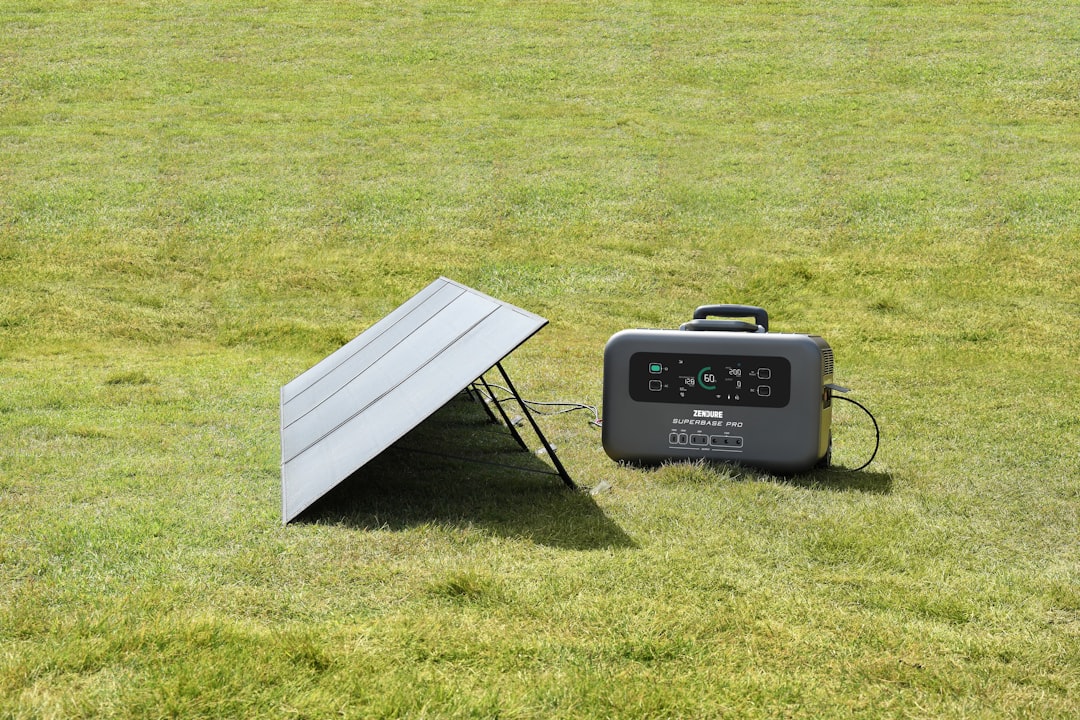
Portable generators are the versatile cousins of the standby unit. They aren't permanent; you typically store them in a garage or shed and wheel them out when the sky turns gray. They offer power outputs ranging from 2,500W for basic needs to about 10,000W for larger units.
While they don't offer the "set it and forget it" convenience of a standby system, they are accessible and mobile. If you are looking into a Whole House Generator in Spring, TX, but aren't ready for a permanent installation, a high-capacity portable unit can be a solid middle ground.
Power Capacity and Appliance Management
Understanding how much power you actually need is the most critical step in this whole home generator vs portable generator comparison. We often see homeowners underestimate the "startup" power required by appliances like central AC units or well pumps.
| Appliance | Running Watts | Starting (Surge) Watts |
|---|---|---|
| Refrigerator/Freezer | 700 | 2,200 |
| Central AC (3-ton) | 3,500 | 10,000+ |
| Sump Pump | 800 | 2,300 |
| Microwave | 1,000 | 1,000 |
| Laptop | 75 | 75 |
If you live in an area like Cypress, TX, a whole house generator ensures you don't have to play "musical chairs" with your appliances, deciding which ones to unplug so the AC can kick on.
Essential Circuits: A Whole Home Generator vs Portable Generator Comparison
A portable generator usually powers a few "essential" items via extension cords or a manual transfer switch. This might include your fridge, a few lights, and a space heater. However, it often struggles with high-demand 240V appliances.
In contrast, a standby system can be sized to manage your entire home. For those following our Kohler 12.5 kW Generator Guide, you’ll see that even a mid-sized standby unit can handle several major appliances simultaneously, including medical equipment that requires 100% uptime.
Sensitive Electronics and Clean Power
Modern life runs on microchips. Smart TVs, high-end laptops, and advanced kitchen appliances are sensitive to "dirty power"—voltage fluctuations that can occur with standard portable generators.
Standby units and "inverter" style portables provide "clean" power with low Total Harmonic Distortion (THD). This is a major consideration for families in Friendswood, TX, looking at whole house generators, as it protects expensive electronics from internal damage during long outages.
Operation and Convenience: Automatic vs. Manual
The biggest difference you will feel during a storm is the restoration process.
The Role of the Automatic Transfer Switch (ATS)
The ATS is the "brain" of a standby system. It constantly monitors the grid. When the power drops, the ATS disconnects your home from the utility line (to prevent dangerous backfeeding) and starts the generator. This happens in about 10 to 15 seconds. For our neighbors in Texas City, TX, a whole house generator with an ATS means you never have to step outside in the rain to get the lights back on.
Manual Setup and Extension Cords
With a portable unit, the work starts when the power stops. You must:
- Wheel the unit at least 20 feet from the house.
- Fuel it up (if it’s not already full).
- Pull-start or electric-start the engine.
- Run heavy-duty extension cords or connect to a manual inlet box.
This can be a "struggle" during a midnight thunderstorm in Katy, TX. Whole house generators eliminate this manual labor entirely.
Fuel Sources and Long-Term Reliability
Fuel availability is often the deciding factor in a whole home generator vs portable generator comparison.
Continuous Fuel Supply
Standby generators typically hook directly into your home’s natural gas line or a large on-site propane tank. This allows them to run for days or even weeks without you ever touching a fuel can. They also perform "exercise cycles"—running for about 15-20 minutes a week to keep the engine lubricated and the battery charged. This ensures they are ready when Clear Lake Shores, TX, whole house generator installation customers need them most.
Maintenance and Durability
Portable generators usually run on gasoline, which has a short shelf life (often degrading in as little as 30 to 60 days without stabilizer). They require frequent oil changes—sometimes every 50 to 100 hours of use. Standby units also require maintenance, but they are built with automotive-style engines designed for thousands of hours of operation, offering superior long-term reliability.
Safety and Property Value Considerations
Safety is paramount. Every year, portable generators used incorrectly lead to tragic cases of carbon monoxide (CO) poisoning.
Essential Safety Checklist:
- The 20-Foot Rule: Always keep portable units at least 20 feet away from windows, doors, and vents.
- Never Indoors: Never run a generator in a garage, even with the door open.
- Backfeeding Danger: Never plug a generator into a wall outlet. This can kill utility workers. Use a transfer switch.
- CO Sensors: Modern units often include automatic CO shutoff sensors, but battery-powered indoor CO detectors are still a must.
Property Resale and Neighborhood Impact
A whole-home standby generator is a significant home improvement. Much like a kitchen remodel, it can increase your property’s resale value and make it more attractive to buyers in storm-prone areas. Furthermore, standby units are much quieter than "open-frame" portable generators, which is a major plus if you have a strict HOA or close neighbors.
Choosing the Best Fit for Your Houston Home
So, which "champion" should you choose?
Lifestyle Needs: A Whole Home Generator vs Portable Generator Comparison
A whole home generator vs portable generator comparison usually ends with a look at your lifestyle:
- The "Hands-Free" Family: If you have small children, work from home, or simply don't want to wrestle with gas cans in a hurricane, a standby system is the way to go.
- The Medical Necessity: If someone in your home relies on oxygen concentrators, CPAP machines, or refrigerated medication, the automatic reliability of a standby unit is often non-negotiable.
- The Budget-Conscious Renter: If you don't own your home or only experience very rare, short outages, a portable unit with a proper manual transfer switch is a smart, cost-effective choice.
Frequently Asked Questions about Generator Comparisons
Can a portable generator provide clean power for my laptop?
Yes, but you should look specifically for an inverter generator. Standard portable generators can have voltage spikes that may harm sensitive electronics. Inverter models throttle their engine up and down to provide steady, "clean" power.
Is an automatic transfer switch required for all generators?
An ATS is required for standby systems to function automatically. For portable generators, you don't need an ATS, but we highly recommend a manual transfer switch or an interlock kit. This allows you to power entire circuits safely through your breaker panel without the "web" of extension cords.
How far should I keep my portable generator from my house?
The industry standard is at least 20 feet. You must also ensure the exhaust is pointed away from any openings, including windows, doors, and even your AC intake vents, to prevent carbon monoxide from entering your living space.
Conclusion
Choosing between a whole home and a portable generator is about balancing your budget against your need for convenience and total security. At Mackey Services, we’ve spent 30 years helping neighbors in Dickinson, Friendswood, League City, and throughout the Greater Houston Area stay comfortable regardless of what the weather does.
As a family-owned business, we treat your home’s safety like our own. Whether you are ready for a Whole House Generator Installation in Clear Lake Shores, TX or simply need an expert to help you size your backup needs, we are here to help.
Don't wait for the next storm to make a plan. Schedule your professional generator consultation today and ensure your family stays powered up when the grid goes down.
Ready for a better day?
One call handles it all — HVAC, electrical, and generators across the Texas Gulf Coast. Less to pay. Better day. That's the Mackey way.
Mon–Fri: 7 AM – 8 PM · Sat: 8 AM – 5 PM · Licensed & insured · #TACLA 112769C · #TECL 558211