
Decoding the Burning Dust Smell During Your Furnace's First Fall Cycle
Decoding the burning dust smell during your furnace's first fall cycle? Get clear answers on whether to wait 30 minutes or shut your system down immediately.
The Initial Panic: Smelling Smoke When the Heat Kicks On
You walk past your thermostat as the first real chill of the season sets in, switch the system over to heat, and wait for that comforting rush of warm air. Decoding the burning dust smell during your furnace's first fall cycle is a common task for homeowners, but that does not make the sudden odor any less alarming. Within minutes of the blower kicking on, a harsh, singed scent begins spreading through your vents and filling your living room. Your immediate instinct is to worry about an active fire hazard hidden inside your ductwork or furnace cabinet.
This moment introduces a critical decision point for any homeowner: do you let the system continue running to see if the smell fades, or do you sprint to the thermostat and shut the entire system down immediately? It is completely normal to feel a spike of anxiety when you smell burning in your home. However, in the vast majority of cases, this specific odor during the first early fall heating cycle is a completely normal seasonal occurrence rather than a dangerous emergency. If you are ever concerned about the safety of your HVAC system, our professional heating services are always available to inspect your equipment and provide immediate peace of mind.
The Science Behind the Seasonal Dust Burn-Off
To understand why this alarming smell happens, you have to look at what your heating system has been doing for the past several months. Even when your furnace is not actively producing heat, the indoor air handler is still working hard to circulate air throughout your home. As air moves through the return vents, it carries microscopic airborne particles, pet dander, and household dust. A significant portion of this debris bypasses the filter and settles directly onto the cold metal surface of your heat exchanger.
In our years of providing HVAC solutions along the Texas Gulf Coast, the team at Mackey Services has seen firsthand how our incredibly long and highly humid cooling seasons affect local equipment. Because of this, we frequently encounter heating systems in Dickinson, TX area homes that have sat completely dormant for eight to nine months out of the year. This extended downtime, combined with high indoor humidity, causes dust to stick stubbornly to internal heating components. When you finally turn the heat on, the system goes through a specific sequence of events:
- The thermostat calls for heat: The system verifies safety checks and initiates the ignition sequence.
- The burners ignite: Gas or electrical elements rapidly heat the metal heat exchanger to extreme temperatures.
- The settled dust scorches: The thick layer of sticky, accumulated dust resting on the heat exchanger instantly bakes and burns off the metal surface.
- The blower distributes the scent: The indoor fan pushes air over the now-hot heat exchanger, carrying that singed dust smell directly into your ductwork and out of your vents.
Because the dust buildup is heavier after a long, humid summer, the resulting odor can be surprisingly strong. One proactive approach we always recommend to avoid this surprise on a freezing morning is to turn on your furnace before you need it. Testing the system early on a mild fall afternoon allows you to clear out the settled dust on your own terms, long before a major cold snap forces you to rely on the heat overnight.
The 30 to 45-Minute Window: When to Wait and Monitor
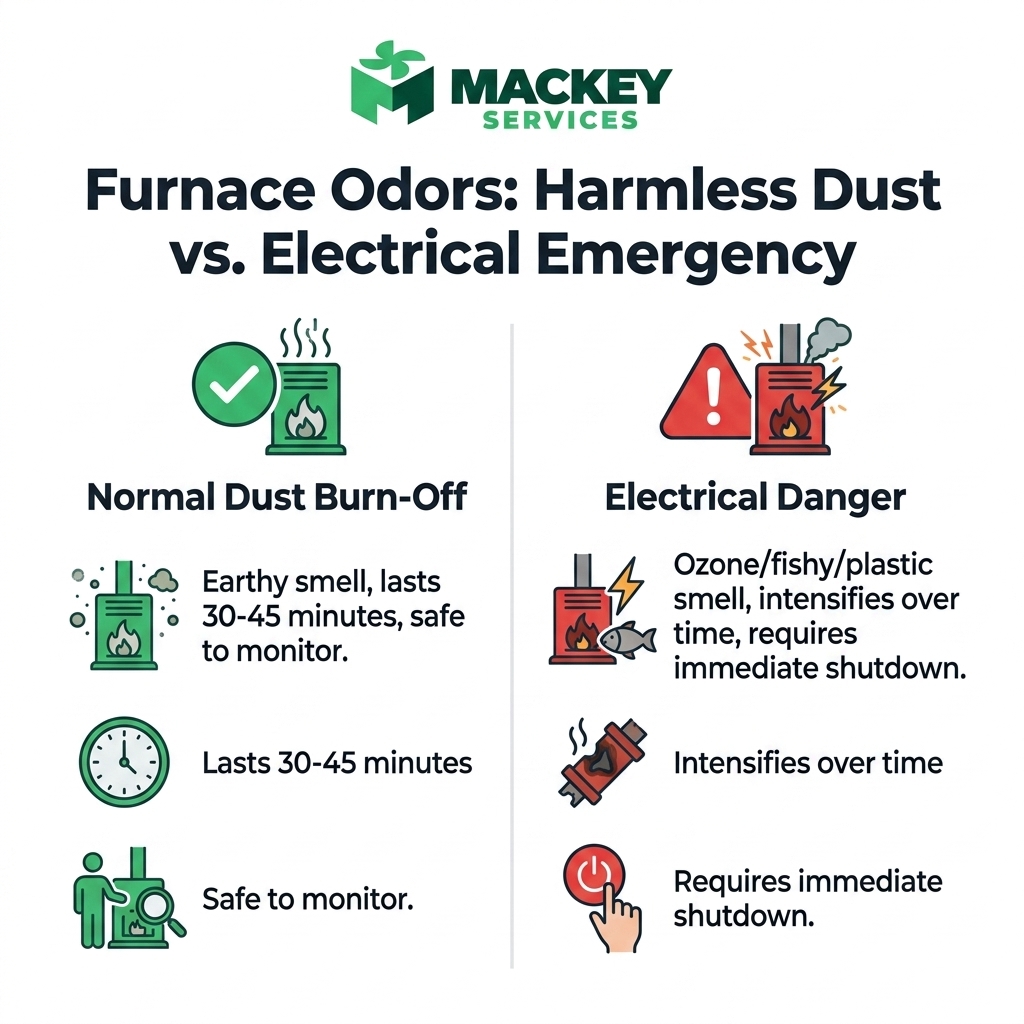
Once you recognize that the smell is likely just seasonal dust, the next step is knowing exactly how long you should tolerate it. A normal, harmless dust burn-off follows a very strict and predictable timeframe. In almost all cases our technicians observe, the odor should peak within the first ten minutes and completely dissipate within a 30 to 45-minute burn-off window. If the smell is strictly dusty and earthy, your best course of action is to let the system run continuously through this period.
Monitoring your system closely during this initial run is a standard and highly recommended practice for homeowners. Just last fall, our Mackey Services dispatch team fielded a call from a Dickinson homeowner who experienced an intermittent heating malfunction after their system had been running for a while. When they called for help, our lead technician gathered diagnostic information over the phone and advised the customer to restart the system, monitor it closely, and call back if it failed again. You can apply this same "monitor and report" strategy to your first fall cycle. Keep the system running, stay nearby, and observe how the odor changes over time.
To make this 30 to 45-minute window more comfortable, you can employ a few simple ventilation strategies. Open a few windows: Cracking windows at opposite ends of the house creates a cross-breeze that quickly pulls the singed air outside. Turn on ceiling fans: Keep air moving to prevent the smell from lingering in stagnant corners of your home. Run exhaust fans: Turn on the ventilation fans in your kitchen and bathrooms to help pull the odor out of the living space faster. Stay near the vents: Pay attention to the air coming out; the burning smell should gradually weaken until it disappears entirely.
Sensory Check: Harmless Dust vs. Dangerous Electrical Odors
While a 30 to 45-minute burn-off window is normal for a first early fall heating cycle, you must be able to confidently tell the difference between harmless scorched dirt and a true emergency. Your nose is your best diagnostic tool in this situation. Different materials produce highly distinct odors when they burn, and knowing what to sniff for can save your home from severe damage.
| Smell Characteristic | Likely Source | Safety Level | Required Action |
|---|---|---|---|
| Earthy, dry, like a hot vacuum motor | Settled household dust on the heat exchanger | Harmless | Monitor for 30 to 45 minutes |
| Sharp, metallic ozone | Overheating blower motor or electrical short | Dangerous | Shut down system immediately |
| Acrid, melting plastic or rubber | Failing wire insulation or slipping belts | Dangerous | Shut down system immediately |
| Fishy or chemical scent | Melting electrical components off-gassing amines | Dangerous | Shut down system immediately |
Identifying Normal Settled Dust Odors
When normal household dust burns, it produces a very dry, earthy scent. Many homeowners compare it to the smell of a vacuum cleaner that has been running for too long, or the scent of a space heater that was just pulled out of a dusty closet. This smell will not sting your eyes, and it will never be accompanied by visible smoke coming from your vents. Most importantly, this earthy smell will steadily fade after the first ten minutes of operation as the heat exchanger burns itself clean.
Recognizing Electrical and Plastic Emergencies
Dangerous odors are sharp, chemical, and highly offensive. If your furnace has an electrical short or melting wire insulation, you will likely smell sharp ozone or melting plastic. Interestingly, melting electrical components often produce a distinct "fishy" odor because of the specific chemicals used in wire insulation. Unlike dust, these dangerous smells will intensify the longer the system runs. You may also hear clicking sounds, buzzing, or notice the system short-cycling. If you detect any of these chemical or electrical scents, this is not a wait-and-see situation. You must abandon the monitoring phase entirely. Furthermore, our team strictly warns against opening the furnace cabinet or attempting any DIY electrical inspections to locate the source of a bad smell. Handling high-voltage HVAC components requires a licensed professional.
When to Shut Down the Thermostat and Call a Professional
Knowing when to call for backup is just as important as knowing when to wait. If you detect ozone, melting plastic, a fishy electrical scent, or if a standard dust smell persists well beyond 45 minutes, you need to take immediate action. Walk directly to your thermostat and switch the system to the "OFF" position. Do not simply lower the temperature; ensure the system is completely disengaged so no further power flows to the heating elements or blower motor.
Once the system is off, calling a professional acts as your ultimate safety net. A thorough inspection identifies abnormal operations, failing motors, or frayed wiring before they escalate into catastrophic failures. For example, during a recent cold snap, our technicians at Mackey Services responded to a Dickinson family whose zoned heating system suddenly malfunctioned. Our crew quickly diagnosed the problem, secured the necessary parts, and made the vital repairs to keep the home warm during the freezing temperatures. This highlights exactly why relying on a professional is always safer than hoping a persistent problem resolves itself.
To protect your home and eliminate the guesswork, follow this shutdown checklist if you suspect an emergency in Dickinson, TX area homes:
- Switch the thermostat to OFF: Stop the heating cycle immediately to prevent further damage or fire risk.
- Check your smoke detectors: Ensure your home's safety alarms are active and functioning.
- Do not open the cabinet: Never attempt to remove the furnace panels to inspect wiring or electrical boards yourself.
- Call for professional diagnostics: Let a trained technician safely probe the electrical components and identify the root cause.
Drawing on our deep roots in the community, our team at Mackey Services provides the peace of mind you need by distinguishing between normal seasonal dust and true emergencies. The absolute best way to prevent this burning smell entirely is by enrolling in a routine maintenance plan. A pre-season tune-up ensures your heat exchanger is professionally cleaned and inspected before the heating season ever begins, meaning you get safe, odor-free warmth from the very first cycle.
Frequently Asked Questions About Furnace Odors
It is completely normal to have lingering questions when your home's primary heating system starts producing strange smells. While a brief burning scent is standard, excessive dust buildup inside your system can also severely impact your indoor air quality. We have gathered the most common search queries from homeowners facing this exact situation to help you make safe, informed decisions. Below are direct answers to help you navigate your first heating cycle of the year.
How long should a furnace smell like burning dust?
A normal dust burn-off should last between 30 and 45 minutes. You should notice the smell noticeably decrease in intensity after the first 15 minutes of the system running. If the earthy, dusty odor lingers for several hours or returns days later, it indicates a deeper issue, such as a severely clogged air filter or a failing blower motor.
What does an electrical fire in a furnace smell like?
An electrical fire produces a distinct fishy, sharp ozone, or melting plastic odor. This contrasts sharply with the smell of dry, burning dirt that characterizes a normal dust burn-off. If you smell chemicals, rubber, or a scent that stings your nose and intensifies over time, shut the system down immediately.
Is it safe to breathe furnace dust burn-off?
While briefly unpleasant, a standard dust burn-off is generally harmless to breathe for a short duration. The smell is simply organic household dust scorching off a metal plate. However, if individuals in your home have asthma, allergies, or respiratory sensitivities, it is highly recommended to open windows and run ceiling fans to ventilate the space until the odor clears.
Should I turn off my furnace if it smells like burning?
Yes, you should turn it off immediately if the smell is electrical, chemical, plastic, or if a dusty smell lasts longer than 45 minutes. No, you do not need to turn it off if it is the very first cycle of the year, the smell is strictly like dry dust, and you are actively monitoring it during that initial 45-minute window.
How can I prevent the burning smell next year?
The best prevention is to schedule pre-season maintenance to have the heat exchanger professionally cleaned before you ever turn the heat on. Additionally, changing your air filters regularly during the dormant cooling months prevents excessive dust from bypassing the filter and settling on the heating components in the first place.
Secure Your Peace of Mind This Heating Season
Transitioning from cooling to heating always comes with a few mechanical quirks, and the initial dust burn-off during your first early fall heating cycle is the most common one. While a brief, earthy burning smell is standard, you should never ignore your instincts if something seems genuinely wrong. Strict timeframes and sensory checks are your best tools for evaluating the situation safely.
If you smell melting plastic, sharp ozone, or if that dusty odor simply refuses to fade after 45 minutes, professional guidance is your safest route. Do not risk your family's comfort or safety on guesswork. Reach out to our experts at Mackey Services to schedule a thorough inspection, clear away the summer dust, and ensure your heating system is ready to operate safely all season long.
Ready for a better day?
One call handles it all — HVAC, electrical, and generators across the Texas Gulf Coast. Less to pay. Better day. That's the Mackey way.
Mon–Fri: 7 AM – 8 PM · Sat: 8 AM – 5 PM · Licensed & insured · #TACLA 112769C · #TECL 558211