

Integrating Fall Debris Removal with Commercial Irrigation Winterization
Based on 1,000+ Houston reviews!
Gulf Coast facilities face a dual threat from heavy autumn foliage and sudden freezes. Combining leaf cleanup and sprinkler blow-outs into one visit saves time and prevents costly damage.
.jpg)
The Dual Threat to Commercial Properties in Early Fall
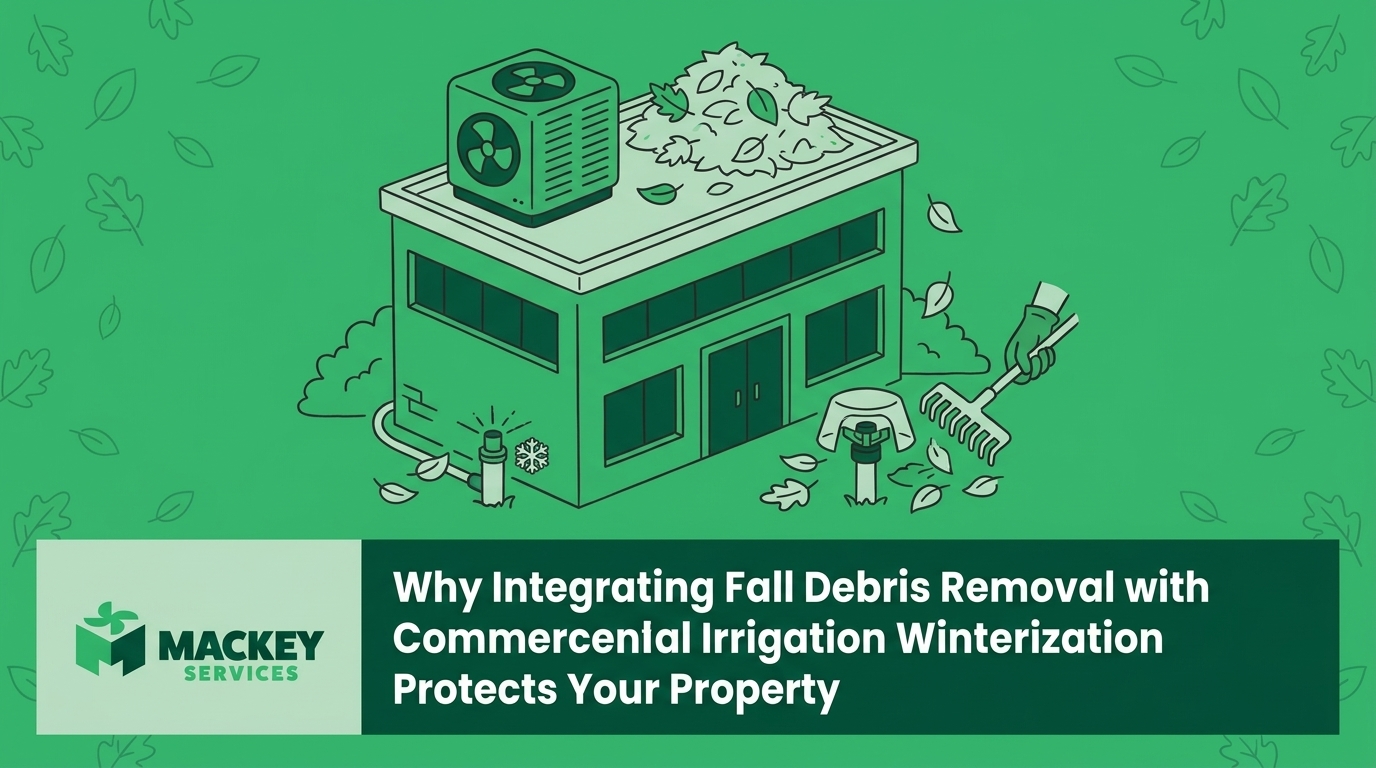
Your commercial property is facing a seasonal double-whammy: heavy autumn foliage clogging your drainage systems, followed closely by the looming threat of sudden winter freezes. Integrating fall debris removal with commercial irrigation winterization is the most effective strategy to protect your facility from both of these hazards simultaneously. The core problem for facility managers isn't just that these two seasonal shifts happen back-to-back; it is the decision point of how to manage them. You must choose between juggling separate chores with different vendors on uncoordinated schedules, or consolidating these essential tasks into a single, cohesive service visit.
Timing is everything when managing a large property. The mild autumns typical of the Gulf Coast often lull property managers into a false sense of complacency. The weather feels pleasant, and the urgency to prepare for winter seems low. However, this is precisely when sudden late-season heavy rains and unexpected freezes arrive to wreak havoc on unprepared infrastructure. September / early fall is the critical planning window. You need to secure your vendor schedules before the temperature drops and storm fronts hit the region. Taking a proactive approach to your commercial property services ensures that your facility is protected. By coordinating these efforts with professional commercial landscaping teams, you guarantee clear drainage before winter weather hits without putting freshly winterized equipment at risk.
The Administrative Burden of September Planning
For facility directors, the transition into fall brings a massive administrative workload. Budgeting for the upcoming year, managing end-of-year capital expenditures, and coordinating seasonal maintenance can quickly overwhelm a management team. When you treat landscaping and irrigation as two completely separate silos, you double the administrative friction. You are dealing with two different contracts, two different scheduling windows, and two different points of contact. If a severe storm is forecasted, you suddenly have to make two emergency phone calls to try and expedite service.
Consolidating these services removes that friction. It shifts the burden of coordination from your desk to your service provider. This strategic alignment means that when the leaves start falling heavily in late autumn, you already have a comprehensive plan in place that addresses both the visible debris on your property and the invisible water resting in your irrigation lines.
How Heavy Fall Foliage Impacts Commercial Drainage Systems
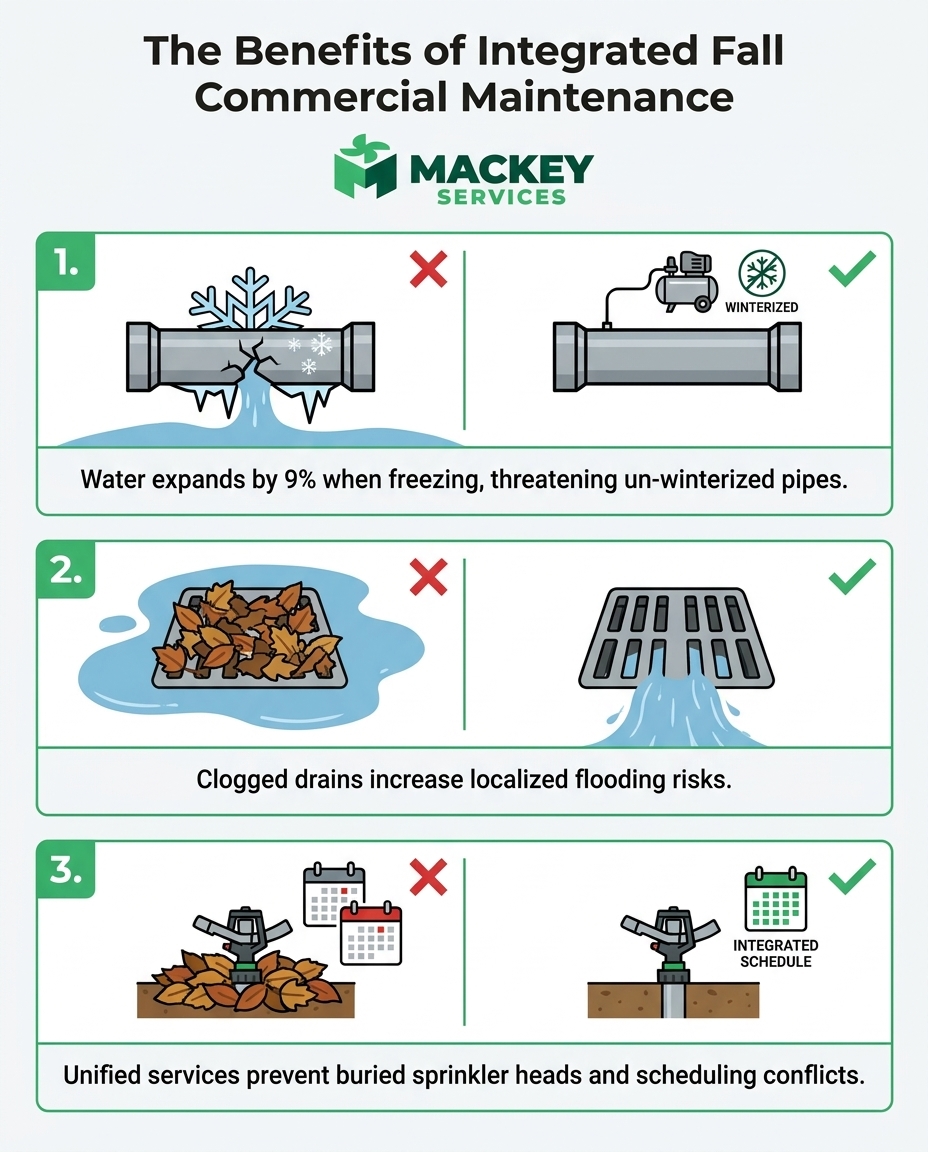
The first half of the early fall threat matrix is entirely visible: leaves, twigs, and storm debris accumulating across your property. While a few scattered leaves might seem like a purely aesthetic issue, heavy fall foliage acts as a dangerous barrier over commercial storm drains and catch basins. When leaves get wet, they mat together, forming an impermeable seal over grates and drainage channels. This prevents runoff from escaping your parking lots and walkways, causing immediate operational hazards.
According to FEMA stormwater management principles, clogged drains significantly increase the risk of localized flooding. On a commercial property, localized flooding isn't just a nuisance; it is a direct threat to your hardscape. Standing water degrades asphalt, weakens concrete foundations, and creates massive liabilities for property owners.
The Liability of Wet, Matted Leaves
Beyond the structural damage caused by standing water, accumulated debris introduces severe safety hazards for your tenants, employees, and customers. Wet leaves are incredibly slick.
• Slip and fall hazards: Matted foliage on concrete walkways reduces traction to near zero, creating dangerous conditions for pedestrians.
• ADA compliance issues: Wheelchair ramps and accessible parking spaces must remain clear of debris and pooling water to maintain compliance and accessibility.
• Hidden dangers: Thick layers of leaves can conceal potholes, cracked sidewalks, or uneven curbs, leading to preventable injuries.
Integrating comprehensive debris removal into a broader routine maintenance plan prevents emergency drainage calls during severe weather. Instead of scrambling to find a crew to clear blocked storm drains while a torrential downpour floods your parking lot, your property remains clear, safe, and fully functional throughout the autumn transition.
• Storm Drains & Catch Basins — Impact of Unmanaged Fall Debris: Matted leaves seal grates, causing deep localized flooding and hardscape erosion. — Result of Proactive Removal: Water flows freely, protecting asphalt and preventing structural water damage.
• Pedestrian Walkways — Impact of Unmanaged Fall Debris: Wet foliage creates severe slip-and-fall liabilities and blocks ADA access. — Result of Proactive Removal: Surfaces remain high-traction, safe, and fully accessible for all visitors.
• Landscaping Beds — Impact of Unmanaged Fall Debris: Thick debris smothers dormant plants and traps excessive moisture, promoting rot. — Result of Proactive Removal: Soil breathes properly, and underlying irrigation components remain visible.
The Hidden Dangers of Sudden Freezes on Irrigation Systems
While fall debris is highly visible, the second half of the seasonal threat matrix is hidden underground and inside your utility boxes. The physics of freezing water are unforgiving. According to EPA WaterSense guidelines, water expands by approximately 9 percent when it freezes. In a natural environment, this expansion is harmless. But inside the closed environment of a commercial irrigation system, that 9 percent expansion generates immense outward pressure.
This pressure has to go somewhere. Un-winterized PVC pipes will shatter under the strain. More critically, the expensive commercial backflow preventers—the heavy brass and copper assemblies that protect the municipal water supply from contamination—are highly susceptible to freeze damage. When a backflow preventer cracks, you are not just looking at a costly repair; you are facing a massive water leak, potential code violations, and the complete shutdown of your property's water management system.
The Vulnerability of Gulf Coast Infrastructure
The risk is particularly acute for Dickinson TX commercial properties. The Texas Gulf Coast is notorious for its unpredictable winter weather patterns. Freezes here rarely arrive with weeks of warning; they often happen overnight, plunging temperatures below freezing for just long enough to destroy unprepared infrastructure, before returning to mild temperatures the next afternoon. This rapid fluctuation leaves absolutely no time for last-minute winterization.
Because these freezes are sudden and severe, sprinkler blow-outs must be completed well in advance. The critical rule of irrigation winterization: this is a highly technical procedure requiring commercial-grade air compressors. It must be performed by licensed professionals. Never attempt this as a DIY project or allow an untrained maintenance worker to use a standard shop compressor on your lines. Commercial systems require precise, high-volume, regulated air pressure to evacuate all water without melting the PVC pipes through friction or blowing the sprinkler heads off their risers. Professional teams have the exact equipment and training required to perform this safely.
The Operational Risks of Siloed Fall Maintenance
Treating landscaping cleanup and irrigation winterization as two separate, siloed tasks introduces massive operational friction and physical risks to your property. When you hire one company to manage the leaves and a completely different contractor to handle the sprinklers, you create a logistical nightmare for your facility management team.
The administrative burden alone is exhausting. Facility directors must negotiate two quotes, schedule two separate service windows, process two invoices, and manage two different sets of technicians on the property. But the real danger lies in the physical risk of uncoordinated teams interfering with each other's work.
The Danger of Asynchronous Scheduling
Consider a typical pattern we see when services are siloed. An irrigation contractor arrives on a Tuesday to perform a professional blowout and winterize the system. They carefully drain the lines, protect the backflow preventer, and ensure the sprinkler heads are safely seated. Three days later, a separate landscaping crew arrives to perform heavy fall debris removal. Armed with heavy-duty rakes, commercial blowers, and debris tarps, they aggressively clear the beds.
Because the landscaping crew has no communication with the irrigation team, they inadvertently bury the exposed sprinkler heads under piles of heavy, wet leaves awaiting removal. Worse, aggressive raking can physically strike and misalign the delicate pop-up heads that were just winterized. If a head is damaged or knocked out of alignment, it is now vulnerable to moisture intrusion and freezing, completely negating the expensive winterization service performed earlier in the week.
Asynchronous scheduling also leaves your property vulnerable to weather delays. If a storm delays the leaf cleanup, but the irrigation blowout proceeds, your property is left with clogged drains right as the rain hits. Coordinating these efforts ensures that one service doesn't compromise the other. If you are already looking into adapting commercial landscape lighting timers for the shorter autumn days, it makes logical sense to synchronize your physical groundskeeping tasks at the exact same time.
Why Unified Commercial Property Care Solves Scheduling Headaches
The solution to this operational friction is integration. Utilizing a single vendor for both debris removal and irrigation winterization saves facility directors countless hours of administrative time. Mackey Services offers unified commercial property care, allowing facility managers to coordinate these essential tasks seamlessly through a single expert team. This approach eliminates the back-and-forth communication, the conflicting schedules, and the risk of one contractor damaging another contractor's work.
When a unified team arrives at your property, they follow a strict, logical sequence. They don't just start working blindly; they execute a coordinated plan that protects your facility at every step. This single-vendor approach simplifies your budgeting, streamlines your invoicing, and provides total peace of mind as you plan for the winter season. You can easily roll these tasks into your broader specialty services budget, ensuring your property is fully prepared for whatever the Gulf Coast weather brings.
Sequencing for Success
The true value of a unified approach lies in the sequence of operations. When one accountable team handles the property's entire winter preparation strategy, they follow these critical steps:
1. Step 1: Comprehensive surface clearing. The team begins by removing heavy leaves, fallen branches, and storm debris from all landscaping beds, walkways, and turf areas. This critical first step ensures that all irrigation components—including pop-up heads, drip lines, and valve boxes—are fully exposed and visible.
2. Step 2: Drain and catch basin inspection. With the surface debris removed, the team inspects all commercial storm drains, catch basins, and runoff channels. They clear away any matted foliage that could cause localized flooding, ensuring clear water flow away from your building's foundation and hardscaping.
3. Step 3: Professional blowout and protection. Finally, with the property clear and the equipment fully visible, the licensed technicians perform a professional blowout of all irrigation zones. They evacuate the water using regulated commercial compressors, shut down the controllers, and insulate the backflow preventers. Because the heavy landscaping work is already finished, there is zero risk of the winterized equipment being struck, buried, or misaligned.
Frequently Asked Questions About Commercial Fall Maintenance
Why should debris removal and irrigation winterization be coordinated?
Coordinating these services prevents cross-contractor damage and ensures your property is fully protected. The short answer is that heavy landscaping work can easily damage or bury freshly winterized sprinkler heads if the tasks are performed out of order. By integrating them, a single team clears the debris first to expose the equipment, and then performs the blowout, ensuring no delicate components are harmed.
How do you prepare commercial landscaping for sudden winter freezes?
Preparation requires a two-pronged approach: clearing the grounds and protecting the plumbing. First, all heavy fall debris must be removed to prevent rot and allow the soil to insulate dormant root systems. Second, all commercial irrigation lines and backflow preventers must be professionally blown out with compressed air to remove standing water before the temperature drops.
When should commercial sprinklers be winterized?
Sprinklers should be winterized in early fall, well before the first freeze date for your region. Most homeowners and property managers don't realize that sudden, unpredictable freezes can happen overnight. Waiting until a freeze is forecasted in the news is too late; professional vendor schedules fill up quickly, so September or October is the ideal time to secure your blowout.
Why is fall debris removal important for commercial drainage?
Fall debris removal is critical because wet leaves mat together to form a solid, impermeable barrier over storm drains. If you notice localized flooding in your parking lot during an autumn rainstorm, that usually means the catch basins are choked with foliage. Clearing this debris prevents standing water that can degrade asphalt, cause slip-and-fall hazards, and lead to expensive hardscape repairs.
What happens if commercial sprinkler lines freeze?
When water freezes inside commercial sprinkler lines, it expands by approximately 9 percent, creating massive internal pressure. This expansion shatters PVC pipes, blows the tops off sprinkler heads, and cracks heavy brass backflow preventers. The resulting damage requires extensive, costly repairs and can cause significant water leaks once the ice thaws.
Can heavy leaf cleanup damage exposed sprinkler heads?
Yes, aggressive leaf cleanup can absolutely damage exposed sprinkler heads. Commercial blowers, heavy-duty rakes, and landscaping tarps can easily strike, misalign, or bury pop-up heads. This is exactly why it is crucial to have a unified team perform the debris removal first, ensuring the area is clear and safe before the delicate winterization process begins.
Securing Your Commercial Property Before Winter Hits
The transition from autumn to winter demands a proactive, strategic approach to facility management. Bundling your heavy fall debris removal with professional irrigation winterization is the smartest way to prevent costly property damage, protect expensive commercial equipment, and drastically simplify your administrative workload. By choosing a unified maintenance strategy, you eliminate vendor friction and guarantee that your property is safe, clear, and fully prepared.
Do not wait for the first sudden freeze warning to hit the local news. Act early in the fall season to secure your spot on the schedule. We encourage property managers to explore unified maintenance options today to streamline their seasonal preparations and enjoy the peace of mind that comes from knowing every inch of their facility is protected by a single, accountable team.
Clients Say About Us
Customer Testimonials
Our AC stopped working during a heatwave, but your team responded quickly and restored comfort within hours. Professional, friendly, and highly recommended!



Service Finance
Enjoy a new HVAC system today with flexible financing through Service Finance. Convenient monthly payment options make it easier to upgrade comfort now and pay over time, subject to credit approval.
Blogs