
Why Heat Pumps Are Replacing Gas Furnaces in New Dickinson Builds
Explore why heat pumps are replacing gas furnaces in new Dickinson builds. See why we prefer electric systems for mild Texas winters before fall hits.
The Heating Myth: Rethinking Winter Comfort on the Gulf Coast
If you are looking at local construction trends, you might wonder exactly why heat pumps are replacing gas furnaces in new Dickinson builds. A common misconception persists that surviving the winter requires a massive, heavy-duty combustion furnace pumping out extreme heat. In reality, bigger is not always better for climate control on the Texas Gulf Coast, and an oversized combustion system does not guarantee superior winter comfort. As we approach the September pre-heating transition, homeowners and builders alike are rethinking how to efficiently manage indoor temperatures before the first cold snap arrives.
This transition period is the ideal time to evaluate your options, especially if you are outfitting a modern home or planning a system upgrade. For decades, the default choice was to install the largest gas furnace available. However, advancements in high-efficiency electric alternatives have completely shifted that mindset. Modern electric systems provide steady, even temperatures without the aggressive blasts of hot air associated with older combustion units. If you are exploring heating services for a new property, scheduling a heat pump installation often provides a much smoother, more consistent level of comfort throughout our short winter season.
The shift toward electric efficiency: Rather than burning fuel to create heat, modern systems use advanced refrigeration cycles to transfer ambient warmth into your living space. This fundamental change in how we warm our homes is driving a massive shift in local building practices, ensuring that your indoor environment remains comfortable without wasting energy.
Why Traditional Gas Furnaces Are Overkill for Dickinson Winters
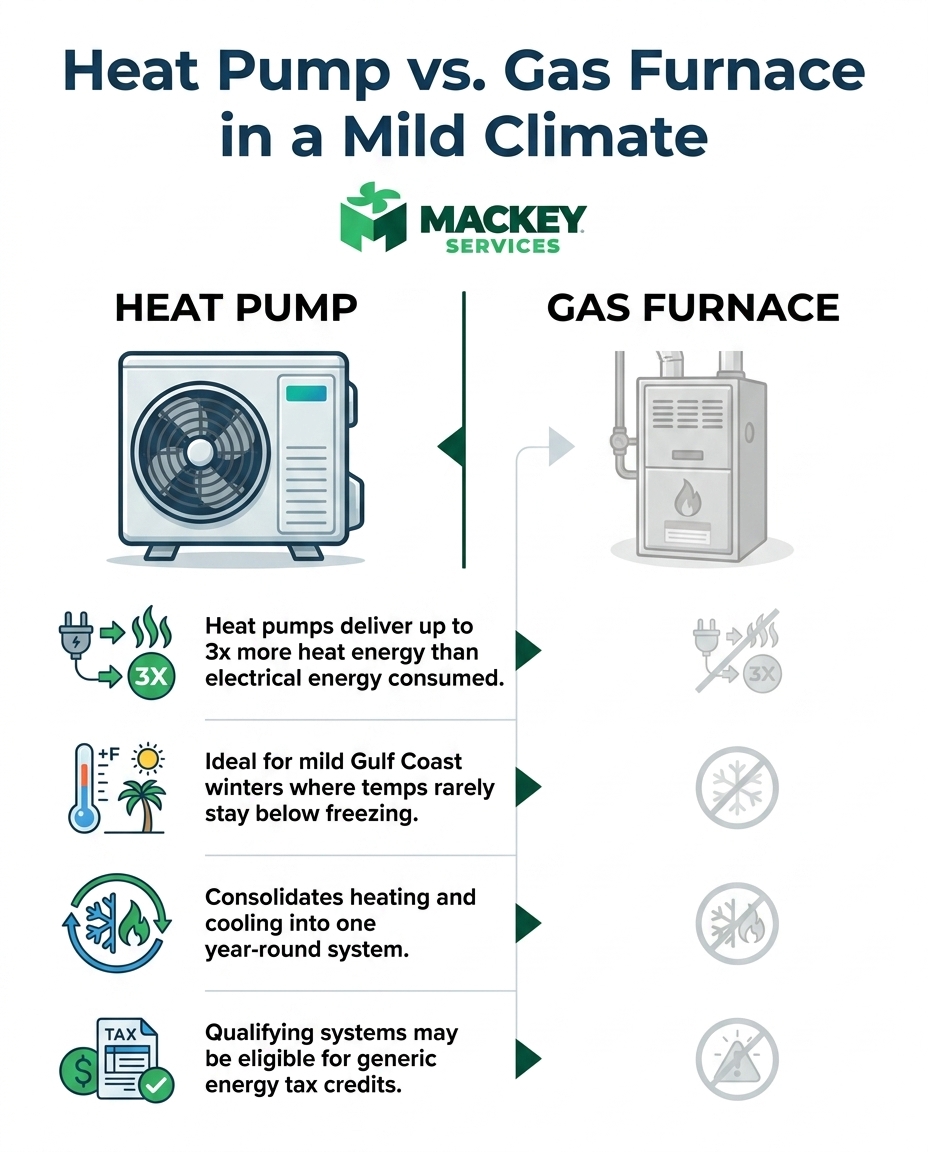
To understand the shift in HVAC preferences, you have to look closely at the reality of the Gulf Coast climate. Our region is characterized by long, hot, and highly humid summers, followed by remarkably mild winters. Average winter lows in the area rarely drop below freezing for extended periods. Because the outdoor temperature usually hovers in a moderate range, homes here require far less active heating than houses in northern climates.
The problem of short-cycling: Traditional gas furnaces are designed to generate a massive amount of rapid heat. When a high-capacity furnace fires up in a mild climate, it blasts the home with intense warmth. The thermostat quickly registers that the target temperature has been reached, often in just a few minutes, and abruptly shuts the system down. This rapid on-and-off process is known as short-cycling. Not only does short-cycling cause annoying temperature swings—leaving some rooms sweltering while others remain chilly—but it also puts tremendous wear and tear on the system's mechanical components.
The True Cost of Excess Capacity
Running a high-capacity combustion system during a short, temperate winter results in significant energy waste. You are essentially using a sledgehammer to drive a small nail. Every time that large gas burner ignites, it consumes fuel to produce more British Thermal Units (BTUs) than the house actually needs to stay comfortable. Over the course of a mild winter season, this wasted energy translates directly into higher utility bills and unnecessary carbon emissions.
Contrast this aggressive heating cycle with the steady, measured output of modern electric alternatives. By delivering a lower, continuous flow of warm air, these systems maintain a perfectly even temperature across the entire home. This is exactly why you see these efficient electric systems being installed as the standard in new Dickinson subdivisions, where builders prioritize consistent comfort and long-term energy savings over raw, unnecessary heating power.
How Modern Insulation Changes the Game for New Builds
The core problem: Older homes were often drafty, with poor insulation and leaky windows that allowed warm air to escape rapidly. To compensate for this constant heat loss, builders installed oversized gas furnaces that could quickly replace the escaping air with a fresh blast of heat.
The underlying cause: Today, building codes have evolved dramatically. Modern new Dickinson subdivisions are constructed with incredibly tight thermal envelopes. Advanced spray foam insulation, double-pane low-E windows, and meticulously sealed ductwork trap conditioned air inside the home highly effectively. Because the home retains heat so well, the overall demand for active heating plummets. A house built to modern standards simply does not require the massive BTU output that a home built thirty years ago might have needed.
The modern solution: This drastic reduction in heating demand aligns perfectly with the operational style of modern electric systems. Because a well-insulated home loses heat very slowly, a system that provides a steady, low-intensity stream of warmth is far more effective than one that blasts intense heat. Our team's deep local expertise in Dickinson's specific building codes and recent subdivision HVAC installation trends shows us exactly how these architectural advancements change the game for homeowners.
Integrating Systems During Construction
Integrating comprehensive residential HVAC solutions during the initial build phase maximizes these efficiency gains. When the ductwork, insulation, and mechanical equipment are designed to work together from day one, the home operates as a unified, highly efficient system. Builders can perfectly size the equipment to match the exact thermal load of the house, ensuring that the system runs long enough to filter the air properly without ever over-conditioning the space.
Year-Round Efficiency: The Dual Benefits of Modern Heat Pumps
One of the most significant advantages of choosing a heat pump for a Gulf Coast home is its ability to provide exceptional year-round climate control. Unlike a furnace, which sits idle for eight months of the year, an air-source heat pump is a dual-function system. During the winter, it extracts ambient heat from the outside air—even when it feels chilly to you—and compresses it to warm your home. This process of moving heat rather than generating it allows the system to deliver up to three times more heat energy than the electrical energy it consumes.
Mastering the summer humidity: The true magic happens when the seasons change. By simply reversing the flow of refrigerant, the system becomes a high-performance air conditioner. In our humid climate, excellent dehumidification is just as important as raw cooling power. Because these modern units often feature variable-speed compressors, they can run at lower speeds for longer periods. This extended run time pulls significantly more moisture out of the indoor air, keeping your home crisp and comfortable rather than cold and clammy.
Real-World Energy Savings
The transition to high-efficiency, variable-speed systems yields measurable results. During a recent summer transition, a local homeowner replaced their aging AC units with a new, high-efficiency variable-speed setup. Because the customer required superior indoor air quality, the installation included a HEPA filtration system alongside the new 19-SEER equipment. Once the old units were removed and the new variable-speed system was dialed in, the home saw a 30% reduction in energy consumption while maintaining perfect humidity control.
This dual-functionality makes these systems the most logical year-round investment for Gulf Coast residents. You get superior heating during the September pre-heating transition and robust cooling capable of keeping up with a 100-degree Texas afternoon, all from one unified piece of equipment.
Heat Pump vs. Gas Furnace: A Side-by-Side Comparison
Evaluating which system is right for your home requires looking at multiple factors, from energy efficiency metrics to environmental impact. The requirements for new Dickinson subdivisions strongly favor electric systems, but seeing the direct comparison helps clarify exactly why this shift is happening.
| Feature | Modern Heat Pump | Traditional Gas Furnace |
|---|---|---|
| Efficiency Ratings | Measured in SEER2 (cooling) and HSPF2 (heating). Highly efficient at moving heat energy. | Measured in AFUE. Efficient at burning fuel, but wastes energy through rapid short-cycling in mild weather. |
| Operational Costs | Uses electricity to transfer heat. Highly cost-effective in mild Gulf Coast winters. | Requires natural gas. Can be costly due to overproduction of heat in well-insulated homes. |
| Environmental Impact | Lower carbon footprint. Zero indoor combustion risks or carbon monoxide threats. | Burns fossil fuels on-site. Requires dedicated venting for exhaust gases. |
| Lifespan & Maintenance | One unified system to maintain year-round. Requires bi-annual checkups (spring and fall). | Requires maintaining separate AC and furnace units, increasing long-term service needs. |
Upfront Installation vs. Long-Term Value
When looking at the initial equipment investment, a high-efficiency electric system might appear different on paper than a standalone furnace. However, you have to factor in that you are essentially purchasing your heating and cooling equipment in a single package. Consolidating both functions into one system offsets the costs associated with buying, installing, and venting a separate combustion furnace and a standalone air conditioner.
Furthermore, transitioning to high-efficiency electric heating often unlocks financial incentives. Generic federal tax credits and local utility incentives may apply to qualifying high-efficiency installations, helping to offset the upfront investment. When you combine these potential credits with the long-term operational savings of a system perfectly sized for a mild climate, the overall value heavily favors the electric approach.
Tailoring Comfort with Flexible Heating Solutions
Modern heating upgrades are not a one-size-fits-all proposition. As homes grow larger and architectural designs become more complex, homeowners need flexible solutions that can adapt to different spaces. Whether you are building a custom home or upgrading an existing property in one of the new Dickinson subdivisions, you have options beyond traditional central air.
- Targeted Climate Control: Ductless mini-split systems serve as an excellent alternative or supplement for specific rooms. They are perfect for master suites, sunrooms, or home additions where extending traditional ductwork is impractical.
- Smart Zoning: Advanced zoning improves overall energy efficiency by allowing you to heat or cool only the occupied spaces. Instead of warming an empty guest bedroom to the same temperature as your living room, you can direct airflow exactly where it is needed.
- Complete System Overhauls: Transitioning away from outdated ductwork often requires a full system reset. Last spring, we handled a complete replacement of an aging AC and heating setup. By removing all the old equipment and installing modern, highly efficient components, the entire overhaul was completed neatly and professionally in just a single day, instantly transforming the home's comfort profile.
By embracing these flexible solutions, you ensure that every square foot of your home maintains the perfect temperature, regardless of what the weather is doing outside.
Frequently Asked Questions
Are heat pumps good for Texas winters?
Yes, they are exceptionally well-suited for Texas winters. Because our average low temperatures rarely stay below freezing, these systems easily extract enough ambient heat from the outside air to keep your home warm without the intense energy draw of emergency strip heating.
Why are new homes installing heat pumps instead of gas?
New homes feature tight thermal envelopes that trap heat very effectively. Builders prefer electric systems because they provide a steady, measured amount of warmth that perfectly matches the lower heating demands of modern, well-insulated architecture, avoiding the short-cycling issues of oversized furnaces.
Is it cheaper to heat with gas or a heat pump in Texas?
In a mild climate, transferring heat with electricity is generally more cost-effective than burning natural gas to generate it. Because these systems deliver multiple units of heat energy for every unit of electricity consumed, they offer superior operational efficiency during our short winter season.
At what temperature does a heat pump become inefficient?
Modern variable-speed systems can efficiently extract heat from the air even when outdoor temperatures drop into the 20s. While older models struggled in freezing weather, today's advanced compressors ensure reliable performance well below the typical winter lows experienced on the Gulf Coast.
Do heat pumps provide adequate dehumidification for Gulf Coast homes?
Yes, they provide excellent dehumidification during the cooling season. Because variable-speed units can run at lower capacities for longer cycles, they pull significantly more moisture out of the indoor air than traditional single-stage air conditioners, keeping your home crisp and comfortable.
Making the Right Choice for Your Home
Understanding why heat pumps are replacing gas furnaces in new Dickinson builds comes down to matching your equipment to your actual environment. By choosing a system designed for year-round efficiency, you avoid the pitfalls of oversized combustion heating while gaining superior summer dehumidification. As we move through the September pre-heating transition, take the time to evaluate your home's needs. A clear, regionally specific approach to climate control ensures you make a confident, lasting choice for your family's comfort.
Ready for a better day?
One call handles it all — HVAC, electrical, and generators across the Texas Gulf Coast. Less to pay. Better day. That's the Mackey way.
Mon–Fri: 7 AM – 8 PM · Sat: 8 AM – 5 PM · Licensed & insured · #TACLA 112769C · #TECL 558211