
10 Things to Do Before the Hottest Months Hit
Prepare now with these 10 things to do before the hottest months hit to stay cool, save energy, and protect your health.
Why Summer Hits Harder Than You Think — And What to Do About It Now
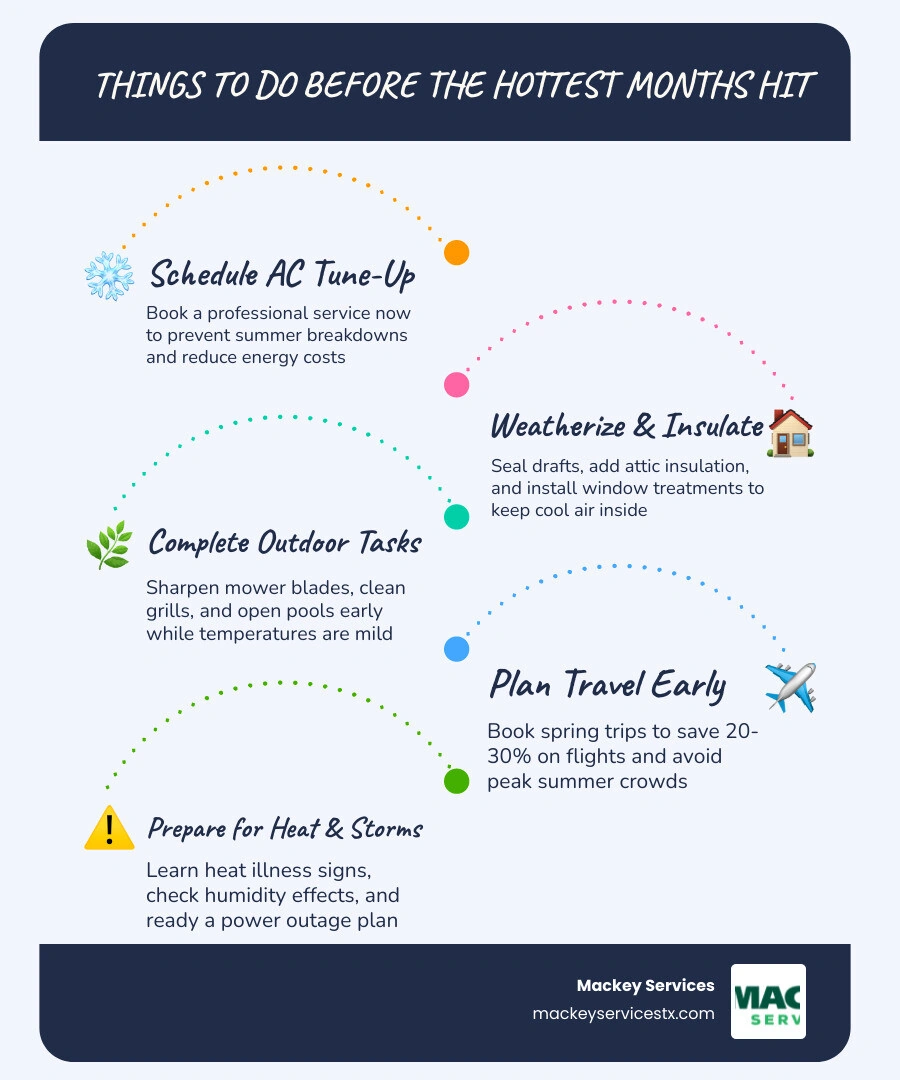
If you're looking for things to do before the hottest months hit, here's a quick checklist to get you started:
- Schedule a professional AC tune-up
- Weatherize and insulate your home
- Complete outdoor maintenance tasks (pool, grill, lawn)
- Plan and book summer travel now to save 20-30%
- Shift your daily schedule away from peak heat hours (3-5 PM)
- Swap to lighter bedding and linens
- Start a spring garden before temperatures climb
- Learn the warning signs of heat exhaustion and heat stroke
- Understand how humidity raises your real-feel temperature
- Prepare an emergency plan for power outages
Summer in the Greater Houston area doesn't ease in — it arrives fast and stays hard. By May, temperatures are already climbing, and if you wait until June to get ready, you're already behind. Extreme heat is the deadliest weather hazard in the United States, contributing to more than 800 deaths every year on average since 1999. For homeowners and business owners in Dickinson, League City, Friendswood, and the surrounding communities, the Gulf Coast heat and humidity make early preparation even more critical.
The good news? A little planning in spring goes a long way. From getting your cooling system ready to adjusting your daily routine, the steps you take now can protect your comfort, your wallet, and your health when August temperatures push into the mid-90s and beyond.
Essential Things to Do Before the Hottest Months Hit

When the sweltering Texas summer arrives, your home should be a sanctuary of cool air. Unfortunately, many families don't realize their homes are unprepared until the outdoor temperatures reach the triple digits and the indoor air conditioning starts struggling to keep up.
Preparing your home is one of the absolute best things to do before the hottest months hit. When you take proactive steps to seal leaks, optimize your cooling system, and check your insulation, you prevent unexpected breakdowns and save yourself from astronomical energy bills.
To ensure your home remains comfortable and safe, check out our guide on How to Make Sure Your AC Survives a Texas Summer. Taking action now prevents the headache of a broken cooling system in the middle of a July heatwave.
1. Schedule a Professional AC Tune-Up
Your air conditioning system is the unsung hero of your home. During a hot Texas summer, it runs almost continuously to keep you comfortable. Expecting a system to run 24/7 without a seasonal check-up is a recipe for a mid-summer breakdown.
A professional HVAC tune-up ensures that every component of your system is clean, lubricated, and operating at peak efficiency. Technicians will clean the condenser coils, check refrigerant levels, inspect electrical connections, and make sure your thermostat is calibrated correctly.
Investing in preventative maintenance offers major long-term rewards:
- Lower Utility Bills: A clean system uses less energy to cool your home, keeping your monthly bills manageable.
- Fewer Emergency Repairs: Catching worn-out parts in May prevents them from failing in August.
- Extended Equipment Lifespan: Regular maintenance directly correlates with a longer life for your expensive HVAC system.
At Mackey Services, we recommend scheduling this essential service as early in the spring as possible. To understand why this step is so critical, read more about the Benefits of Routine AC Maintenance. To make it even easier for our local neighbors to prepare, we proudly offer a professional $49 AC tune-up.
2. Weatherize and Insulate Your Living Spaces
Once your air conditioner is running efficiently, your next goal is to keep that cool air inside your home. If your house has poor insulation or hidden drafts, you are essentially paying to cool the outdoors.
Start by inspecting your attic. In the Gulf Coast region, attic temperatures can easily exceed 140°F on a sunny summer afternoon. Proper attic insulation acts as a barrier, preventing that intense heat from radiating down into your living spaces.
Additionally, look for drafts around your doors and windows. You can use the flashlight test (shining a light around door frames at night to see if light leaks through) or simply feel for air movement on a windy day. Apply fresh weather-stripping to doors and use high-quality caulk to seal gaps around window frames. For windows that receive direct, intense afternoon sunlight, consider installing window reflectors or heavy, light-blocking drapes to bounce the heat back outside.
For more practical ways to keep your home sealed and efficient, review these Air Conditioning Service Tips to Help You Save Energy.
3. Complete Outdoor Home Maintenance Tasks
While indoor comfort is vital, your outdoor spaces also require attention before the heat makes physical labor miserable. Completing these tasks in the mild spring weather of May 2026 ensures your yard, pool, and patio are ready for summer fun.
- Sharpen Your Lawn Mower Blades: Dull blades rip and tear your grass instead of slicing it cleanly. Torn grass is highly susceptible to heat stress and fungal diseases, which run rampant in humid climates. Sharpening your blades now keeps your lawn resilient.
- Open Your Swimming Pool: If you have a pool, open it up once daytime temperatures consistently reach 70°F. This is the optimal time to skim debris, shock the water, and add algaecide to prevent a massive algae bloom before the swimming season kicks off.
- Clean Your Gas or Charcoal Grill: Clear out any leftover grease or carbon buildup from last year. Check the burner jets on gas grills for clogs and make sure your propane tanks are filled and ready for backyard barbecues.
- Organize the Garage: Clean out clutter and safely dispose of old household chemicals, paint, and batteries. High summer temperatures can cause stored chemicals to degrade, leak, or release dangerous fumes in a hot garage.
Strategic Travel and Leisure Planning
Many people associate summer with travel, but peak-season trips often come with high costs, crowded destinations, and unbearable outdoor temperatures. By shifting your perspective and planning your getaways during the transitional spring months, you can enjoy a far more relaxing and budget-friendly experience.
Why Planning Things to Do Before the Hottest Months Hit Saves Money
If you want to save money on summer travel, the secret is to book early. Air carriers and hotels release their inventory months in advance, and booking your summer trips in April or May can save you anywhere from 20% to 30% compared to last-minute bookings in June or July.
Furthermore, traveling during the "shoulder season" (the period between peak and off-peak times) allows you to enjoy popular destinations without fighting massive crowds. You will get better service, shorter lines at major attractions, and lower prices on lodging and dining.
4. Visit Heat-Sensitive Destinations During the Spring
Some parts of the country are incredibly beautiful in the spring but become hot, wet, or crowded by mid-summer. Planning your visits to these areas in the spring allows you to experience them at their absolute best:
- San Antonio, Texas: Spring is widely considered the best time to visit San Antonio. Average spring temperatures hover around a comfortable 87°F, making it perfect for walking the historic River Walk or touring the Missions. By contrast, peak summer hits in August with average highs of 96°F and lows of 75°F. Additionally, San Antonio experiences its heaviest rainfall from May through early June, so visiting earlier in the spring helps you avoid both the rain and the extreme heat.
- Seattle, Washington: While Seattle receives roughly 38 inches of rain annually, April through May delivers the driest spring weather with just 7 to 11 rainy days combined. It is a magical time to visit before the summer crowds arrive.
- Greater Palm Springs, California: This desert oasis boasts over 300 days of sunshine a year. While winter and spring offer gorgeous temperatures, summer temperatures reach the low triple digits from June through September. Visiting in the spring allows you to enjoy the desert landscape and blooming wildflowers comfortably.
5. Savor Mild Outdoor Activities Now
Before the midday sun becomes too intense to enjoy, take advantage of the mild spring weather to spend time outdoors. Go hiking in local parks, enjoy family picnics, or view seasonal blooms.
For dining out, spring is the perfect time for patio dining. Many local restaurants in our area feature beautiful outdoor patios equipped with misters, allowing you to enjoy a meal in the fresh air before the high humidity of late summer makes indoor dining the only comfortable option.
6. Start a Spring Garden
If you enjoy fresh, home-grown produce, spring is your window of opportunity. Starting a garden is a wonderful way to spend time outdoors before the heat sets in.
- Cool-Season Crops: In early spring, focus on leafy greens like spinach, lettuce, and kale, which thrive in milder temperatures.
- Warm-Season Starters: As the soil warms up to at least 50°F, you can plant tomatoes, peppers, cucumbers, and squash. Starting these plants in the spring gives them time to establish strong root systems before the intense summer sun hits.
- Container Gardening: If you have limited yard space, container gardening is a fantastic alternative. Using five-gallon buckets or decorative pots on your patio allows you to grow fresh herbs, cherry tomatoes, and peppers with minimal space.
Adjusting Your Lifestyle and Home for Rising Temperatures
Preparing for the hottest months isn't just about home maintenance and travel; it is also about adjusting your daily habits and routines to stay comfortable and safe.
7. Swap to Lighter Bedding and Linens
One of the simplest ways to transition your home for the summer is a bedding swap. Heavy flannel sheets, thick duvets, and weighted blankets are perfect for winter, but they trap body heat in the summer, forcing you to lower your thermostat even further at night.
In May, perform a physical reset of your bedroom. Swap out heavy blankets for lightweight, breathable sheets made from natural fibers like 100% cotton, linen, or bamboo. These fabrics allow air to circulate and help wick moisture away from your body, keeping you cool and helping you sleep soundly without overworking your air conditioner.
8. Shift Your Daily Schedule to Avoid Peak Heat
When extreme heat hits, adjusting the timing of your daily activities can make a massive difference in your comfort and safety. The most dangerous time of day for heat-related illnesses is between 3:00 PM and 5:00 PM, when the earth has absorbed hours of solar radiation.
- Exercise Early or Late: If you enjoy running, walking, or cycling, shift your workouts to the early morning hours or late in the evening when temperatures are at their lowest.
- Acclimate Gradually: If you must work or spend time outdoors, allow your body to adjust to the heat gradually. Start with short periods of outdoor activity and slowly increase your time over a week or two to help your body build heat tolerance safely.
- Avoid Midday Errands: Try to run errands, walk pets, or complete yard work in the morning. Dark pavement and asphalt can easily burn your pet's paws during the heat of the day.
Prioritizing Health, Hydration, and Emergency Preparedness
When temperatures soar, heat safety should be your top priority. Understanding how to protect yourself and recognizing the early signs of heat-related illness can save lives.
| Condition | Warning Signs | Immediate Action |
|---|---|---|
| Heat Exhaustion | Heavy sweating, cold/pale/clammy skin, fast or weak pulse, nausea, muscle cramps, dizziness, headache, fainting. | Move to a cool, shaded area. Loosen clothing. Sip cool water or sports drinks. Apply cool, wet cloths to the body. |
| Heat Stroke | High body temperature (above 103°F), red/hot/dry skin (no sweating), rapid and strong pulse, dizziness, confusion, loss of consciousness. | Call 9-1-1 immediately. This is a medical emergency. Move the person to a cool area. Cool them with wet cloths or ice packs. Do not give them anything to drink. |
Smart Things to Do Before the Hottest Months Hit to Protect Your Health
Staying safe in extreme heat requires a proactive approach. Do not wait until you feel thirsty to start hydrating. Carry a water bottle with you everywhere and drink fluids consistently throughout the day. Water is always the best choice, but if you are sweating heavily, supplement with sports drinks to replenish lost electrolytes.
Additionally, dress for the weather. Choose loose-fitting, lightweight, and light-colored clothing made from breathable fabrics like cotton or linen. Light colors reflect heat, while loose clothing allows air to circulate over your skin, helping your sweat evaporate. Finally, always check on vulnerable family members, elderly neighbors, and pets to ensure they have access to cool spaces and plenty of water.
9. Understand the Dangerous Relationship Between Humidity and Heat
When assessing summer weather, the temperature on the thermometer only tells half the story. In the Greater Houston area, humidity is the factor that elevates a warm day into a dangerous one.
Your body cools itself through the evaporation of sweat. When you sweat, the moisture evaporates off your skin, carrying heat away with it. However, when the air is highly humid, it is already saturated with moisture. This prevents your sweat from evaporating efficiently, leaving you feeling hot, sticky, and unable to cool down.
This combination of temperature and humidity is measured as the "Heat Index" (or "real-feel" temperature). A humid, windless 88°F day can actually feel much hotter and be far more dangerous to your body than a dry 94°F day. Because our Gulf Coast climate features notoriously high humidity levels, your air conditioner has to work twice as hard to dehumidify your indoor air while cooling it.
To learn more about how our local weather impacts your home's comfort systems, read our detailed guide on How Gulf Coast Climate Affects Your HVAC System.
10. Prepare an Emergency Plan for Power Outages and Storms
Summer in Texas brings not only extreme heat but also the threat of severe weather, tropical storms, and hurricanes. When a major storm hits, power outages can leave homes without air conditioning for days or even weeks, turning a hot house into a dangerous environment.
Preparing an emergency plan in advance is one of the most critical things to do before the hottest months hit.
- Build an Emergency Kit: Stock up on non-perishable food, flashlights, batteries, first-aid supplies, and at least one gallon of water per person per day for a minimum of three days.
- Invest in a Standby Generator: A whole-home standby generator is the ultimate defense against summer power outages. It detects a loss of power instantly and restores electricity to your home within seconds, keeping your air conditioner, refrigerator, and medical devices running smoothly.
- Have a Communication Plan: Ensure your family has a designated meeting place and a clear plan for how you will communicate if cell service is disrupted.
For a complete checklist on safeguarding your home against severe summer weather, refer to our comprehensive Hurricane Season Home Preparation Guide.
Frequently Asked Questions About Summer Heat Preparation
When do the hottest months typically begin in the US?
While summer officially begins in late June, extreme heat conditions can start much earlier depending on your region. In the desert Southwest, triple-digit temperatures routinely arrive in May and persist through September. In the southern United States and the Gulf Coast, temperatures begin climbing rapidly in June, peaking in late July and August.
How does humidity affect the outdoor temperature?
Humidity does not change the actual air temperature, but it significantly increases the perceived temperature (the Heat Index). High humidity prevents sweat from evaporating off your skin, which disables your body's natural cooling mechanism. As a result, you feel much hotter, and your risk of heat-related illness increases at lower temperatures than it would in a dry climate.
What are the most critical signs of heat stroke?
Heat stroke is a life-threatening medical emergency. The most critical signs include a body temperature rising above 103°F, red, hot, and dry skin (with no sweating), a rapid and strong pulse, severe headache, dizziness, confusion, or loss of consciousness. If you suspect someone is experiencing heat stroke, call 9-1-1 immediately and take steps to cool them down.
Conclusion
Getting ready for the hottest months of the year doesn't have to be overwhelming. By breaking your preparation down into manageable steps — from scheduling your professional AC tune-up to weatherizing your home, shifting your daily schedule, and establishing an emergency plan — you can ensure your family stays safe, cool, and comfortable all summer long.
For homeowners in Dickinson, League City, Friendswood, and the surrounding Greater Houston communities, Mackey Services has been the trusted name for home comfort since 1992. With over 30 years of local experience, an A+ rating from the Better Business Bureau, and a dedicated team of licensed professionals, we treat our customers like family. Whether you need a comprehensive cooling system check-up, electrical upgrades, standby generator installation, we are here to provide reliable, high-quality service.
Don't wait for the summer heat to catch you off guard. Schedule your professional AC service with Mackey Services today and enjoy complete peace of mind when the temperatures soar!
Ready for a better day?
One call handles it all — HVAC, electrical, and generators across the Texas Gulf Coast. Less to pay. Better day. That's the Mackey way.
Mon–Fri: 7 AM – 8 PM · Sat: 8 AM – 5 PM · Licensed & insured · #TACLA 112769C · #TECL 558211