
The Myth of Winterizing Your AC Condenser in the Texas Gulf Coast
Why we skip the tarp. The myth of winterizing your AC condenser in the Texas Gulf Coast traps moisture and causes rust. See what to do.
Is It a Mistake to Cover Your AC Unit This Winter?
Closing unused vents doesn't actually save energy, and wrapping your outdoor cooling equipment in a tarp doesn't protect it from the elements. As the September early-fall transition approaches, many homeowners face a common dilemma: deciding whether to cover their outdoor AC condenser unit for the cooler months. The short answer is that following generic, out-of-state advice to cover your unit creates a massive concrete problem. When you wrap a condenser in a humid coastal environment, you trap highly corrosive moisture inside the machinery. Rather than protecting the system, this well-intentioned maintenance step rapidly accelerates rusting. The myth of winterizing your AC condenser in the Texas Gulf Coast stems from a fundamental misunderstanding of regional climates, and learning the truth can save your equipment from premature failure.
For professional guidance tailored to our specific climate, explore our air conditioning services to see how we keep local systems running efficiently.
The Origin of the Winter Cover Myth: Snow Belts vs. Coastal Humidity
If you search online for fall HVAC maintenance tips, you will almost certainly find articles telling you to securely wrap your outdoor condenser in a heavy tarp. This advice isn't entirely wrong—it is just written for a completely different part of the country. The origin of the "cover your AC" rule traces back to northern snow-belt states. In places like Minnesota or Upstate New York, heavy blizzards, accumulating ice, and freezing rain pose a severe physical threat to outdoor equipment. A thick layer of heavy snow can easily crush internal fan blades or bend delicate aluminum fins.
However, applying that same snow-belt logic to Dickinson and the Texas Gulf Coast is a critical mistake. Our mild, non-freezing winters simply do not produce the crushing ice loads that northern states experience. Instead, our primary atmospheric challenge is sustained, high-level humidity. Generic internet HVAC advice fails to account for these regional differences.
Comparing the Climates
To understand why a cover is so destructive here, you have to look at the environmental differences. Here is a breakdown of what happens when you follow northern advice in a southern climate:
| Environmental Factor | Northern Snow Belt Reality | Texas Gulf Coast Reality |
|---|---|---|
| Winter Precipitation | Heavy snow and freezing rain that can physically crush components. | Mild rain and high humidity with almost zero risk of heavy ice accumulation. |
| Primary Threat to AC | Physical damage from the weight of ice and snow. | Chemical damage from trapped moisture and airborne salt. |
| Purpose of a Cover | Creates a physical shield against falling ice chunks. | Acts as a greenhouse, trapping water vapor and preventing evaporation. |
| Ventilation Needs | Minimal, as freezing temperatures keep humidity extremely low. | Critical, as high humidity requires constant airflow to keep parts dry. |
Relying on deep local expertise is the only way to avoid these costly mistakes. A generic blog post written by someone in a freezing climate will actively harm your system in a coastal environment. We consistently see the damage caused by these out-of-state recommendations.
The Physics of a Trapped Micro-Climate Under a Tarp
To truly understand why covering your unit is harmful, we have to look at the specific science of condensation and dew point physics during fluctuating seasonal temperatures. During the September early-fall transition, our region frequently experiences warm, humid days followed by significantly cooler nights. This temperature swing is the exact recipe for massive condensation.
The Greenhouse Effect on Your Condenser
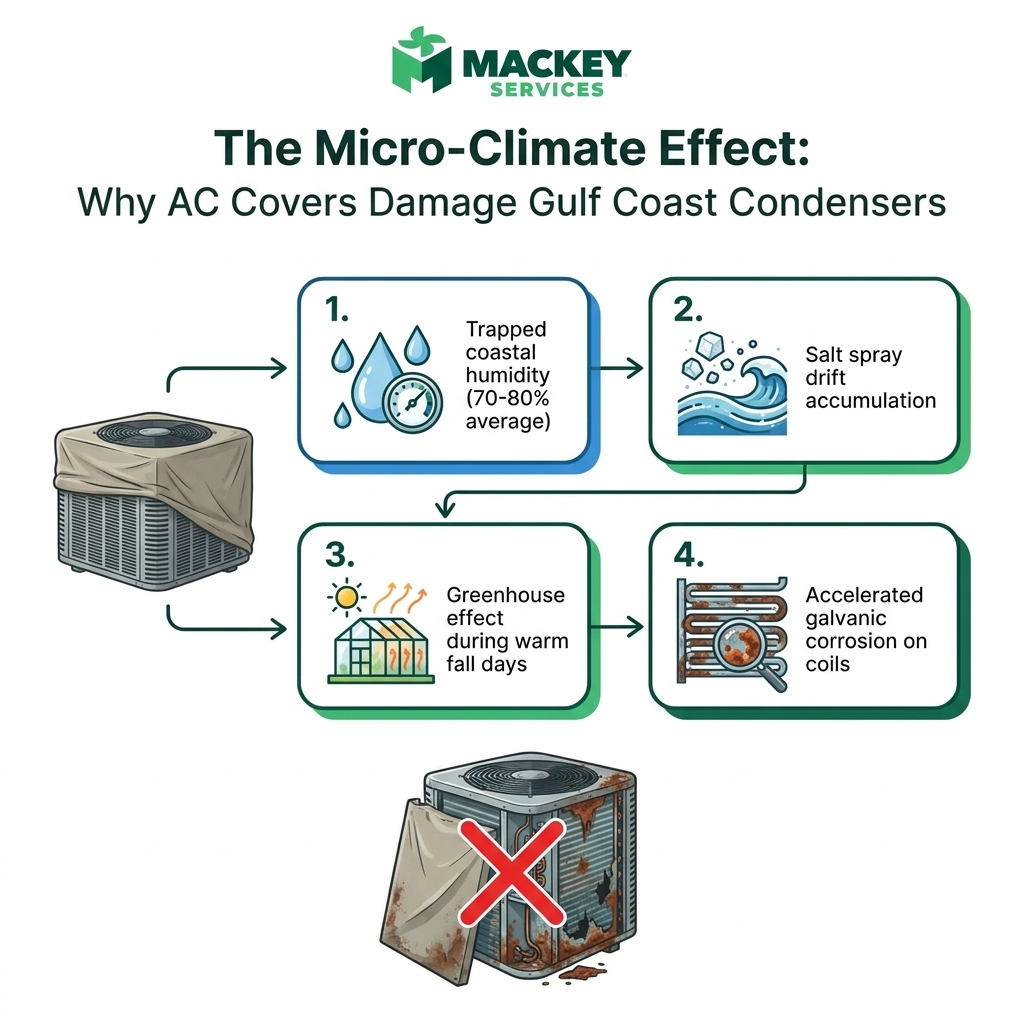
When you wrap your outdoor condenser in a non-breathable tarp or plastic cover, you create a trapped micro-climate. As the sun beats down on the cover during a warm fall afternoon, the air inside the cover heats up, pulling moisture from the damp ground below. When the sun goes down and the ambient temperature drops, this trapped, warm, humid air hits the dew point. The water vapor rapidly condenses into liquid water, coating every single internal component of your AC unit—from the sensitive electrical contactors to the copper refrigerant lines.
Because the tarp prevents natural airflow, this trapped moisture cannot evaporate. The system remains perpetually damp. If you want to dive deeper into how our specific environment impacts your system's efficiency, you can read more about how coastal conditions affect HVAC equipment. Without the wind and sun to dry the internal components, the constant dampness creates an environment where metal degradation accelerates at an alarming rate.
Salt Air Corrosion: The Invisible Threat to Your Condenser
Moisture alone is bad enough, but in Dickinson and the Texas Gulf Coast, we have an invisible multiplier: airborne chlorides. Salt spray drift from the coast can easily travel 5 to 10 miles inland on the breeze. When this salt air mixes with the trapped condensation under a tarp, it creates a highly reactive chemical environment that leads to galvanic corrosion.
How Galvanic Corrosion Destroys Coils
Galvanic corrosion occurs when two different metals—like the copper tubes and aluminum fins in your AC coil—are connected in the presence of an electrolyte. Saltwater is a highly conductive electrolyte. When salty coastal air gets trapped under a cover, it aggressively attacks these metals, causing the aluminum fins to literally crumble into white powder. Over time, this weakens the copper lines, leading to inevitable and irreversible refrigerant leaks.
Under normal, uncovered circumstances, standard rain showers actually help protect your system. A good downpour washes away corrosive salt deposits and dirt from the condenser coils. A cover prevents this natural cleaning process, effectively locking the salt against the metal. During a recent summer service call, one local homeowner needed a complete condenser replacement due to severe degradation. After our technician replaced the condenser and explained the technical details of how trapped coastal moisture and salt air accelerate this kind of metal breakdown, the customer finally understood why their previous unit failed so prematurely.
The long-term impact of this corrosion is a drastically shortened lifespan for the equipment and plummeting energy efficiency. For a closer look at this chemical process, learn more about how salt air and humidity shorten AC lifespan. Leaving the unit uncovered allows the rain to rinse the coils and the wind to dry them, breaking the corrosive cycle.
Unwanted Winter Guests: Creating a Haven for Pests
Beyond the chemical and physical degradation of your equipment, covering your AC unit introduces a serious biological risk. When temperatures finally do drop in the late fall and winter, local wildlife immediately begins searching for dry, sheltered, and reasonably warm places to nest.
The perfect pest real estate: A tarped AC unit provides the ultimate predator-free nesting ground. It is elevated off the wet ground, shielded from the wind, completely dry, and hidden from owls, hawks, and neighborhood cats. Rodents, specifically mice and rats, find this environment irresistible.
- Chewed electrical wires: Rodents have a biological need to gnaw to keep their teeth filed down. The low-voltage wiring and high-voltage insulation inside your condenser cabinet are prime targets. A single chewed wire can cause a catastrophic short circuit when you turn the system back on in the spring.
- Restricted airflow: Pests bring in leaves, twigs, insulation, and trash to build their nests. This debris packs tightly against the condenser coils. Even if the wires survive, this nesting material severely restricts the airflow required for the system to cool your home.
- Corrosive waste: Animal urine and droppings are highly acidic and will rapidly eat through aluminum fins and copper lines, compounding the corrosion issues we already discussed.
Emphasize this simple rule: leaving the unit open and exposed to the wind, rain, and natural light deters pests from settling inside. They prefer dark, dry spaces, and an uncovered AC unit simply doesn't meet their criteria for a safe winter home.
NEMA Standards: Why Your AC Is Already Weatherproof
One of the main reasons homeowners feel compelled to cover their units is a natural protective instinct. You wouldn't leave your television out in the rain, so it feels wrong to leave a complicated electrical appliance exposed to the elements. However, outdoor condenser units are specifically manufactured and engineered to withstand severe weather without any additional covering.
Understanding NEMA Ratings
The National Electrical Manufacturers Association (NEMA) sets strict standards for outdoor electrical enclosures. Your AC condenser is built to meet or exceed these rigorous NEMA standards. The internal wiring, the compressor terminal connections, and the fan motors are fully sealed and weatherproofed against rain, wind, and ambient moisture.
The quick takeaway: Outdoor units are actually designed to be rained on. The manufacturers anticipate that the unit will sit in the elements for 10 to 15 years. The louvered panels and top grates are angled to allow water to flow through the system harmlessly while keeping large debris out. The bottom of the unit features built-in drainage weep holes that allow precipitation to flow right out.
When you add a DIY cover, you actively interfere with the manufacturer's engineered weatherproofing. You block the drainage, you block the ventilation, and you introduce a moisture variable that the engineers never intended the system to handle. Trust the engineering—your AC is already wearing its winter coat.
Safe Early-Fall Preparation for Your HVAC System
If covering the unit is off the table, you might be wondering what you should do to prepare your system for the cooler months. Fortunately, safe early-fall preparation is straightforward and highly effective when done correctly during the September early-fall transition.
- Clear the surrounding perimeter: Ensure there is at least two feet of clear space around the entire condenser base. Trim back overgrown bushes, rake away accumulated dead leaves, and remove any tall grass. This guarantees the unit has the proper airflow to operate efficiently and dry out quickly after a rainstorm.
- Perform a gentle exterior wash: Using a standard garden hose with a gentle spray nozzle, carefully wash away accumulated dirt, pollen, or salt residue from the exterior fins. Important: Never use a high-pressure power washer, as the intense force will instantly flatten the delicate aluminum fins and destroy the coil.
- Avoid DIY internal maintenance: Warn against any DIY electrical work or opening the condenser cabinet. Cleaning the internal components, checking the contactors, or measuring refrigerant levels requires specialized tools and must be handled by a licensed professional to ensure safety and compliance with warranties.
- Schedule professional maintenance: The best protection is a pre-heating-season tune-up. This ensures the system transitions smoothly from cooling to heating.
One local customer experienced a system malfunction after running their unit in heat mode for the first time during the fall. A technician gathered the system's performance information, guided a safe restart, and advised the customer on what specific signs to watch for if the problem recurred. This kind of proactive monitoring is exactly why professional tune-ups matter. If you are curious about how these systems handle extreme shifts, you can read more about whether can a heat pump keep up with a Texas afternoon.
Frequently Asked Questions About AC Winterization
Should I cover my outside AC unit in winter in Texas?
No, you should never cover your outside AC unit in the Texas Gulf Coast during the winter. Our mild temperatures and high humidity make covers extremely detrimental to the equipment. A non-breathable tarp acts like a greenhouse, trapping ground moisture and coastal humidity inside the cabinet. Because the cover blocks natural airflow and sunlight, this trapped water vapor cannot evaporate, leading to severe internal damage over the winter months.
Does covering an AC unit cause rust?
Yes, covering an AC unit directly accelerates rust and galvanic corrosion. When condensation forms inside a covered unit, it sits on the metal components indefinitely because the tarp prevents evaporation. This constant, stagnant moisture leads to the rapid oxidation of internal parts, including the electrical contactors, the steel base pan, and the delicate copper and aluminum coils. Over time, this rust weakens the system and causes premature failure.
How do you protect an AC unit from salt air?
The best way to protect an AC unit from salt air is through regular rinsing with fresh water and ensuring it remains uncovered so rain can naturally wash the coils. Covering the unit actually traps the airborne salt inside, where it mixes with condensation to form a highly corrosive environment. For maximum protection, you can also have a licensed professional apply specialized protective coil coatings that resist airborne chlorides without restricting the system's necessary heat transfer.
What happens if water gets in my AC condenser?
Nothing harmful happens if normal rainwater gets into your AC condenser; the system is fully designed for it. The electrical components, motors, and wiring are sealed to strict outdoor safety standards, and the bottom of the unit features built-in drainage holes to prevent pooling. In fact, natural rain is beneficial because it helps wash away accumulated dirt, dust, and corrosive salt spray from the exterior coils.
Can I put a piece of plywood on top of my AC unit?
Placing a piece of plywood solely on the top of the unit is a common compromise to stop falling debris, but it still carries risks. While it won't trap moisture as aggressively as a full tarp, it can still restrict upward airflow if you forget to remove it before the system kicks on during a warm winter day. If you have heavy acorn or pinecone drops from a directly overhanging tree, a top-only board can be used temporarily, but it must be removed immediately before the system operates.
Protect Your Equipment the Right Way This Season
Keeping your outdoor unit completely uncovered is the absolute best defense against coastal humidity, salt air corrosion, and winter pest infestations in Dickinson and the Texas Gulf Coast. By understanding the science behind the micro-climate effect, you can enjoy scientifically grounded peace of mind knowing that leaving your unit exposed to the elements is exactly what the engineers intended. Instead of trapping moisture under a tarp, focus your efforts on keeping the perimeter clean and the coils gently rinsed.
If you want to ensure your system is fully prepared for the seasonal transition, talk to a local expert about proper fall maintenance. Explore our comprehensive HVAC maintenance plan to keep your equipment protected, efficient, and running smoothly all year long.
Ready for a better day?
One call handles it all — HVAC, electrical, and generators across the Texas Gulf Coast. Less to pay. Better day. That's the Mackey way.
Mon–Fri: 7 AM – 8 PM · Sat: 8 AM – 5 PM · Licensed & insured · #TACLA 112769C · #TECL 558211