
The Complete Guide to How Coastal Conditions Affect HVAC Equipment
Discover how coastal conditions affect HVAC equipment with expert tips to protect your Dickinson TX system from salt air and humidity.
Why Coastal Conditions Affect HVAC Equipment More Than Most Homeowners Realize
Understanding how coastal conditions affect HVAC equipment is essential for any homeowner living near the Gulf Coast. If you want the short answer: salt air, high humidity, and coastal winds work together to corrode metal components, overwork your system, and cut its lifespan nearly in half compared to inland units.
Here is a quick summary of how coastal conditions damage HVAC systems:
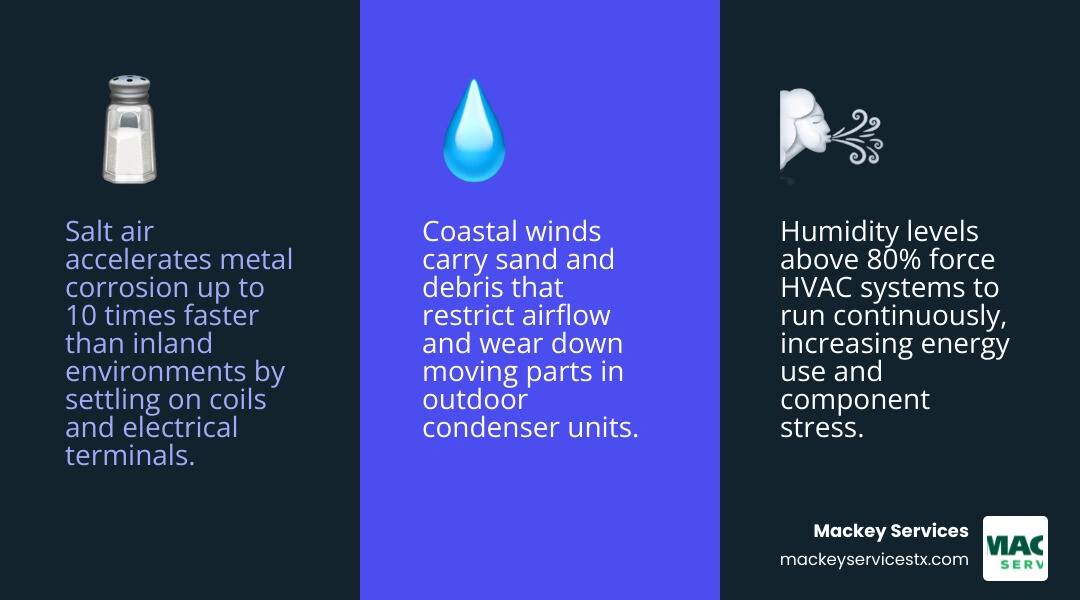
- Salt corrosion - Salt particles carried by ocean breezes settle on condenser coils, fins, and electrical components, accelerating rust and metal breakdown up to 10 times faster than inland climates
- High humidity - Coastal areas regularly see humidity above 80%, forcing your system to run longer and work harder to remove moisture from the air
- Sand and debris - Coastal winds push grit into outdoor units, restricting airflow and wearing down moving parts faster
- Year-round operation - In Gulf Coast climates like Dickinson, TX, systems rarely get a break, which compounds fatigue from corrosion and humidity stress
- Electrical vulnerability - Salt and moisture together attack wiring, terminals, and contactors, sometimes causing sudden and unexpected failures
- Shortened lifespan - Without protective measures, coastal HVAC systems often last only 7 to 12 years, compared to 15 to 20 years for well-maintained inland systems
If you live in Dickinson, League City, Friendswood, or anywhere along the Gulf Coast, your HVAC system is quietly fighting a battle against the environment every single day. The same ocean breeze that makes coastal Texas living so appealing is also one of the harshest forces your heating and cooling equipment will ever face. Salt particles can travel miles inland on coastal winds, meaning even homes that are not directly on the water are not fully protected. Pair that with Houston-area humidity that regularly pushes past 80% and a cooling season that stretches from early spring through late fall, and it is easy to see why Gulf Coast HVAC systems take a serious beating compared to their inland counterparts.
The good news is that understanding the problem is the first step toward solving it. With the right maintenance routine, equipment choices, and protective measures, you can extend your system's life significantly and avoid costly surprises.
The Science of How Coastal Conditions Affect HVAC Equipment
To understand how coastal conditions affect HVAC equipment, we have to look at the chemistry of coastal air. Ocean breezes carry microscopic salt particles (sodium chloride) and moisture. When these particles land on your outdoor condenser unit, they initiate a destructive process known as galvanic corrosion.
Your outdoor unit relies on two primary metals to transfer heat: copper tubing and aluminum fins. When salt and moisture settle on these two different metals, it creates an electrolytic reaction. This essentially creates a "slow-motion battery" effect. The salt water acts as an electrolyte, causing the aluminum fins to sacrifice themselves to protect the copper. Over time, this chemical reaction causes the aluminum fins to weaken, turn to a white powder, and crumble away. This process is called pitting corrosion, and it destroys the heat-transfer capabilities of your coils, leading to system inefficiency and eventual refrigerant leaks.
But the damage doesn't stop with the coils. Coastal winds carry fine sand and abrasive grit that blow directly into the condenser. This sand accumulates at the base of the unit, trapping moisture and salt against the metal casing. The abrasive nature of blowing sand also strips away the manufacturer's protective paint, leaving the steel cabinet vulnerable to rust.
Furthermore, the mixture of salt and high humidity is highly conductive. When this salty mist penetrates the electrical compartment of your outdoor unit, it targets:
- Electrical terminals and contactors: Leading to high resistance, burnt contacts, and sudden power failures.
- Fan motor bearings: Causing them to seize up prematurely.
- Compressor terminals: Leading to catastrophic compressor failure.
Without consistent intervention, this relentless environmental assault will quietly rot your system from the inside out. For a deeper look at this process, check out our article on How Salt Air and Humidity Shorten AC Lifespan.
Lifespan Expectations: Coastal vs. Inland HVAC Systems
The geographical location of your home plays a massive role in equipment longevity. In a mild, inland environment, a standard central air conditioner or heat pump can easily last 15 to 20 years with basic maintenance. Along the Gulf Coast, however, system fatigue sets in much faster due to the combination of chemical corrosion and near-continuous year-round operation.
In places like Galveston, Seabrook, and Kemah, an unprotected, neglected HVAC system can begin showing severe signs of wear in as little as 3 to 5 years, with complete system failure occurring between years 7 and 12.
| Performance Metric | Inland Texas HVAC System | Coastal Texas HVAC System (Unprotected) | Coastal Texas HVAC System (With Proper Care) |
|---|---|---|---|
| Typical Lifespan | 15–20 Years | 7–12 Years (Often failing by year 5 near oceanfront) | 12–15+ Years |
| Coil Degradation Timeline | Minimal over 10+ years | Visible corrosion within 3–5 years | Slowed significantly by protective coatings |
| Efficiency Loss Over Time | 5%–10% over system life | Up to 30% loss by year 5 due to salt buildup | Kept near factory levels with regular flushes |
| Required Maintenance | Annual professional tune-up | Bi-annual professional tune-up + monthly flushes | Bi-annual professional tune-up + monthly flushes |
| Primary Failure Modes | Electrical wear, old age | Coil corrosion, refrigerant leaks, seized motors | Normal wear, manageable electrical component updates |
Because our coastal systems do not get the long winter breaks that northern systems enjoy, they suffer from mechanical fatigue. Running constantly in a high-salt, high-humidity environment means every component is pushed to its limit. If you want to know more about what to expect in our local area, read our guide on How Long Does an AC System Last on the Gulf Coast.
Understanding How Coastal Conditions Affect HVAC Equipment Lifespan
Why exactly does coastal exposure slice so many years off a system's life? It comes down to the compounding effect of heat and rust. As salt corrosion eats away at the aluminum fins on your condenser coil, the surface area available to reject heat shrinks.
To make up for this lost heat transfer, the compressor has to work much harder and run longer cycles to cool your home. This extra workload raises the operating temperature of the compressor, degrading its internal lubricants and leading to premature mechanical failure. When the heart of your system—the compressor—fails prematurely, a costly replacement is often the only option. To help you navigate these decisions, we have put together a resource on When Should You Replace Your AC in a Coastal Climate.
Warning Signs of How Coastal Conditions Affect HVAC Equipment Performance
It is important to catch coastal damage early before it leads to a total system breakdown on a hot July afternoon. Keep an eye out for these warning signs:
- Rising Energy Bills: If your electricity bills are climbing month-over-month but your usage habits haven't changed, your system is likely losing efficiency due to salt buildup on the coils. Salt buildup can reduce efficiency by up to 30% before the system is five years old.
- White Rust or Powdery Buildup: Inspect your outdoor unit. If you see a white, powdery substance on the aluminum fins or notice that the fins crumble like a soda can when gently touched, galvanic corrosion is actively destroying the metal.
- Refrigerant Leaks: Pitting corrosion creates microscopic pinhole leaks in copper refrigerant lines. If your system constantly needs refrigerant top-offs, corrosion is the likely culprit.
- Musty Odors Indoors: High coastal humidity can overwhelm an AC's dehumidification capacity, leading to standing water in the drain pan and mold growth in the dark, damp interior of your air handler.
- Frequent Electrical Failures: If your system is constantly tripping breakers, blowing capacitors, or refusing to turn on, salt crusting on electrical contactors is likely causing electrical shorts.
Proactive Maintenance and Protective Measures for Salt-Air Environments
While the coastal environment is tough, you are not helpless. Implementing a proactive preventive care strategy can double the life of your HVAC system.
First, let's talk about coil rinsing. One of the simplest and most effective DIY steps you can take is to gently rinse your outdoor condenser unit with fresh water from a garden hose every 2 to 4 weeks. This washes away salt crystals before they can chemically bond to the metal. Always turn off the system at the thermostat before rinsing, and never use a pressure washer, which will instantly flatten the delicate aluminum fins and ruin airflow.
Second, keep vegetation cleared. Maintain a 2-to-3-foot clearance zone around your outdoor unit. Trim back coastal grasses, shrubs, and weeds. This ensures proper airflow and prevents plants from trapping salt-laden moisture against the unit's cabinet.

For long-term protection, we highly recommend the following professional measures:
- Anti-Corrosion Coatings: Applying specialized, factory-grade protective coatings (such as epoxy, polymer, or phenolic coatings) to the condenser coils creates a physical barrier that prevents salt from contacting the raw metal.
- Stainless Steel Fasteners: Standard screws rust quickly in salt air, making future repairs difficult and letting cabinet panels vibrate loose. Replacing them with marine-grade stainless steel fasteners prevents rust streaks and structural degradation.
- Elevated Placement: Elevating your outdoor unit on a raised platform or stand protects it from ground-level salt spray, blowing sand, and localized flooding during heavy Gulf storms.
- Surge Protection: Coastal storms and grid fluctuations can send electrical surges through your system. Installing heavy-duty surge protectors protects sensitive variable-speed blowers and compressors from frying.
For more hands-on advice, read our articles on How to Extend the Life of Your AC on the Coast and explore these essential HVAC Maintenance Tips for Coastal Texas Homeowners.
Sizing, Humidity Control, and Equipment Selection for Coastal Homes
When it comes to coastal HVAC design, standard rules of thumb do not apply. Coastal homes deal with a massive latent load (the heat associated with moisture in the air) compared to sensible load (the heat associated with actual air temperature).
If an HVAC system is oversized—a common mistake made by inexperienced installers—it will quickly cool the air to the thermostat setpoint and shut off. This is called short cycling. Because it doesn't run long enough, it fails to remove moisture from the air, leaving your home feeling cold, clammy, and damp.
To manage this high dehumidification demand, coastal homeowners should look for specific equipment features:
- Variable-Speed Compressors: Unlike standard single-stage systems that are either 100% on or 100% off, variable-speed systems run continuously at lower, highly efficient speeds. This allows them to constantly pull moisture out of the air, maintaining perfect indoor humidity levels (ideally between 45% and 55%).
- E-Coated Coils: Look for systems that feature factory-applied electro-deposition (E-coat) coil protection. This process completely submerses the coil in a protective barrier, ensuring 100% coverage against salt air.
- Marine-Grade Cabinets: High-end coastal-rated outdoor units feature heavy-gauge galvanized steel cabinets with baked-on powder paint and rust-resistant base pans designed to withstand salt spray.
- Whole-Home Dehumidifiers: Integrating a dedicated whole-home dehumidifier directly into your ductwork allows you to control indoor moisture levels independently of your air conditioner. This is especially helpful during mild, humid "shoulder seasons" in spring and autumn when you don't need much cooling, but desperately need to dry out the indoor air.
Proper humidity control is also your first line of defense against biological growth. To learn more, read about The Role of Humidity Control for Home Comfort and discover How Air Purification and Dehumidification Reduce Mold Risk. Additionally, learn how local outdoor factors interact with your indoor climate in our guide on How Texas Pollen and Humidity Affect Indoor Air.
Frequently Asked Questions About Coastal HVAC Care
Living near the water brings up unique maintenance questions. Here are the answers to the most common questions we hear from local homeowners.
How often should I rinse my outdoor AC unit if I live near the coast?
If you live within a mile of the Gulf or tidal waters, we recommend a gentle freshwater rinse of your outdoor condenser coils once a month. If you are further inland (between 1 and 5 miles), rinsing the unit once every two months is generally sufficient.
Always turn off the system at the thermostat before rinsing. Use a standard garden hose with a gentle spray nozzle, spraying from top to bottom to wash away salt crystals. Never use chemical cleaners or high-pressure washers, as they can chemically react with the metal or physically flatten the condenser fins.
Why does my coastal home feel damp even when the air conditioner is running?
This "cold and clammy" feeling is almost always caused by high indoor humidity levels resulting from an oversized AC system or single-stage equipment that is short cycling. Because the system turns off too quickly, it doesn't run long enough to pull moisture out of the air.
To fix this, you may need a dedicated whole-home dehumidifier or a transition to a variable-speed HVAC system that runs longer, low-speed cycles designed specifically for maximum moisture removal.
Do coastal storms and flooding require special HVAC precautions?
Yes, absolutely. The Gulf Coast is prone to heavy rainfall, tropical storms, and hurricanes. Your outdoor condenser should always be elevated on a sturdy concrete, plastic, or elevated metal platform well above the local base flood elevation.
Additionally, electrical surges from lightning strikes and power grid fluctuations during storms can easily destroy your system's compressor and control boards. Installing a whole-home surge protector is highly recommended. For complete peace of mind during storm-induced power outages, many coastal homeowners also invest in standby power. To see if this is right for your home, read our guides: Is a Whole House Generator a Wise Investment and the Whole Home Generator Investment Guide 2026.
Conclusion
Living on the Gulf Coast is a wonderful experience, but it requires a specialized approach to home maintenance. Now that you know how coastal conditions affect HVAC equipment, you can take the necessary steps to protect your investment. From monthly coil flushes to selecting coastal-rated equipment with E-coated coils, a little proactive care goes a long way.
At Mackey Services, we have been helping our neighbors in Dickinson, League City, Friendswood, and across the Greater Houston Area keep their homes comfortable since 1992. As a family-owned business with 30 years of experience and an A+ rating from the Better Business Bureau, we understand the exact environmental challenges your coastal HVAC system faces. Whether you need custom ductwork fabrication, a coastal-grade system installation, or a comprehensive maintenance plan to wash away the salt and sand, our friendly, licensed technicians are here to help.
Don't let salt air and humidity quietly destroy your comfort. Contact us today to schedule your coastal system checkup and keep your home running efficiently all year long.
Schedule Professional AC Maintenance in Dickinson, TX
Ready for a better day?
One call handles it all — HVAC, electrical, and generators across the Texas Gulf Coast. Less to pay. Better day. That's the Mackey way.
Mon–Fri: 7 AM – 8 PM · Sat: 8 AM – 5 PM · Licensed & insured · #TACLA 112769C · #TECL 558211